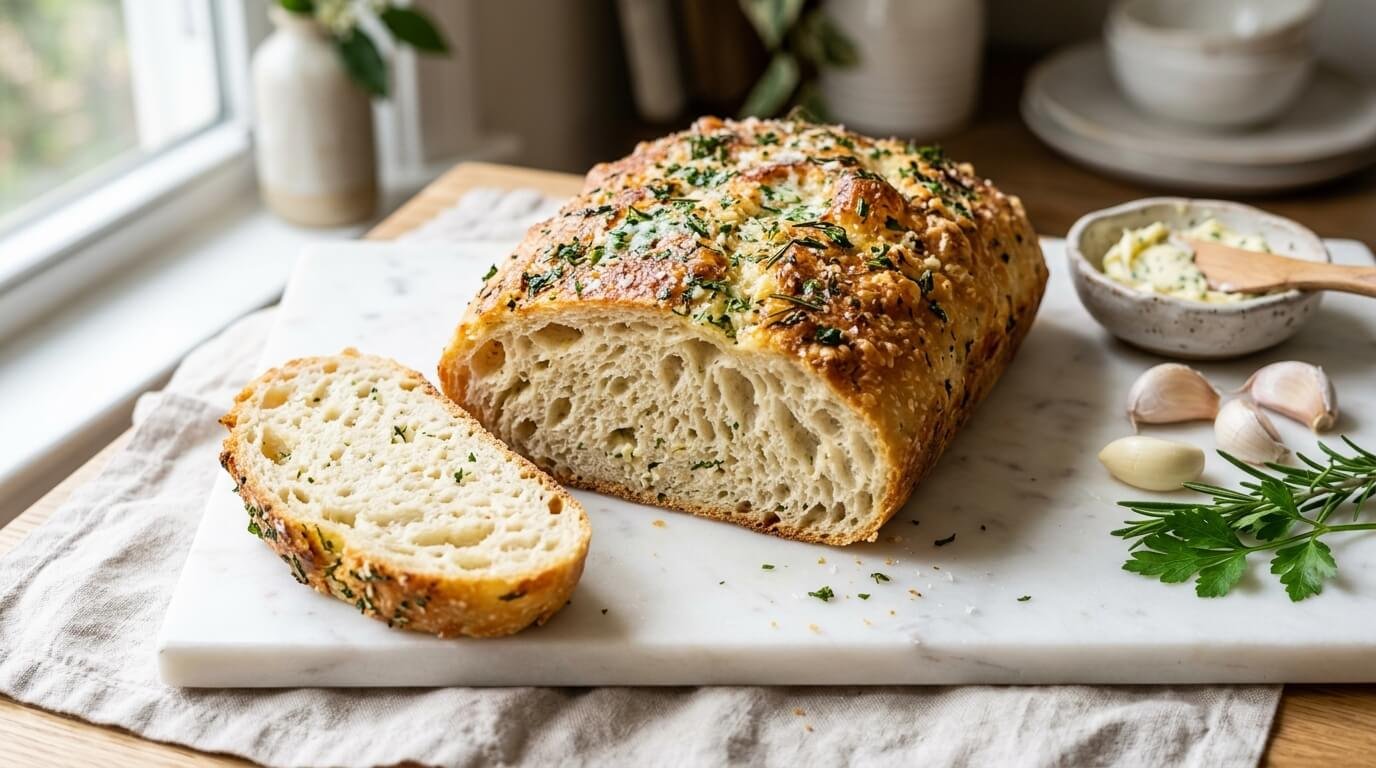
The Garlic and Herb Bread You’ll Want Alongside Every Single Meal
There is a specific moment when garlic hits hot butter and the smell travels through the entire house. Everyone suddenly appears in the kitchen. Nobody is asking what’s for dinner anymore because the answer is already in the air.
This bread does that every single time.
I started making this a few years ago because I was tired of garlic bread that was either soggy in the middle or so hard on the outside it hurt your teeth. I wanted something that had a real crust with a proper crunch when you bite through it and then went immediately soft and pillowy on the inside, completely saturated with garlicky herb butter. After a lot of attempts and adjustments this is the version I landed on and it has not changed since.
It goes alongside pasta, soup, grilled chicken, or honestly just on its own standing over the kitchen counter because you couldn’t wait long enough to sit down.
What You Need
The ingredient list here is short but every single thing matters so don’t skip or swap without reading the tips section first.
You need one large loaf of Italian or French bread, the kind with a proper thick crust and a soft airy crumb inside. A baguette works too but a wider loaf gives you more surface area for the butter which is always a good thing.
For the garlic butter you need 6 tablespoons of unsalted butter softened to room temperature, 4 cloves of fresh garlic very finely minced, a tablespoon of fresh flat leaf parsley finely chopped, a teaspoon of fresh thyme leaves, half a teaspoon of dried oregano, a quarter teaspoon of salt, and a small pinch of red pepper flakes if you like a little warmth in the background.
That is genuinely everything. Simple ingredients, big result.
How to Make It
Start by taking the butter out of the fridge at least thirty minutes before you plan to use it. Softened butter blends with the garlic and herbs into a smooth spreadable paste. Cold butter tears the bread and distributes unevenly, which means you get bites with too much and bites with too little.
While the butter softens, mince the garlic as finely as you can. You want it to melt into the butter rather than sit on top of the bread in chunks. If you have a microplane or fine grater you can use that instead and it works even better. Add the garlic to the softened butter along with the parsley, thyme, oregano, salt, and pepper flakes if using. Mix everything together with a fork until completely combined and the butter looks uniformly flecked with green and smells absolutely wonderful.
Preheat your oven to 375 degrees Fahrenheit. While it heats up, slice the loaf in half lengthwise so you have two long flat pieces. Spread the garlic butter generously over the cut side of both halves. Do not be shy here. You want the butter to go right to every edge, including the corners where it tends to get skipped. That’s where the best bites are.
Place both halves cut side up on a baking sheet and slide them into the oven. Let them bake for about twelve minutes. At this point the butter will have melted and soaked into the bread and the edges will just be starting to turn golden. If you want a deeper crispier crust, switch the oven to broil for the last two to three minutes and watch it closely. It goes from perfect to burnt faster than you expect so don’t walk away.
Pull it out when the top is golden and the edges have color. Let it sit for two minutes before cutting into pieces. Cutting it too soon means the butter runs out onto the board instead of staying in the bread where it belongs.
Tips From Making This Too Many Times
Fresh garlic is non-negotiable. Garlic powder gives you a completely different flavor and not in a better way. If fresh garlic is all you have, use it. If garlic powder is all you have, save this recipe for when you can do it properly.
The bread you choose matters more than you might think. A loaf with a thick sturdy crust holds up to the butter without going limp. Soft sandwich bread will just turn greasy and fall apart. Italian and French loaves from a bakery counter are ideal. The ones that come in a paper bag rather than a plastic sleeve are usually better.
If you want the inside even softer and more pull-apart, wrap the buttered loaf halves in foil for the first ten minutes of baking, then open the foil and bake uncovered for another five to get color on top. It steams the inside first and crisps the outside second and the result is incredible.
Don’t skip resting it before you cut. Two minutes feels like nothing but it makes a real difference to how the bread holds together when you slice it.
Ways to Change It Up
A handful of finely grated parmesan mixed into the butter adds a salty nutty layer that takes this somewhere close to a restaurant breadstick. It also helps the top get a little more color and texture under the broiler.
Swap the thyme and oregano for fresh rosemary if that’s what you have. Rosemary is more assertive so use a little less than you think you need, about half a teaspoon finely chopped.
A thin layer of shredded mozzarella scattered over the top before it goes into the oven turns this into cheesy garlic bread. Let the cheese melt and get slightly bubbly before pulling it out. It becomes a completely different thing and somehow even harder to stop eating.
For a spicier version double the red pepper flakes and add a tiny pinch of cayenne to the butter. You still taste the garlic and herbs but there’s a warmth that builds with each bite.
Storing and Reheating
If you have leftovers, wrap them tightly in foil and leave them at room temperature for up to a day. For longer storage keep them in the fridge for up to three days.
To reheat, wrap the bread in foil and place it in a 350 degree oven for about ten minutes. This brings the crust back to life and warms the inside through without drying it out. The microwave is fast but it makes the crust soft and chewy rather than crispy so use the oven if you can.
Leftover garlic butter can be kept in the fridge in a small container for up to a week. It’s excellent tossed through hot pasta, melted over roasted vegetables, or spread on toast in the morning.
A Few Questions People Ask
Can I make the garlic butter ahead of time? Yes and it actually gets better as it sits. Make it the day before, cover it and refrigerate it, then bring it back to room temperature before spreading. The garlic flavor deepens overnight.
Can I use salted butter instead of unsalted? You can but taste before adding the extra salt in the recipe. Salted butter varies a lot between brands and you don’t want it too salty.
What bread works best if I can’t find a proper Italian or French loaf? A ciabatta loaf works very well. It has the right crust and an open airy crumb that soaks up butter beautifully.
Can I freeze it? You can freeze it before baking. Spread the butter, wrap the halves tightly in foil, and freeze for up to a month. Bake straight from frozen at 375 degrees for about twenty minutes, then unwrap and give it another five minutes to crisp up.
One Last Thing
This is one of those recipes that seems almost too simple to be worth writing down and then you make it and understand immediately why people keep coming back to it. Good bread, real butter, fresh garlic, a handful of herbs and twenty minutes in the oven. That’s all it is. That’s all it needs to be.