Thanksgiving Tablescape Ideas for a Small Dining Table
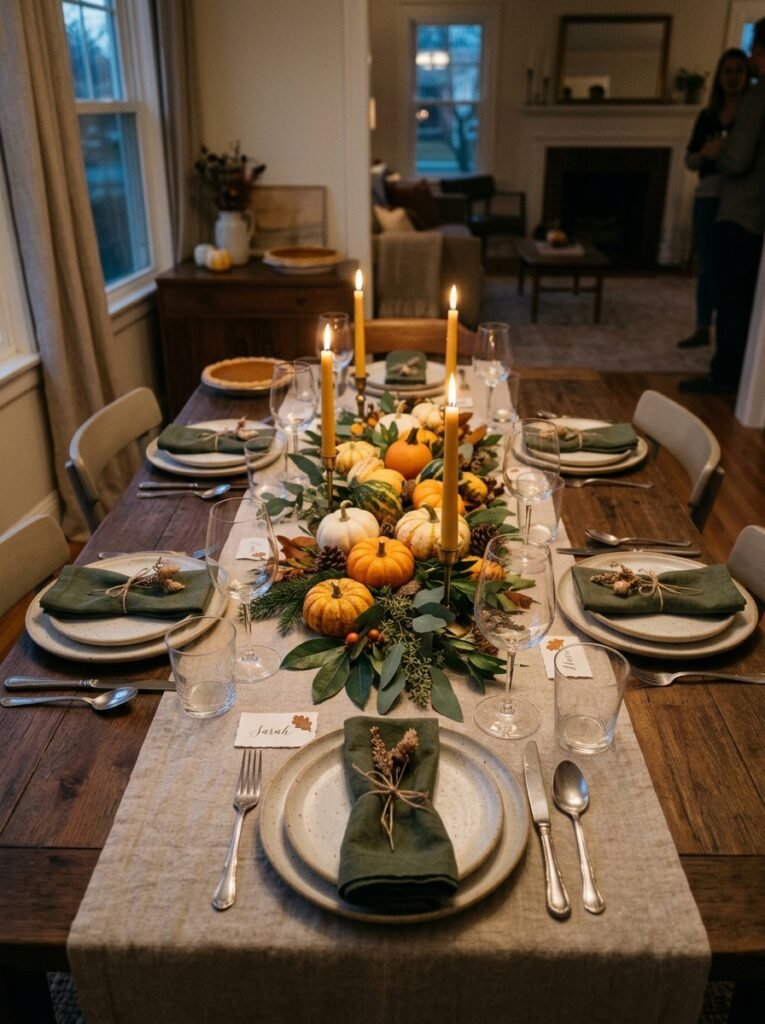
Most Thanksgiving tablescape inspiration gets photographed on a table built for twelve, with a runner long enough to trail off both ends, layered chargers, and a centerpiece tall enough to need its own chair. None of that translates well to a table that seats four to six, which is the actual size a lot of people are working with, especially in an apartment or a starter house hosting its first holiday.
A small table does not need a scaled-down version of that big-table look. It needs a different set of proportions from the start, since the usual approach of simply buying less of the same thing tends to leave a small table looking either bare or crowded, with very little room in between.
Why Big-Table Inspiration Doesn’t Scale Down Cleanly
The mismatch is not really about having fewer decorations. It is about how much of the table’s actual surface those decorations are allowed to take up before there is no room left to eat.
Table Size vs. Place Setting Space
A single place setting, plate, utensils, glass, and a little elbow room, needs roughly 24 inches of width to feel comfortable. On a table seating four to six, that leaves a fairly narrow strip down the center for anything decorative, often less than 12 inches wide once the plates are accounted for. A centerpiece or runner sized for a large table simply does not fit in that space without pushing into someone’s plate.
The Height Problem With Centerpieces
Tall centerpieces, the kind that dominate a large table’s photos, cause a bigger problem on a small one, since guests are sitting closer together and closer to the center of the table itself. A tall arrangement that would be a nice focal point from across a 10-foot table becomes a direct obstruction to conversation on a table where everyone is within a few feet of each other.
Centerpieces That Fit Without Taking Over
The goal on a small table is a centerpiece that reads as intentional without eating into the narrow strip of space actually available.
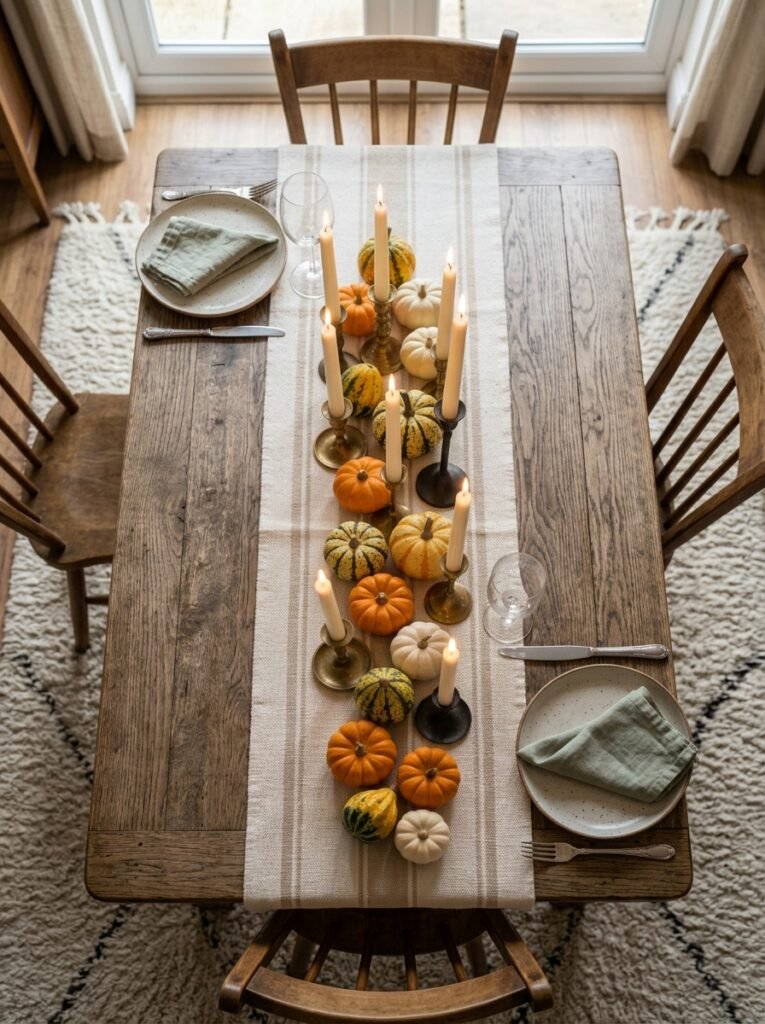
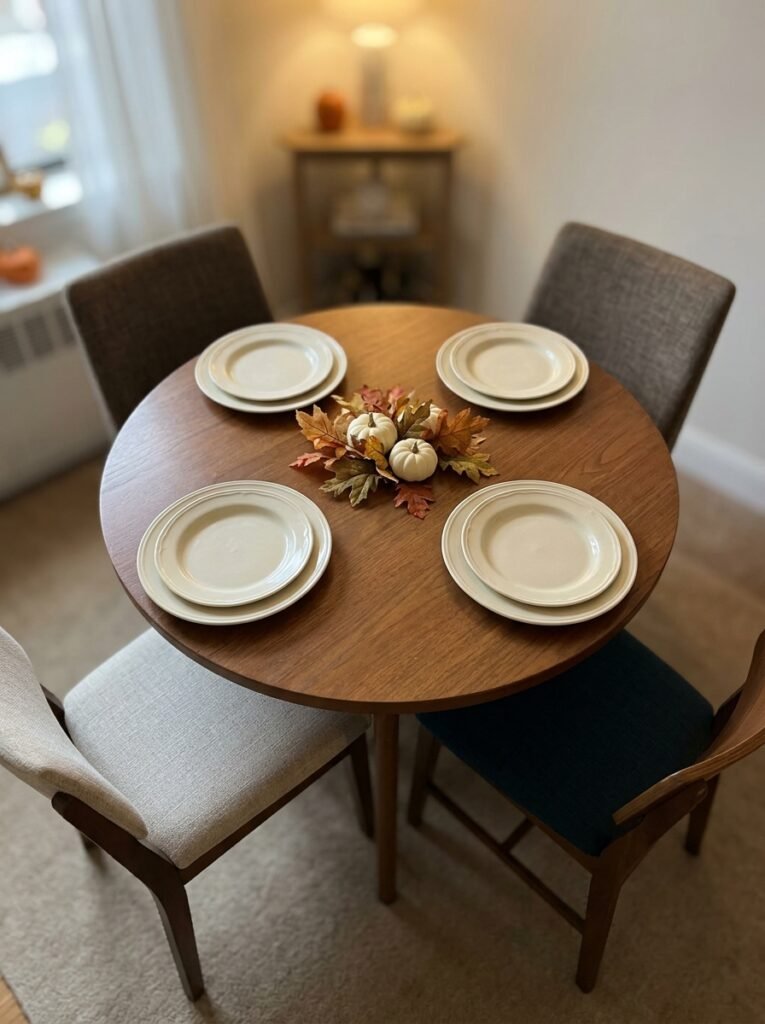
- A low, elongated arrangement rather than a single tall vase. A shallow dish or trough-style container filled with small gourds, a few sprigs of greenery, and a couple of candles spreads visual interest along the table’s length instead of stacking it upward, which keeps sightlines clear across the table.
- Two or three small clusters instead of one central piece. Grouping a few mini pumpkins with a short taper candle in two or three spots along the table, rather than one large arrangement in the middle, distributes the decoration in a way that leaves gaps for serving dishes without looking sparse.
- A single dramatic piece placed slightly off-center. For anyone who wants one clear focal point, positioning it toward one end of the table, near a sideboard or the head of the table, rather than dead center, keeps the middle of the table open for food and place settings.
Linens Sized for the Table, Not the Trend
A runner or tablecloth cut for a much longer table changes how the whole setup reads, even before any other decoration is added.
- A runner cut to the table’s actual length, not a standard pre-made size. Most runners are made for tables 6 feet or longer, and using one on a smaller table means either bunching the excess or letting it hang unevenly off the ends, both of which look unintentional. A runner trimmed to fit, or a shorter table topper style piece, reads as considered rather than improvised.
- A tablecloth with a modest drop, not a floor-length one. A floor-length cloth on a small table in a small room can visually shrink the space further, since it removes the visible table legs that would otherwise help define the table’s actual footprint.
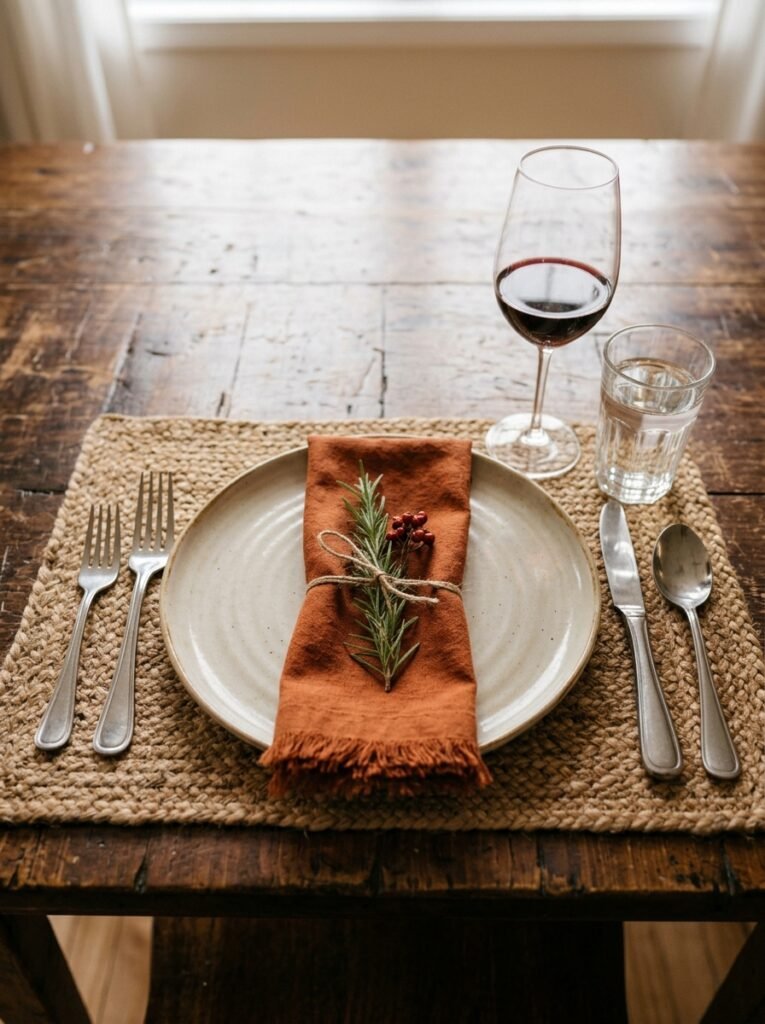
- Cloth napkins in a coordinating but not identical texture to the runner. This adds some layering without needing additional tabletop objects, which matters when there is limited flat space to add much else.
Place Settings That Look Complete Without Crowding
The place setting itself can do more visual work on a small table, since there is less room for separate decorative elements competing for the same space.
- A charger plate only if the table has room to spare. On a genuinely tight table, a charger can push a place setting past its comfortable footprint. Skipping it in favor of a textured placemat achieves a similar layered look without the added width.
- A small folded napkin with a single sprig of herb or a mini pinecone, rather than a full napkin ring plus a separate favor. Combining what would otherwise be two small decorative touches into one detail keeps each place setting from accumulating too many individual objects.
- Mismatched but coordinated flatware or glassware, gathered from what is already on hand. This adds visual interest without needing to purchase a full new set, and it tends to look more collected than a table trying to match everything exactly, which can read as trying too hard on a smaller, more intimate table.
Adding Color and Texture Without Adding Bulk
Small tables benefit from decoration that adds visual richness through height and texture rather than more physical objects taking up surface area.
- Taper candles at varying heights instead of one large candle cluster. A few slim candles, some slightly taller than others, add visual movement without the footprint of a large candle arrangement, and they read as more elegant on a smaller table than anything bulkier.
- A patterned tablecloth or runner in place of a plain one plus separate decorative objects. Pattern does some of the visual work that additional centerpiece pieces would otherwise need to do, which frees up table space for food and place settings.
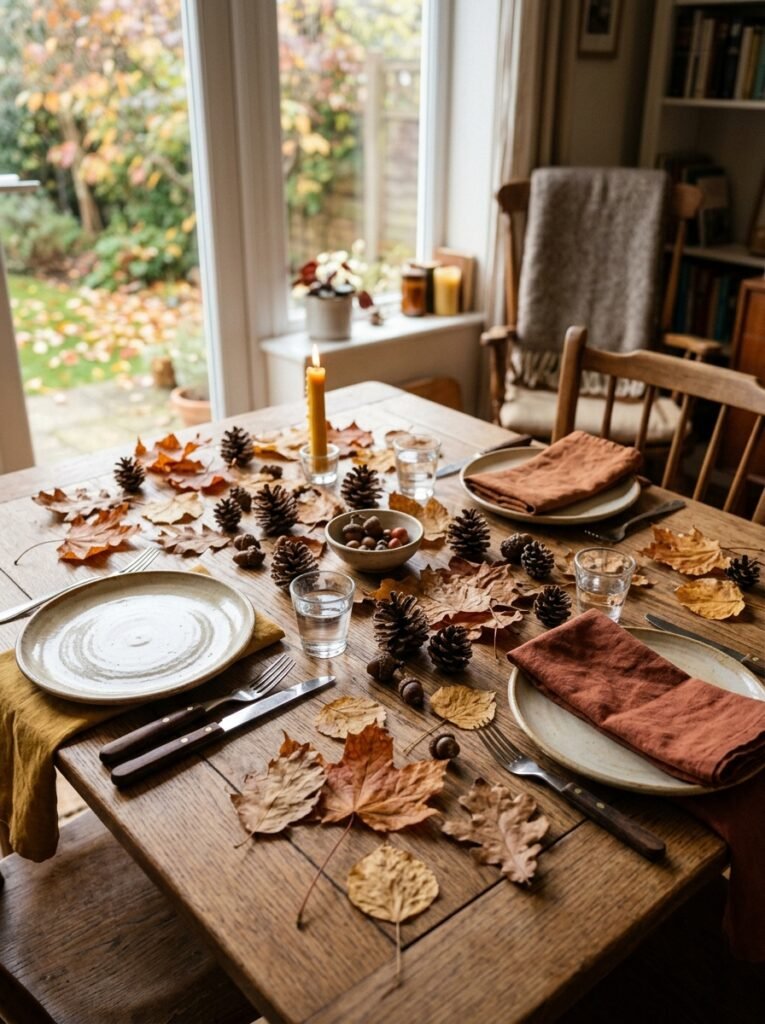
- Dried leaves or small sprigs scattered directly on the table rather than gathered into a vase. This adds a seasonal, layered look with almost no footprint, since the pieces sit flat rather than taking up vertical or clustered space.
Planning Seating and Serving Around a Small Table
A small table changes how food gets served as much as how it gets decorated, and planning for that early avoids a cramped table once the meal actually starts.
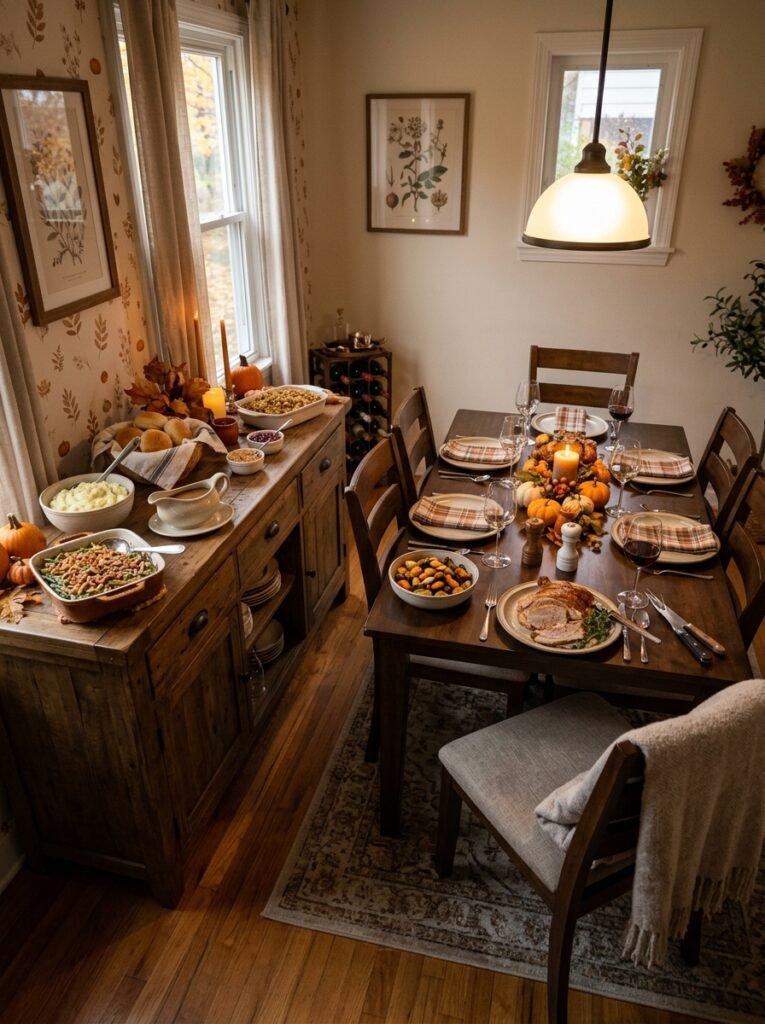
Family-style serving, with dishes passed rather than a full buffet spread across the table, tends to work better on a small table than trying to fit every side dish on the table at once alongside the centerpiece and place settings. A nearby sideboard, counter, or even a stack of trays on a nearby surface can hold serving dishes between passes, keeping the table itself reserved mostly for plates and the decorative elements already chosen.
If the table has a removable leaf or extension, adding it just for the meal and removing the extra decoration from that section once everyone is seated is a reasonable way to get slightly more serving space without fully committing to a larger table footprint for the whole event.
The site’s guide to cozy, budget-friendly bedroom styling covers a similar principle applied to a different room, layering smaller, less expensive touches rather than a few large pieces, which carries over directly to styling a small dining table without needing an oversized centerpiece to make an impression.
Lighting That Makes a Small Table Feel Considered
Lighting has an outsized effect on how a small tablescape reads, since it can make the same modest setup feel either intentional or simply sparse.
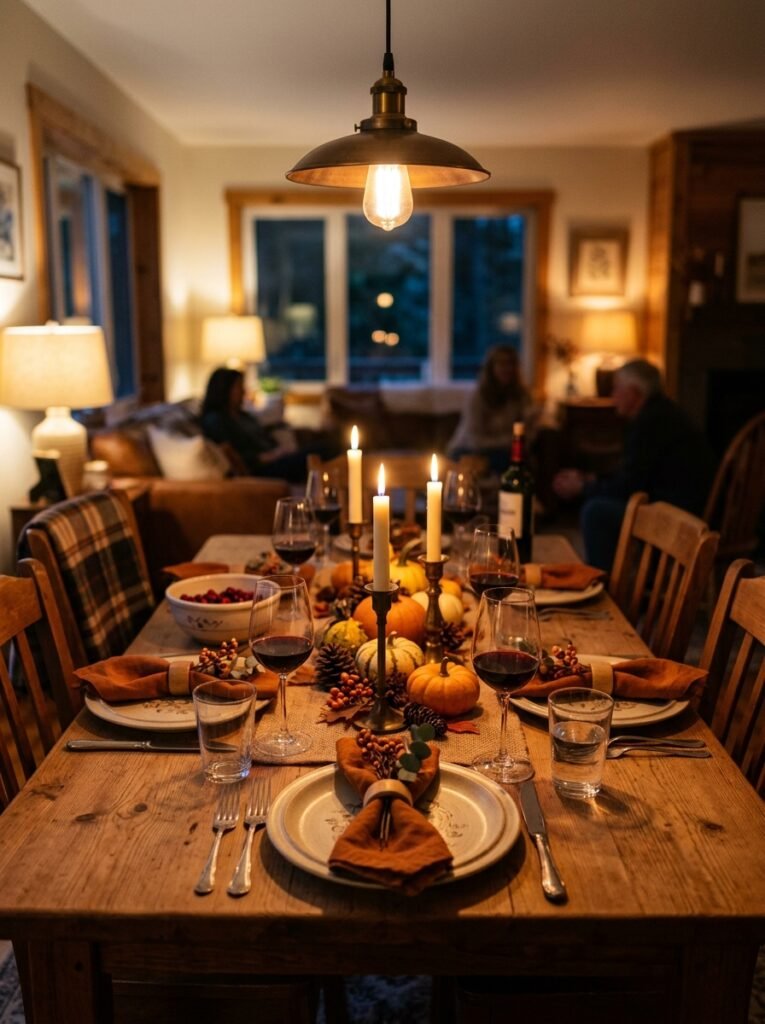
- Warm, dim overhead lighting paired with candlelight, rather than bright overhead light alone. Bright, even lighting tends to flatten a small tablescape and make its modest scale more obvious, while warmer, lower lighting with some candlelight adds dimension that a compact table setup benefits from.
- A single pendant or chandelier centered over the table, rather than multiple light sources competing. One clear light source overhead helps anchor a small table visually, especially in a room where the table itself is close to other furniture.
- Candles kept at a height that does not block sightlines across the table. This matters more on a small table than a large one, since guests are seated closer together and a candle at eye level becomes a bigger obstruction than it would be across a longer table.
Mistakes That Make a Small Tablescape Feel Cramped
A handful of choices tend to work against a small table more than people expect going in.
- Buying a standard-length runner and letting it overhang. This is one of the more common ways a small table ends up looking unfinished rather than intentionally styled.
- Stacking a charger, patterned placemat, and a decorative napkin ring at every seat. Each element alone is reasonable, but layering all of them onto a tight place setting eats into the space guests need for their actual meal.
- Choosing a centerpiece sized for a photo rather than the table. A centerpiece that looks proportionate in a wide shot of a styled table can look oversized once real plates, glasses, and serving dishes are added around it.
- Skipping a plan for serving dishes. Without a nearby surface for extra food, side dishes end up competing directly with the tablescape for the same limited space, and the decoration is usually what gets pushed aside first.
Choosing a Palette That Suits a Compact Setup
Color choice matters more on a small table than a large one, since there is less surface area for a busy palette to spread across before it starts to feel chaotic.
- A limited palette of two or three tones, rather than a full autumn spread. Sticking to something like rust, cream, and a deep green, instead of pulling in every classic fall color at once, keeps a small table looking curated rather than cluttered, since each additional color needs its own visual space to register properly.
- One deeper, saturated tone used sparingly against mostly neutral pieces. A single deep burgundy or forest green element, a runner or a cluster of candles, stands out more clearly on a small table than it would if surrounded by several other equally bold colors competing for attention.
- Metallics used as accents, not a dominant finish. A few small gold or copper details, a candle holder, flatware trim, work well in small doses, but a table covered in metallic pieces can start to feel overdone once everything else, food included, is added to the surface.
- Natural, muted tones for anyone unsure where to start. Cream, sage, and warm wood tones give a small table a settled, cohesive look without requiring much color-matching effort, and they tend to photograph well regardless of the room’s existing wall color or lighting.
A smaller table rewards restraint in the palette the same way it rewards restraint in the physical footprint of the decorations themselves. Fewer colors, chosen deliberately, tend to read as more finished than a wide seasonal color spread squeezed into a compact space.
Common Questions About Styling a Small Thanksgiving Table
Is a runner or a full tablecloth better for a small table? A runner generally works better, since it defines the center of the table without covering the whole surface, which can make an already small table feel visually smaller. A tablecloth is still a reasonable choice if paired with a modest drop rather than a floor-length one.
How many centerpiece elements are too many for a small table? As a general guide, two to three grouped elements, a candle, some greenery, a few small gourds, tend to read as complete without crowding a table for four to six. Beyond that, the centerpiece usually starts competing with the place settings for space.
Should chargers be skipped entirely on a small table? Not necessarily, but they are usually the first element worth cutting if the table feels tight once everything else is set. A textured placemat can offer some of the same layered look with a smaller footprint.
What is the easiest way to add a seasonal feel without buying a lot of new decor? Scattered dried leaves, a few taper candles already on hand, and a couple of small gourds go a long way on a small table, since the goal is texture and warmth rather than volume. The site’s Thanksgiving nail ideas roundup covers a similar approach applied to a completely different part of the holiday, choosing a few considered seasonal touches rather than leaning on the most obvious color or object by default.
Does a small table need a different centerpiece for lunch versus an evening meal? Somewhat. A daytime Thanksgiving meal relies more on natural light, so a centerpiece can lean on texture and color rather than height, while an evening meal benefits from more candlelight, which also tends to suit a low, elongated centerpiece better than a tall one blocking the light source.
A small dining table can hold a genuinely full Thanksgiving tablescape. It just asks for decoration chosen at the table’s actual scale, low and elongated rather than tall and centered, layered through texture rather than stacked objects, with serving space planned for separately rather than squeezed in around the centerpiece at the last minute.