

Low-Maintenance Fall Hairstyles for Thick Hair
Most fall hairstyle roundups get shot on hair that is somewhere between fine and medium, the kind that takes a curling wand well and falls back into place with a shake. Thick hair does not behave that way. It holds more weight, takes longer to dry, and shrugs off a lot of the five-minute tricks written for a different texture entirely.
That gap between the advice and the actual hair is where most of the frustration starts each September. What follows is built around density first, not length or color, with cuts, styles, and a few small habits that hold up once the weather turns and the mornings get shorter.

Why Fall Weather Hits Thick Hair Differently
Summer humidity and thick hair have an odd truce. The extra moisture in the air weighs strands down just enough to keep frizz somewhat in check, even if it also adds bulk. Once the air dries out in fall, that truce ends, and the same density that felt manageable in July can suddenly look wide and full of static by October.

Indoor Heat Changes the Moisture Balance
Furnaces and radiators pull humidity out of a room fast, and hair notices before skin does. Thick hair has more surface area holding onto whatever moisture is left, so it dries out unevenly. The result is often frizz at the crown with strands that still feel slightly damp lower down, which is a different problem than the flat, oily roots that thinner hair deals with in the same conditions.
A humidifier in the bedroom helps more than most people expect, and it costs nothing to try before spending money on new products.
Layered Clothing Adds Friction Thick Hair Does Not Need
Scarves, wool coats, and turtlenecks rub against hair all day in a way that summer clothing does not. That friction lifts the outer layer of the hair shaft, called the cuticle, and a raised cuticle is what makes hair look dull and feel rough by the end of the day. Thick hair has more strands catching on more fabric, so the effect compounds.
None of this means thick hair needs more products. It usually needs fewer, better-placed ones, along with a cut that gives the density somewhere to go.
Curly and Wavy Thick Hair Deals With an Extra Variable
Thick hair that also curls or waves has shrinkage layered on top of everything else fall weather brings. A style cut and set to a certain length in summer humidity can sit noticeably shorter once the indoor air dries out, since less moisture in the strand means less stretch in the curl pattern.
Checking length on a dry day rather than right out of the shower gives a more accurate read before committing to a cut. It also means styling products built for definition, rather than pure smoothing, tend to matter more for this combination than for straight thick hair, since the goal is holding the curl’s shape rather than flattening it.
A Cut That Removes Some of the Daily Work
The single biggest factor in how much time thick hair takes each morning is not the styling routine. It is whether the cut is already doing some of that work before a brush ever touches it.
Long Layers That Thin Without Shortening
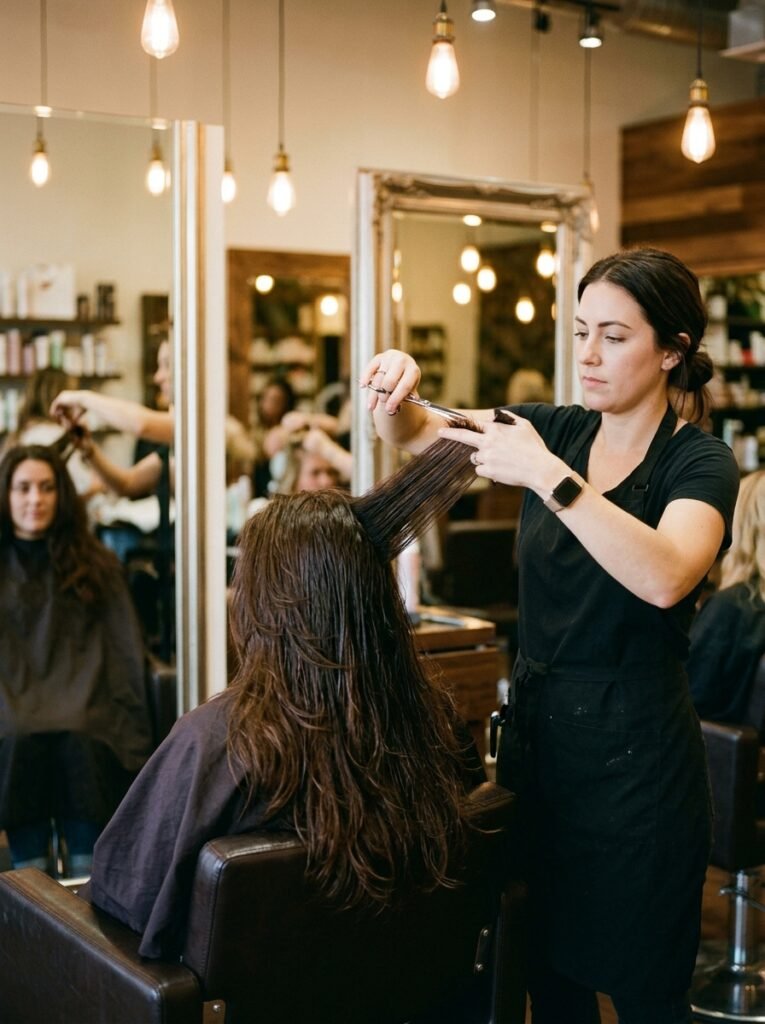
A layered cut removes bulk from the middle of the hair without taking length off the ends, which matters for anyone who wants to keep their hair long through fall but is tired of the weight. Layers cut vertically, section by section, rather than in one blunt horizontal line tend to blend better on very thick hair and avoid the triangular shape that heavy layering can leave behind.
Ask specifically for internal layers, cut underneath the top section so the surface stays smooth. That phrase tells a stylist you want the thinning effect without visible steps on top.
A Shoulder-Length Shape With Built-In Movement
Shoulder-length cuts split the density in a way that neither short nor very long hair manages as well. There is enough length for the hair to have weight and fall naturally, but not so much that the ends drag the whole style flat by afternoon. A slight A-line, longer in front and shorter in back, keeps the shape from reading as one solid block.
This length also air-dries faster than long hair does, which matters more in fall once quick showers before work start replacing long ones.
Where a Fringe Fits, and Where It Does Not
A full, blunt fringe on thick hair needs daily maintenance to avoid looking heavy, since dense hair pushes a straight-across fringe forward and out rather than letting it sit flat. A side-swept or curtain fringe, cut longer and with softer ends, handles the density better and needs less daily shaping to stay in place. The site’s guide on curtain bangs and how thick hair changes the cut goes into more detail on the length adjustments that make a fringe work on denser hair.
Styles for Wash Day and Styles for the Days After
Thick hair behaves differently depending on how many days out from a wash it is, more so than most textures. Grouping styles by that instead of by how long they take tends to match reality better.
On Wash Day, When Hair Is Slippery and Full
- A low, wrapped ponytail. Freshly washed thick hair has the most volume and the least grip, so a low pony anchored with a strong elastic, then wrapped with a small section to hide the elastic, holds better than anything higher or tighter.
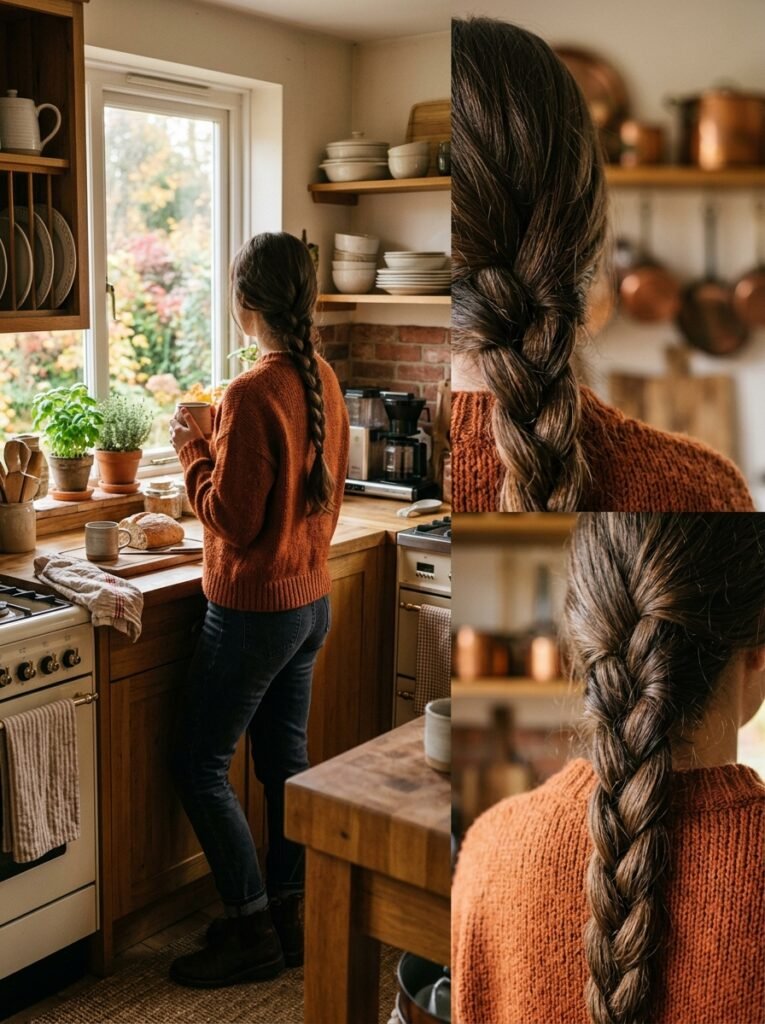
- A loose braid down the back. One three-strand braid, tied off but not pulled tight, keeps clean hair contained without fighting its natural slip.
- Air-dried waves with a light cream. Thick hair often holds a wave well on its own once damp product is worked through and left alone, no heat needed.
On Day Two or Three, Once Texture Has Built Up
- A high, twisted bun. Texture from a day or two of wear gives a bun something to grip, which clean hair does not offer as easily.
- Two French braids instead of one thick one. Splitting dense hair into two sections before braiding is faster than fighting a single braid that keeps slipping out of its shape, and it holds longer through a full day. The site’s roundup of quick styles built specifically for thick or very long hair covers this same splitting trick in more detail.
- A half-up style with a claw clip. The grip from day-old texture means the clip does not need to fight slippery strands, so it stays put through a full afternoon.
The Product Layer Thick Hair Actually Needs in Fall
Thick hair rarely benefits from adding more product in colder months. It usually benefits from swapping what is already in rotation for something lighter, applied more precisely.
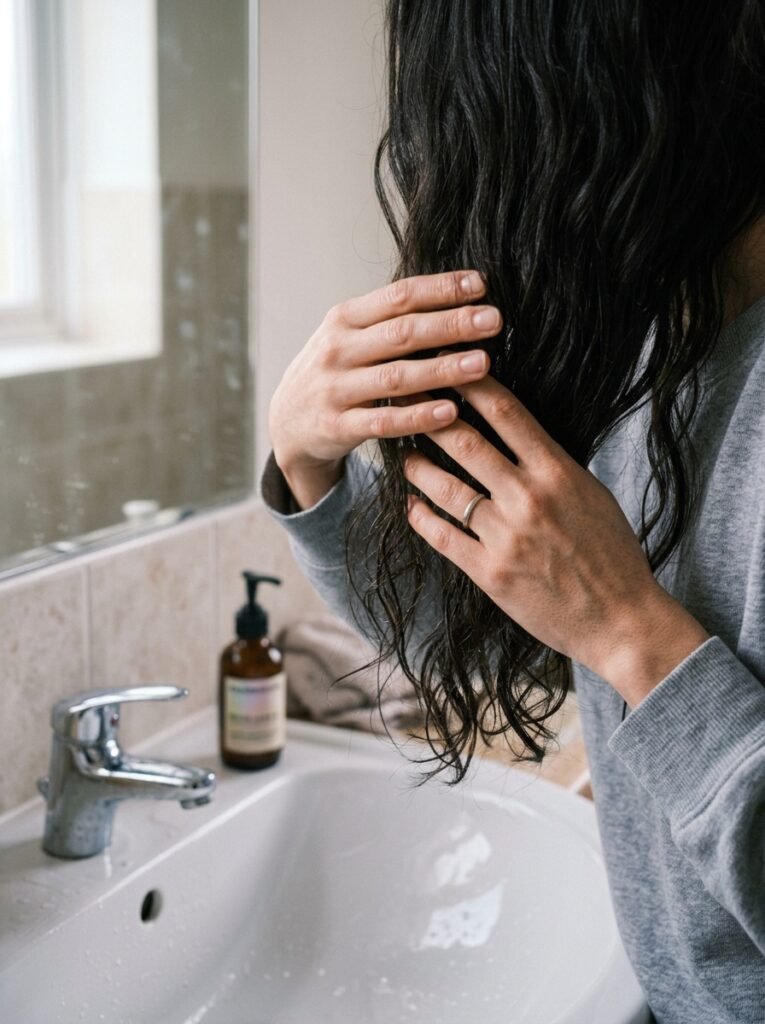
- A leave-in over a heavy cream. Rich creams meant for curl definition can sit on top of thick strands instead of absorbing, which adds weight without solving frizz. A lighter leave-in spray, focused on the mid-lengths and ends, tends to do more with less.
- Dry shampoo applied to sections, not sprayed generally. Thick hair hides oil differently at the roots than thinner hair does, and a general spray over the whole head often misses the spots that actually need it. Parting hair into two or three sections and spraying directly at the scalp works better.
- An anti-static spray or a small amount of oil on a boar-bristle brush. Static shows up more on thick hair once wool and synthetic fabrics enter the picture, and running a brush lightly coated in oil through dry ends before putting on a coat cuts down on flyaways without weighing the roots down.
- Heat protectant, used even on air-dried days that turn into a quick blowout. Skipping it on days that seemed casual is a common way damage builds up without anyone noticing until spring. The American Academy of Dermatology’s guidance on styling hair without causing damage covers heat and product habits worth knowing before assuming a routine is safe just because it looks gentle.
- A shampoo swap based on scalp behavior, not the calendar. Thick hair can go from needing washes every other day in summer to stretching three or four days once sweat and humidity drop off. Watching the scalp rather than following a fixed schedule usually settles the new rhythm faster than guessing.
Keeping Volume Once Scarves and Hats Get Involved
Fall styling has an extra variable that summer does not: hats, hoods, and scarves that sit directly against the hair for hours at a time. Thick hair handles that pressure differently than thinner hair does, and it is worth planning around rather than discovering the hard way.
A hat worn over freshly styled hair tends to flatten the crown and push volume out at the sides once removed, which reads as wider rather than flatter on thick hair. Styling with slightly less root volume than usual on hat days, and adding it back after the hat comes off with fingers rather than a full restyle, avoids that particular shape.
Scarves and turtlenecks create the most static, especially with wool or synthetic blends. Tucking hair into a low bun or braid before putting on a scarf, rather than leaving it loose against the fabric, keeps the friction contained to one section instead of spread across the whole head. For anyone checking what a specific fabric is made of before it causes a static problem, the FDA’s overview of cosmetic and textile ingredient labeling is a reasonable starting point, though it covers products more than clothing.

Mistakes That Add Time Back to a Thick-Hair Routine
A handful of habits quietly undo the low-maintenance goal, even when the cut and the styles are right.
- Brushing dry hair from the roots down. This pulls tangles tighter instead of releasing them. Starting at the ends and working upward takes the same amount of time and causes far less breakage.
- Skipping layers to “save length.” A cut with no internal layering looks fuller in the salon mirror but takes longer to dry and style every single day after that. The trade-off rarely favors the extra bulk once real mornings are involved.
- Using a wide-tooth comb only on wet hair. Thick hair often needs detangling dry too, particularly at the nape, and a wide-tooth comb used only in the shower leaves that section to sort itself out later.
- One giant elastic instead of two smaller ones. A single elastic under real density stretches out fast and slips by midday. Two thinner elastics, one on top of the other, hold longer and are gentler on the hair than one thick, overworked one.
- Ignoring the scalp because the ends look fine. Thick hair can mask an oily or flaky scalp longer than thin hair does, simply because there is more hair covering it, which sometimes delays noticing a problem that a lighter texture would have flagged weeks earlier.
Quick Questions
Does thick hair actually take longer to dry in fall, or does it just feel that way? It genuinely takes longer, since indoor heating dries the surrounding air faster than it dries a full head of dense hair. Squeezing out excess water with a microfiber towel before any styling starts cuts drying time noticeably.
Is a blowout worth the effort for thick hair in cooler months? For special occasions, yes. As a daily routine, it usually is not, since thick hair reverts fastest in dry, staticky indoor air. A rough dry followed by air-drying the last twenty percent tends to be the better daily trade-off.
What is the fastest style for thick hair with almost no time in the morning? A low, wrapped ponytail with two elastics. It takes under a minute, holds through a full day, and works on both freshly washed and second-day hair without adjustment.
Do thick-hair cuts need more frequent trims than other textures? Not necessarily more frequent, but the layering tends to grow out more noticeably, since thick hair shows a change in shape faster than it shows split ends. A trim every eight to ten weeks usually keeps a layered cut behaving the way it did on day one.
Is it normal for thick hair to feel heavier in fall than in summer? Yes, and it usually comes down to moisture rather than actual growth. Less humidity in the air means less natural lift at the roots, so the same hair can feel denser and sit lower on the head, even though nothing about the hair itself has changed.
The routines that hold up through a whole fall season tend to have less to do with finding a new product and more to do with a cut that already accounts for the density, plus a handful of styles matched to how many days it has been since a wash. More cuts and styling guides sorted by hair type are collected in the site’s hairstyle section.