Kitchen Counter Organization Ideas for Renters
The kitchen counter becomes the default landing spot for almost everything in a home, not because it is the best place for mail, keys, spare change, and half-finished projects, but because it is the flattest surface within reach of the front door. That habit compounds fast in a rental kitchen, where there is usually less counter to begin with and no option to add a cabinet or an island to absorb the overflow.
Fixing that does not start with buying organizers. It starts with deciding what actually belongs on the counter in the first place, then arranging the rest around how the kitchen gets used, without drilling, cutting, or anything else a lease would frown on.
Decide What Actually Earns Counter Space
Most kitchen counters are not overcrowded because there is too little space. They are overcrowded because everything that has ever landed there gets treated as a permanent resident.
A useful filter is frequency. Anything touched daily, a coffee maker, a knife block, dish soap, has a reasonable claim to counter space. Anything touched weekly or less, the stand mixer used twice a month, the blender from a smoothie phase that ended in March, belongs in a cabinet instead, even if that means a slightly longer walk to get it out when it is actually needed.
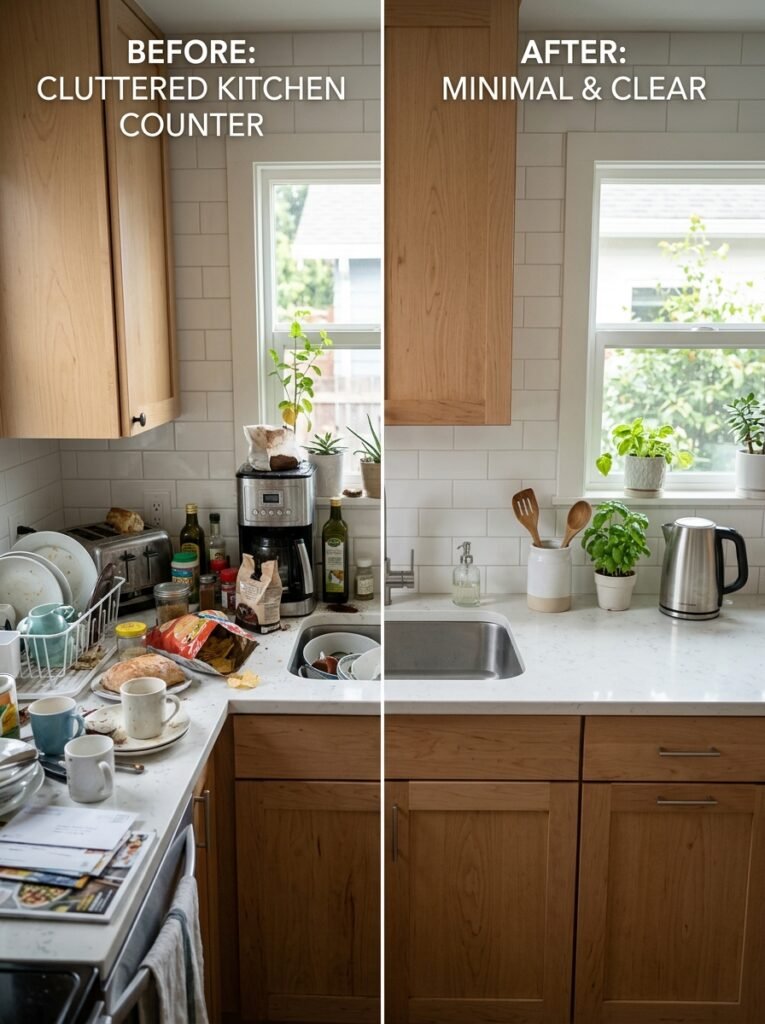
Running this filter honestly usually clears twenty to thirty percent of a counter without buying a single organizer. That space is what makes the next steps possible, since no amount of clever bins fixes a counter that simply has too many objects competing for the same few feet.
Zone the Counter Before Organizing It
Once the excess is gone, what remains works better grouped by task than scattered by habit. A counter organized into a few clear zones reads as intentional even without matching containers or a full makeover.
The Prep Zone
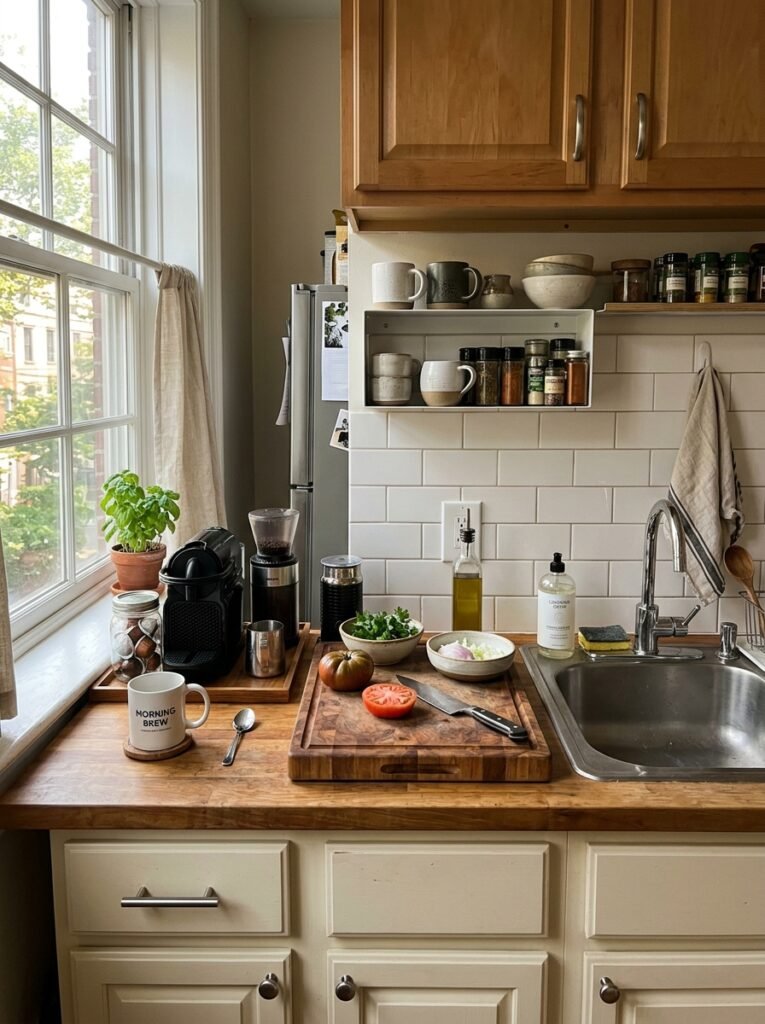
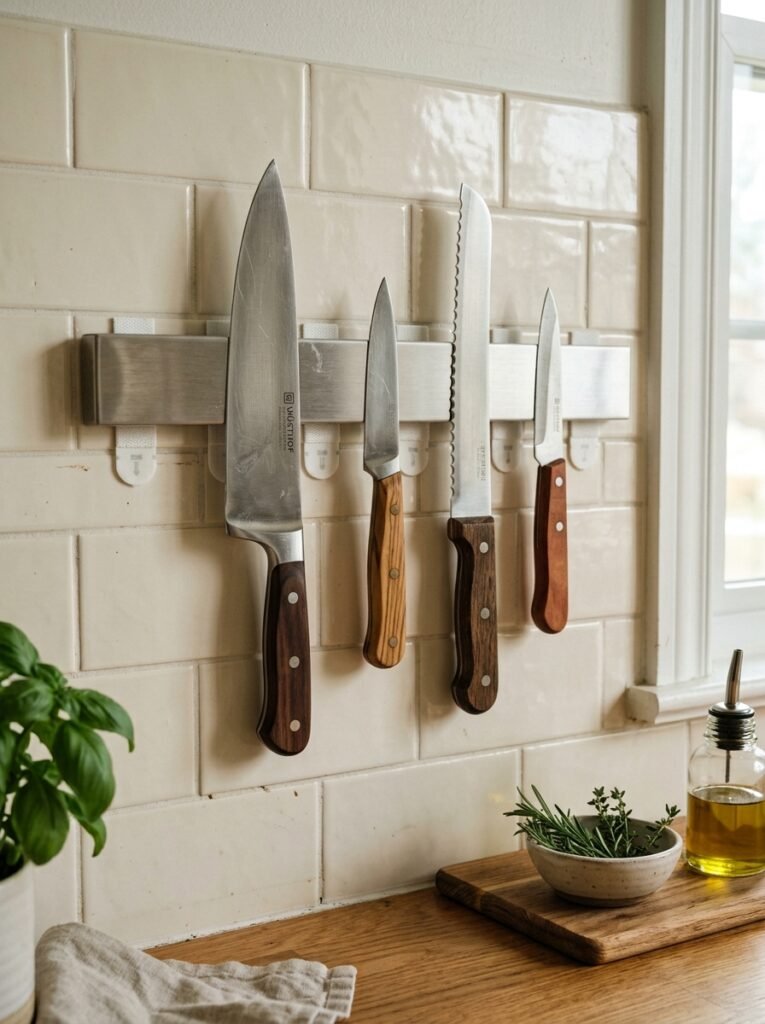
The stretch of counter nearest the stove or sink usually gets the most daily use, so it deserves the least clutter. A cutting board that lives upright in a slim holder, rather than flat and buried under other items, and a knife block or magnetic strip within reach cover most of what prep actually requires.
Keeping this zone as close to empty as possible, rather than as organized as possible, is the real goal. An empty prep surface is more valuable here than a beautifully arranged one that still eats into usable space.
The Coffee and Beverage Zone
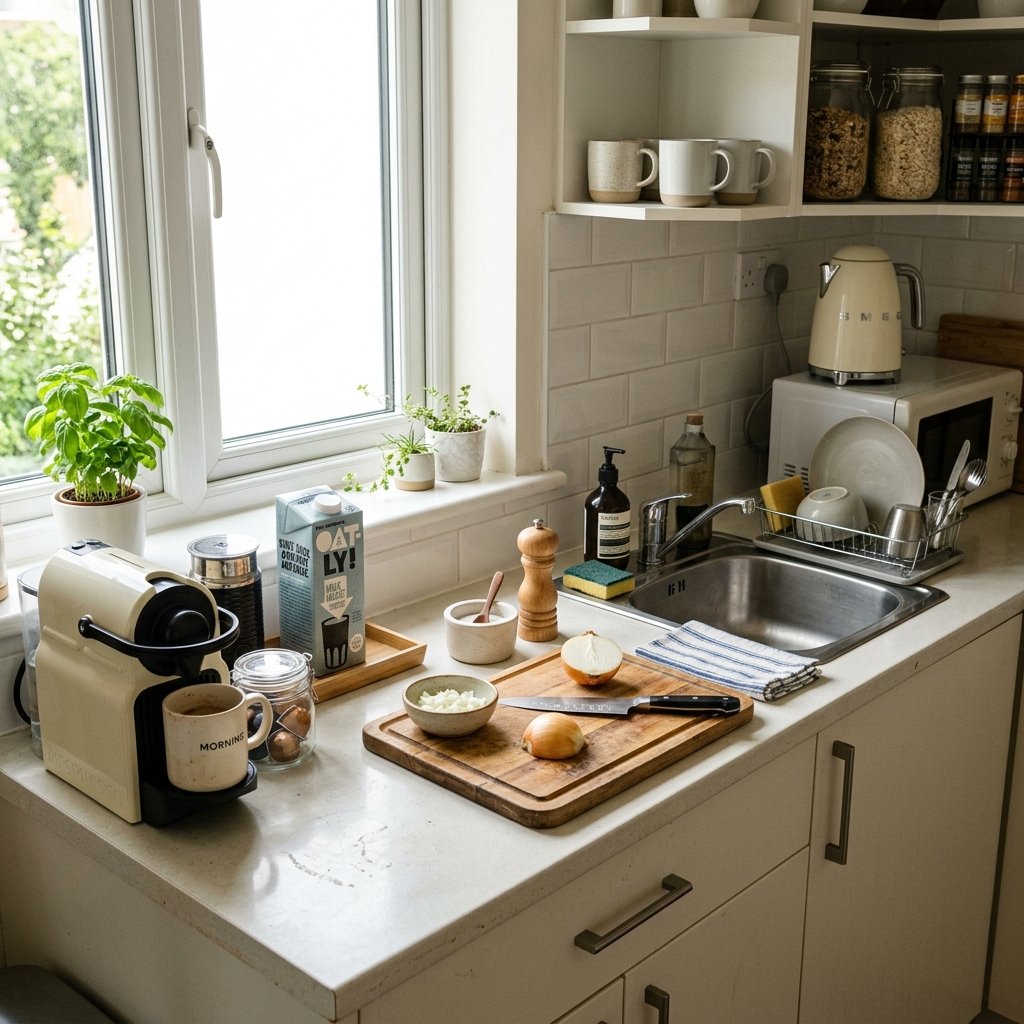
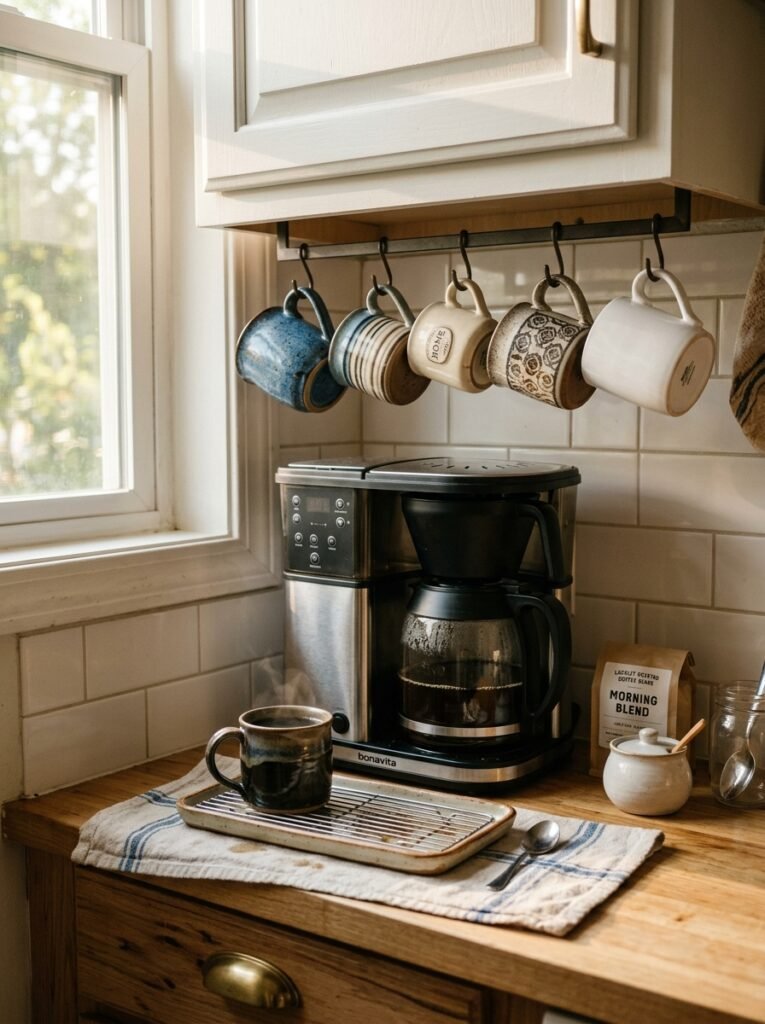
Grouping a coffee maker, mugs, and related supplies into one corner keeps that entire routine out of the rest of the kitchen. A small tray underneath the setup catches spills and drips, which protects both the counter finish and the security deposit at move-out.
Vertical mug storage, using a small hanging rack mounted under a cabinet rather than resting mugs directly on the counter, reclaims a surprising amount of space in a corner that otherwise fills up fast with cups nobody quite gets around to putting away.
A Landing Zone for Mail, Keys, and Tech
Every kitchen counter eventually becomes the drop point for mail, keys, and a phone charger, whether that is planned or not. Giving that habit one small, contained spot, a shallow tray or a wall-mounted pocket organizer, keeps it from spreading across the entire surface.
This zone works best kept small on purpose. A tray sized for a stack of mail and a set of keys, rather than a larger catchall bin, forces a weekly sort instead of letting the pile grow indefinitely.
The Cleanup Zone
The area around the sink handles dish soap, a sponge, and often a drying rack, and it tends to look cluttered faster than any other zone simply because it stays wet. A small caddy that holds the soap bottle and sponge together, rather than letting them sit loose against the backsplash, keeps water rings contained to one spot instead of spreading across the counter.
A slim, foldable drying rack takes up less permanent space than a rigid one and can fold flat against a cabinet or under the sink between uses, which matters more in a rental kitchen with less counter to spare in the first place.
Vertical Solutions That Skip the Drill
Once the counter itself is organized into zones, the walls and the space under cabinets do the rest of the work, without needing anything permanent.
Under-Cabinet Risers and Shelves
A slim riser or shelf that mounts to the underside of an existing cabinet using screws into the cabinet itself, rather than the wall, adds a full extra layer of storage without touching the rental’s actual structure. This works well for spices, a paper towel roll, or a stack of small bowls that would otherwise sit directly on the counter below.
Tension-mounted versions, which wedge against the underside of the cabinet using spring pressure, skip even the cabinet screws and come down in seconds if a lease requires everything restored to its original state.
Magnetic Strips and Rails
A magnetic knife strip mounted with removable adhesive strips, rather than screws, keeps knives off the counter entirely and off the inside of a drawer, where they dull faster against other utensils. The same strips work for metal spice tins, which several brands sell specifically for this kind of magnetic storage.
Adhesive-mounted rails with S-hooks do something similar for utensils, mugs, and pot lids, all of which otherwise pile up in a drawer or take up a chunk of counter next to the stove.
Appliance Garages Made from Freestanding Pieces
A traditional appliance garage is built into the cabinetry during a renovation, which is not an option here, but a similar effect comes from a freestanding cabinet, cart, or a simple curtain strung on a tension rod across an open shelf. Either hides a toaster or coffee grinder from view without needing it plugged in and visible all day.
For anyone dealing with a particularly tight kitchen footprint, the same principles covered in the site’s guide to laying out furniture in small apartment rooms apply just as directly to a kitchen corner as they do to a living room.
Small Appliances Take More Space Than They Need To
Countertop appliances are frequently the single biggest space drain in a rental kitchen, and rotating them based on actual use recovers more room than almost any organizing product.
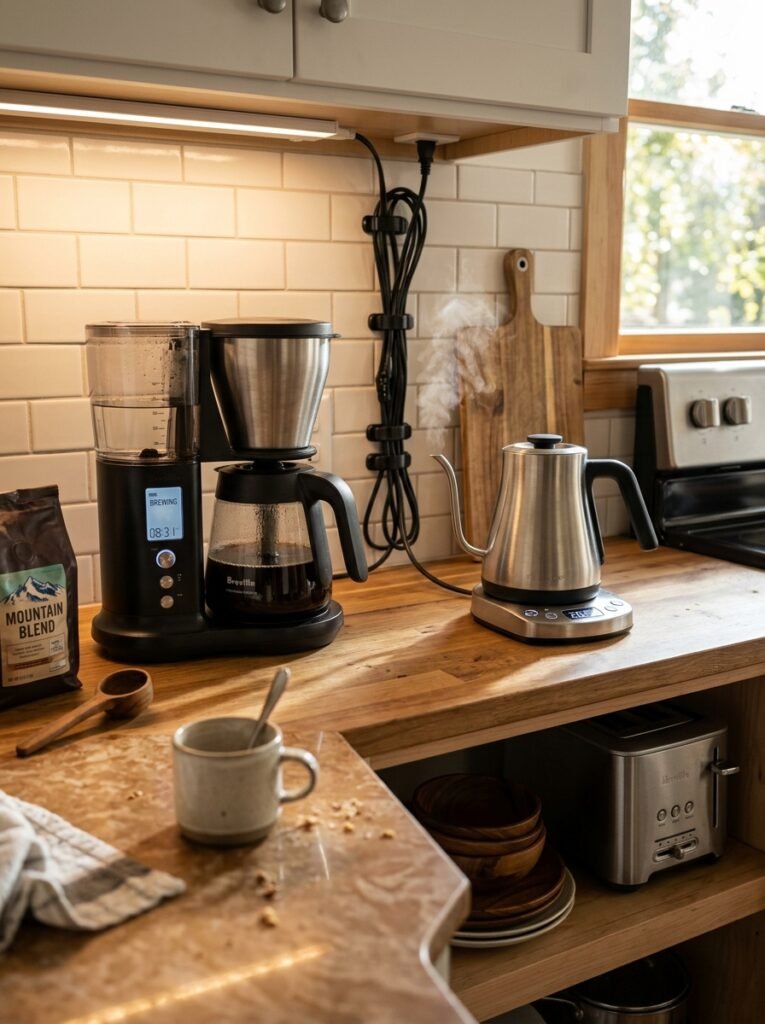
An appliance used daily, a coffee maker or an electric kettle, earns a permanent spot. An appliance used weekly, a toaster or a rice cooker, can live in a low cabinet and come out as needed without much added friction. An appliance used monthly or less, a waffle iron, an ice cream maker, a second blender inherited from a move-in, belongs in the back of a cabinet or a closet, not on the counter absorbing daily visual and physical space.
Cord management matters here too. A tangle of cords behind small appliances makes a counter look cluttered even when the appliances themselves are put away correctly, and a simple cord clip or a small basket dedicated to cords keeps that mess contained. Since kitchens combine water, cords, and countertop outlets more than almost any other room, the Electrical Safety Foundation International’s guidance on kitchen appliance and cord safety is worth a quick read before finalizing where anything gets plugged in.
Renter-Specific Constraints Worth Planning Around
A few limits show up specifically in a rental kitchen that would not matter as much in a home the tenant owns outright.
Outlet count is usually fixed and often lower than a kitchen this size would ideally have, which means every appliance competing for the same one or two outlets needs a plan rather than a permanent extension cord running across the counter. A short, rated power strip tucked behind appliances is a better long-term fix than a cord stretched across an open stretch of counter.
Counter material is not always known to the tenant, and adhesive products that are safe on laminate can sometimes discolor natural stone or a specific coated finish. Testing any adhesive-backed organizer on a small, hidden section first, rather than the visible front edge, avoids a surprise at move-out inspection.
Perishable food left out on the counter is a separate but related issue, since counter organization often means deciding what food storage stays visible versus goes into a cabinet or the refrigerator. The general rule from FoodSafety.gov’s guidance on safe food handling is that perishable items should not sit at room temperature for more than two hours, which is worth factoring into any decorative fruit bowl or open bread box left permanently on display.
Older buildings and galley-style rentals sometimes offer less counter length than a newer apartment of the same square footage, since kitchen layouts from decades past were not designed around the number of small appliances a modern household tends to own. In that situation, the frequency filter from earlier matters even more, since there may simply not be room for a coffee station, a full prep zone, and a landing zone all at once without some overlap between them.
Making a Small Counter Look Bigger Than It Is
Beyond what physically sits on the counter, a few visual choices change how much space it appears to have, which matters as much as actual square footage in a small rental kitchen.
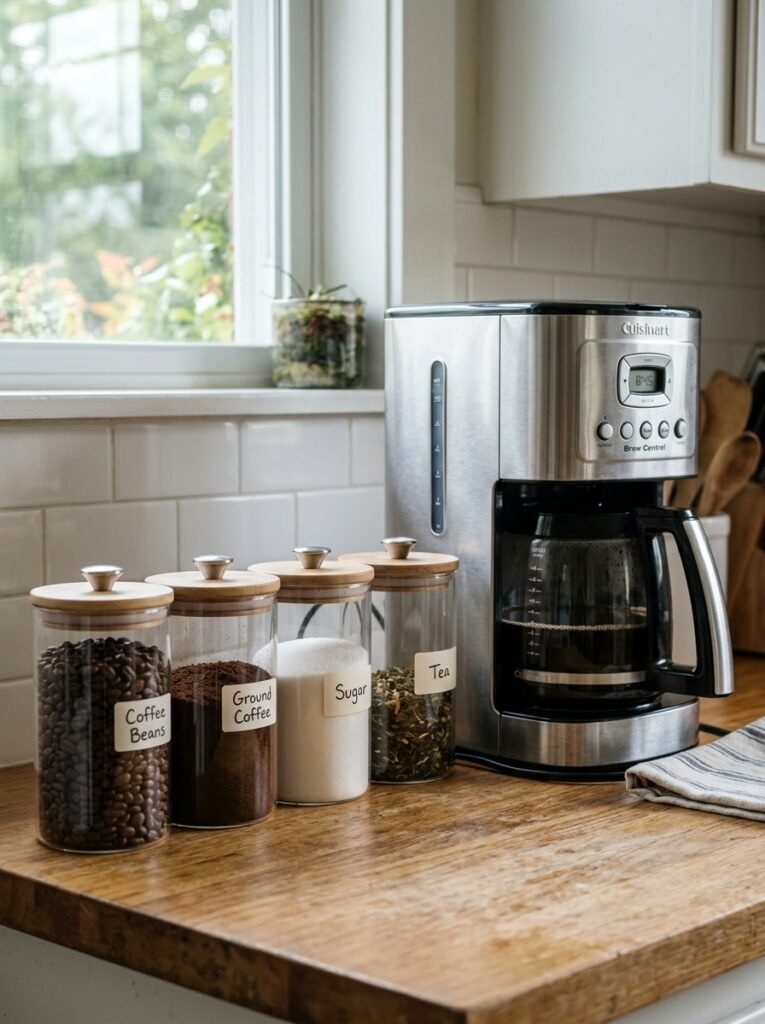
Matching containers, even inexpensive ones, read as more spacious than a mismatched collection of whatever jars happened to be on hand. A single canister style for flour, sugar, and coffee does more for the sense of order than the material or price of the canisters themselves.
Light-colored or clear organizers tend to make a counter feel less crowded than dark, opaque ones, since they visually blend into the surface rather than stacking as separate blocks of color. This matters most in kitchens with limited natural light, where every visual break adds to a sense of clutter even when the actual item count is low.
Keeping small appliances in a single finish, all stainless or all matte black rather than a mix collected over several years, has a similar effect. It costs nothing to plan for going forward, even if it means a slow appliance swap rather than an immediate fix.
Mistakes That Undo a Clear Counter
A handful of habits bring clutter back even after a counter has been properly zoned and organized.
- Buying organizers before clearing anything out. A new set of bins on top of an already overcrowded counter just organizes the clutter instead of removing it.
- Treating the counter as the default home for anything without an assigned spot. Every item that lands there because there was nowhere else to put it becomes a permanent resident within a week.
- Skipping the cabinet in favor of counter convenience. An appliance used once a month does not need to live somewhere it takes up daily visual space, even if putting it away feels like a minor extra step.
- Ignoring cord clutter behind appliances. A tidy countertop above a tangle of cords still reads as messy, and it is one of the easiest fixes on this entire list.
- Choosing containers that do not match in height. Mismatched jars and bins waste vertical space the same way mismatched furniture wastes floor space, even in a small zone like a coffee station.
- Letting the cleanup zone stay wet and loose. A soap bottle and sponge sitting directly on the counter, rather than contained in a small caddy, spreads water rings and grime across a wider area than the items themselves actually occupy.
Quick Questions
What is the fastest way to reclaim counter space in a rental kitchen without spending money? Running the frequency filter first, moving anything used less than weekly into a cabinet, clears meaningful space before a single product gets purchased. Most kitchens have more available cabinet space than counter space, it just is not being used efficiently yet.
Are adhesive strips safe on all countertop materials? Not universally. Laminate and sealed wood generally tolerate removable adhesive well, but some natural stone finishes and certain coated surfaces can discolor or show a residue mark. Testing on a small hidden section first avoids guessing on the visible parts of the counter.
Should renters avoid magnetic knife strips because of wall damage concerns? Not necessarily, since most are designed to mount with removable adhesive strips rather than screws, which come down cleanly at move-out. Checking the specific product’s mounting method before buying is worth the extra minute, since some versions are sold with drill-in hardware as the default option.
How much counter space should realistically stay empty? There is no universal number, but many organizers aim for roughly a third of visible counter space with nothing on it at all. That empty stretch is what makes a kitchen feel functional rather than simply tidy, since it gives food prep somewhere to actually happen.
Does a galley kitchen with very little counter need a different approach entirely? The same zoning and frequency principles apply, just with tighter trade-offs. A galley kitchen often means picking two zones instead of three, usually prep and cleanup, and moving a coffee or beverage setup onto a small cart or a nearby shelf instead of the counter itself.
None of this requires renovation, matching containers, or a full weekend project. Clearing what does not belong, grouping what remains by how it gets used, and pushing the rest onto the walls and into cabinets covers most of what a cluttered rental counter actually needs. More small-space, renter-friendly ideas for other rooms are collected in the site’s room by room section.