Short Nails? Almond Shape Still Works, and Here Is How
You know the moment. You save a photo of gorgeous tapered almond nails, walk into the salon feeling optimistic, spread your hands on the table, and then you see the tech’s face do that tiny flicker. Your nails are barely past your fingertips. Almond needs length. You already know what she is about to say.
I lived in that loop for about two years. I would try to grow my nails out, get to a decent length, snap one on a car door or a zipper, and file everything back down to nothing. Almond felt like a shape for other people.
Then a friend who does nails on the side looked at my hands and said something that stuck with me. She said the shape is not about the length, it is about the sidewalls. And once she showed me what she meant, I stopped chasing length and started shaping what I already had.
So let me flip the usual order here. Instead of explaining the theory first, I want to show you what short almond actually looks like in practice, because I think the ideas will make the technique easier to picture.
Seven Looks I Keep Coming Back To
These are all doable on nails that sit two to four millimeters past the fingertip. Nothing here requires extensions or a light box, though gel does help some of them last.
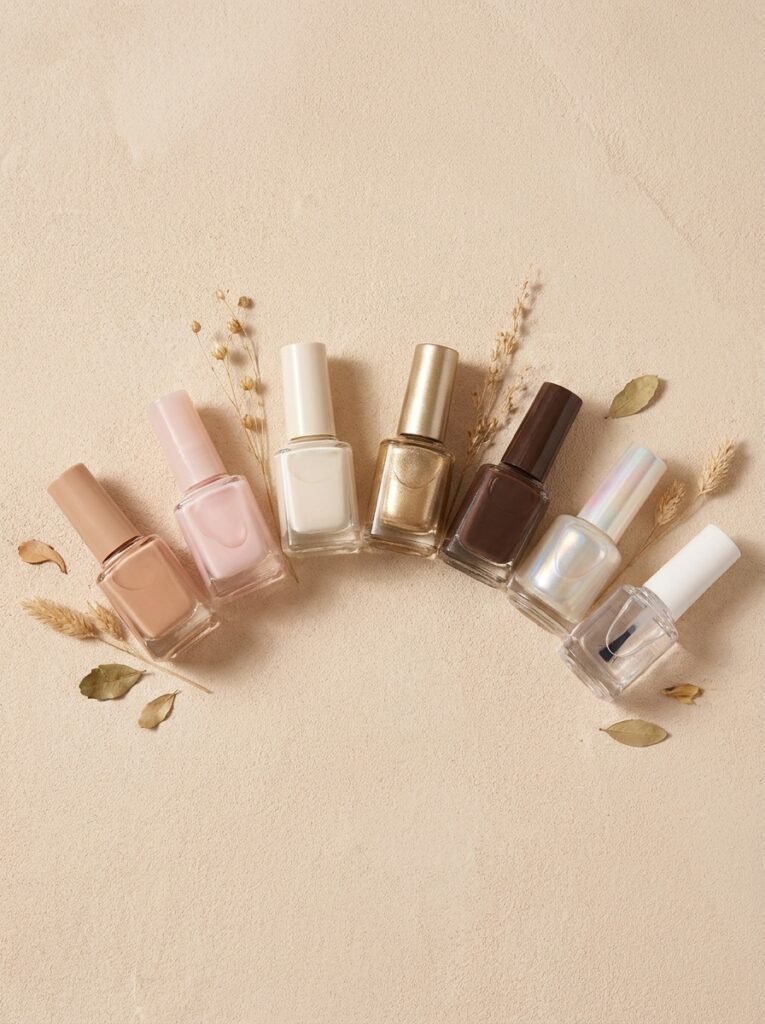
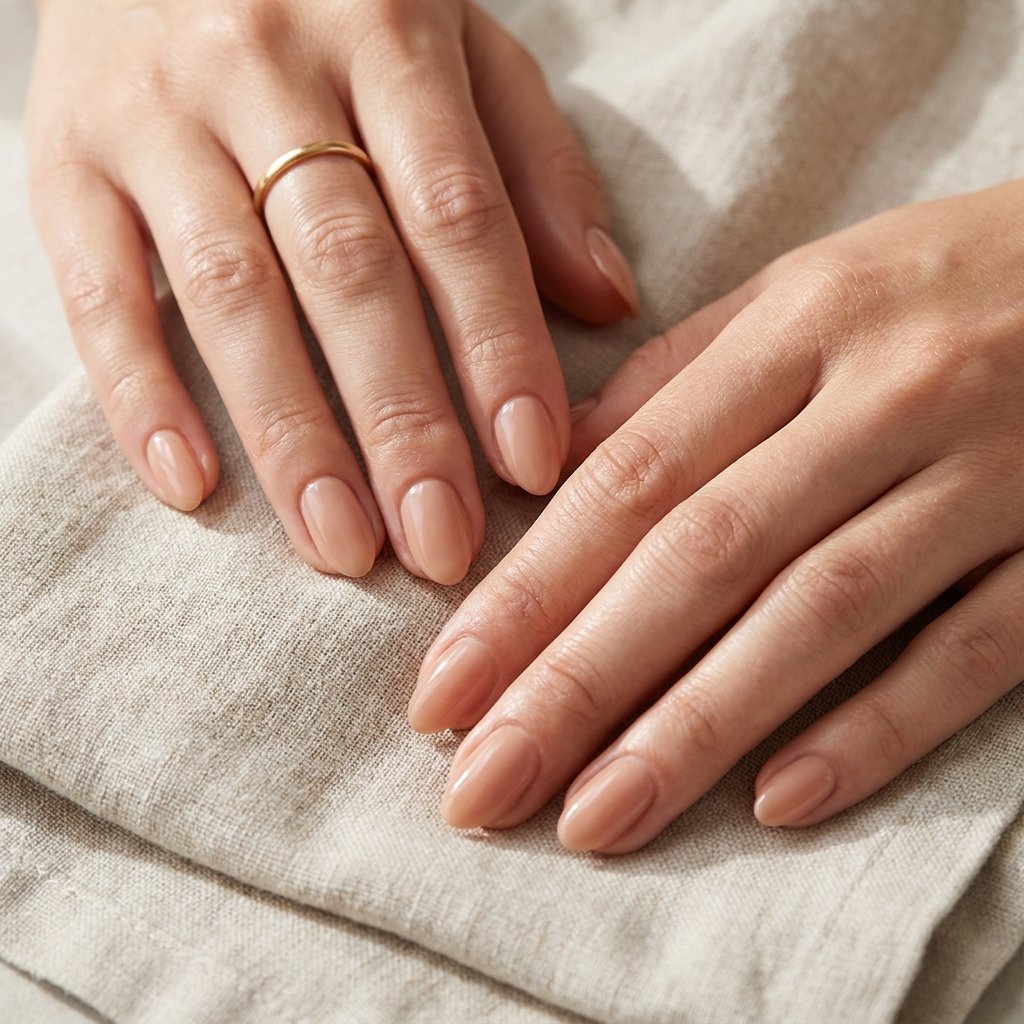
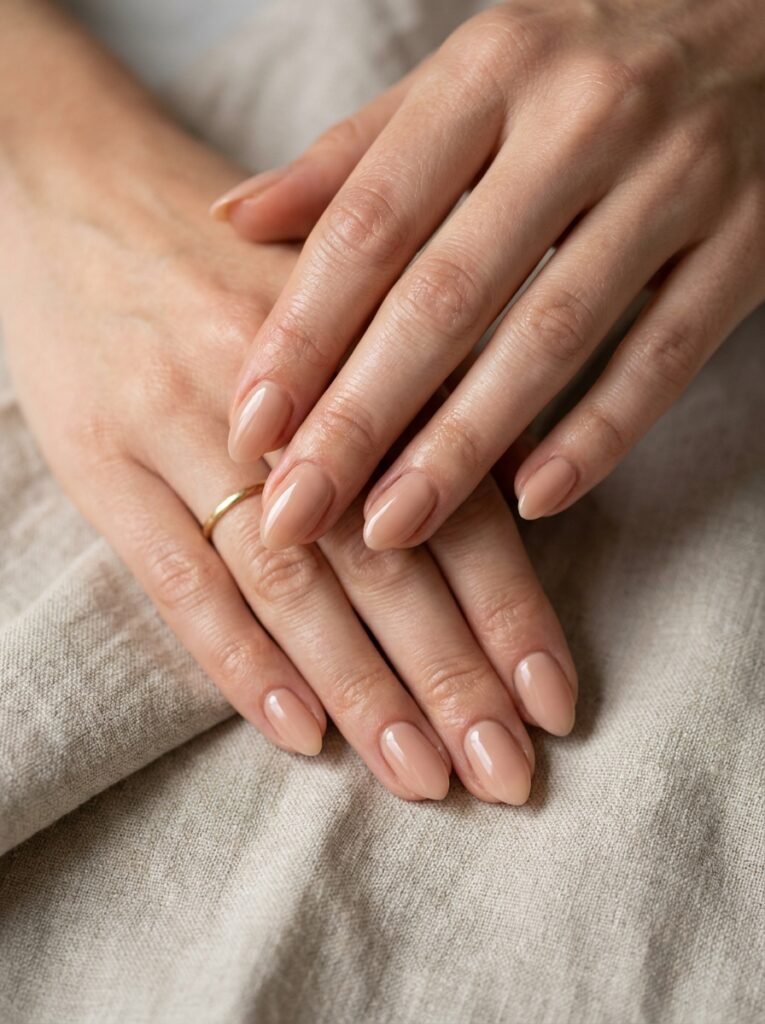
The soft nude with nothing else going on. One warm nude, two thin coats, glossy top. The shape does all the talking. This is my default when I have somewhere to be and twenty minutes to spare.
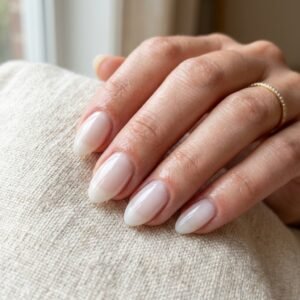
Milky pink with a slight sheer. You can still see the natural nail underneath, which softens the edges of a short nail and makes it read longer. It also hides tiny shape imperfections better than any opaque color.
Micro French on the tip. Not the thick white band from the early 2000s. A hairline of white or cream that follows the exact curve of the almond tip. It defines the shape without cutting the nail in half visually.
One thin vertical line. A single stripe of gold, silver, or a contrasting cream running from cuticle to tip, down the center of the nail. It sounds too simple to matter. It genuinely makes short nails look narrower and longer.
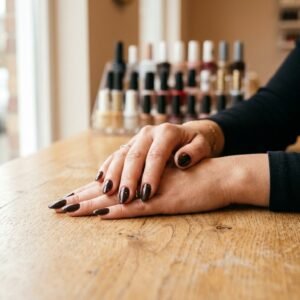
Chocolate brown or cocoa. Warm dark shades are having a real moment and they suit short almond nails beautifully because they follow the taper without harshness. Way more forgiving than black.
Chrome or pearl finish. The light bends around the curve of an almond tip, which stretches the nail visually. On a square nail chrome looks flat. On almond it looks like it is doing something.
Negative space with a small accent. Leave part of the nail bare, add one thin arc or a couple of tiny dots near the base. Less coverage means the nail looks less crowded, and less crowded means longer.
If you want to see how these ideas play out across different finishes and color families, there is a good roundup of nail looks worth trying this year that is easy to adapt down to shorter lengths. Most trends translate fine, you just scale the design down and skip anything that needs a big canvas.
So What Actually Makes a Short Nail Look Almond?
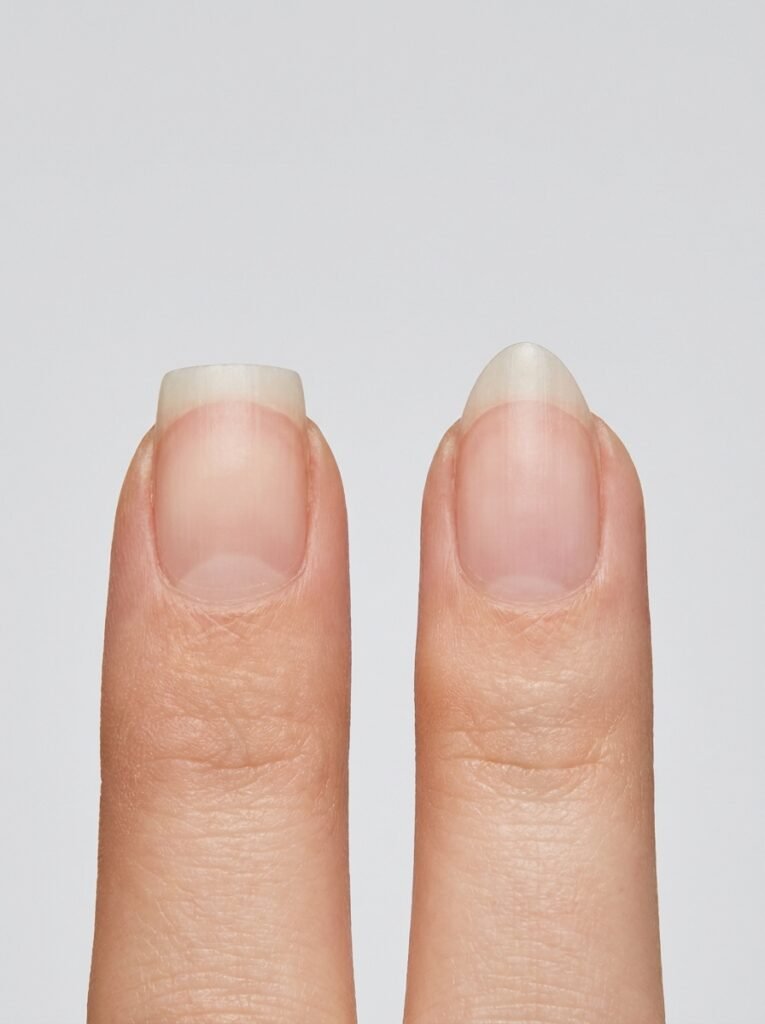
Here is the thing my friend was getting at. When people picture almond nails, they picture the tip. The narrow, tapered point. But that point is the last five percent of the shape.
What your eye is actually reading is the sidewalls. Almond nails have sides that slope gently inward as they move toward the tip. That inward slope is what creates the illusion of a long, slim nail, and you can create it on a very short nail as long as you have a tiny bit of free edge to work with.
The tip itself, on short nails, should be soft. A rounded peak rather than a point. If you try to file a sharp point onto a short nail you end up with something that looks pinched and slightly awkward, and it will break within a week because there is no structural support behind it.
Some people call this version soft almond. Others call it rounded almond or a squoval almond hybrid. The name does not matter much. What matters is that the sides taper and the tip curves.
The Two Millimeter Rule
If you take one measurement away from this post, make it this one.
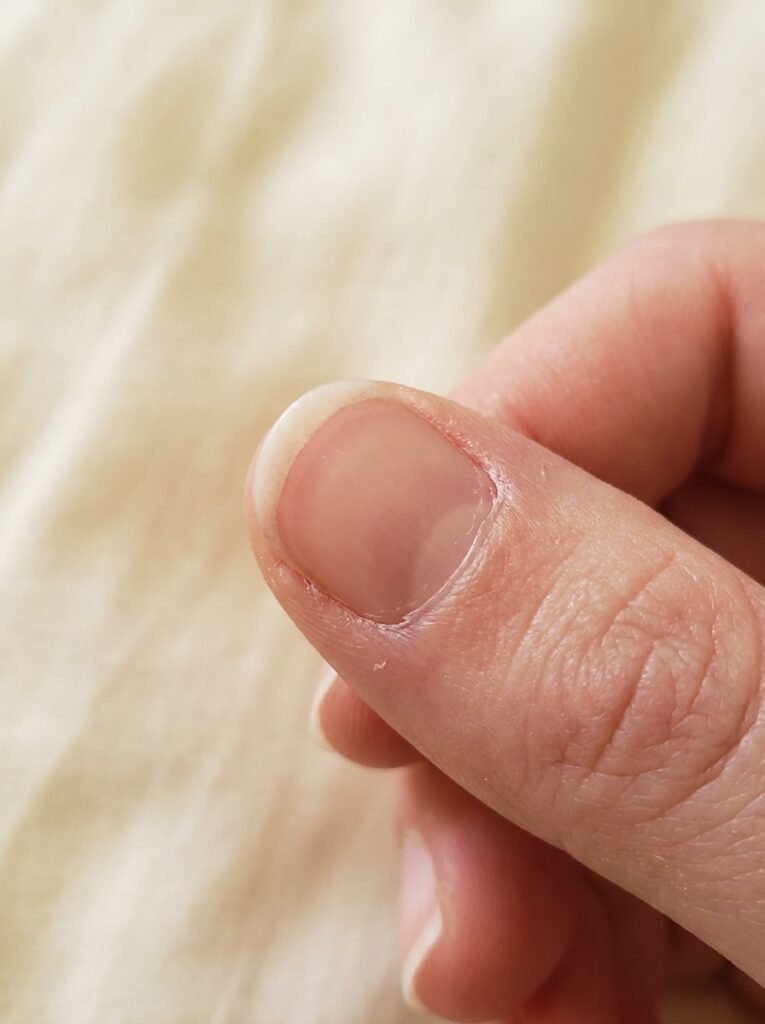
You need roughly two millimeters of free edge before an almond shape becomes visible. That is about the width of a stacked pair of coins, or the tiniest sliver of white you can see past your fingertip.
Below that, you can still round the corners and slim the sides slightly, and it will look tidier than a flat square. But it will not read as almond to anyone looking at your hands.
Between two and four millimeters is where short almond really works. That range is short enough that you can type, fasten buttons, and open a can of soda without a second thought. It is also long enough that the taper is obvious.
Above four millimeters you are into medium territory, and you can start pushing toward a more defined point if you want.
If you are currently below two millimeters, you are looking at about two to three weeks of growth. Nails grow around three millimeters a month on average, a bit faster in warm weather and a bit slower in winter. Cuticle oil will not make them grow faster, but it will stop them breaking, which amounts to the same thing in practice.
A Filing Routine That Takes Ten Minutes
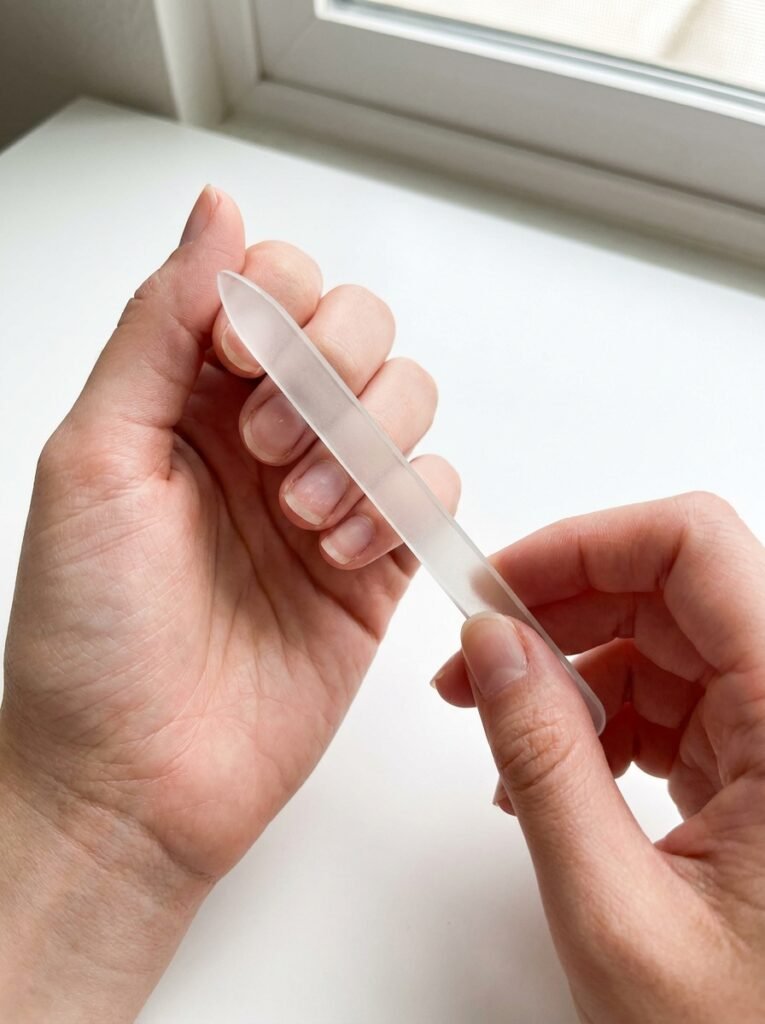
I do this on a Sunday evening in front of the TV. Dry nails, decent light, no rushing.
Start dry. Wet nails are soft and they tear along the layers. If you want to soak, do it after shaping, not before.
Use a 180 grit file. Coarser files shred short edges. A glass file is worth buying if your nails peel easily, and it lasts years.
File in one direction. Sawing back and forth is the single most common cause of frayed, splitting tips, and short nails show that damage immediately.
Then the sequence:
- Flatten the tip first. Take everything down to one clean straight edge, even if it means going slightly shorter than you wanted. You need a level starting line.
- Find the center. Look at the nail straight on and note where the middle is. Some people mark it with a pencil dot. It helps more than you would think.
- Do the left sidewall. File from where the free edge begins, angling toward that center point. Light pressure, short strokes.
- Do the right sidewall to match. Compare as you go rather than at the end.
- Round the peak. A few gentle passes to turn the point into a curve.
- Check from the side and from underneath. Looking down from above hides all the crooked ones.
One tip that saves a lot of frustration: shape the same finger on both hands one after the other. Index left, index right, then middle left, middle right. Matching is far easier that way than finishing an entire hand first.
If a nail turns out lopsided, resist the urge to even it up by filing the good side. That is a spiral that ends with everything back down to nothing. Let it grow for a few days and correct it next time.
Things That Quietly Ruin the Shape
Most short almond fails come down to one of these.
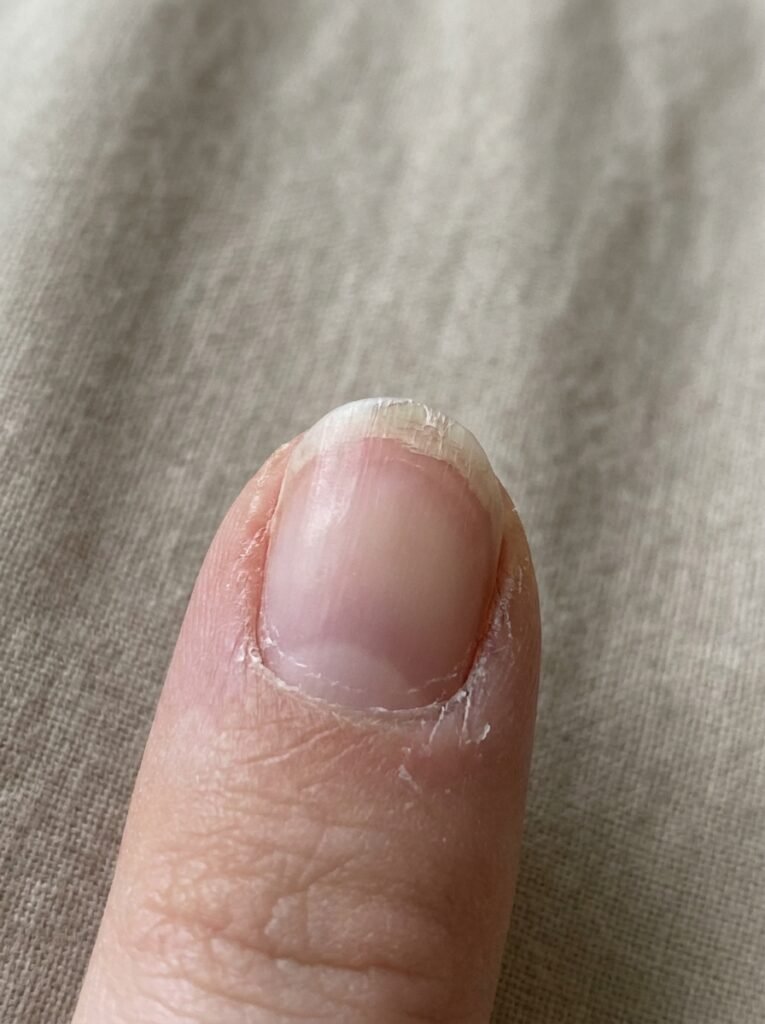
Filing the point before the sides. If you attack the tip first you lose all the length you needed for the taper. Sides first. Always.
Taking too much off the sidewalls. Slimming is good, carving is not. Over filed sides make the nail narrow, weak, and prone to lifting away from the skin over time. You are refining an existing shape, not sculpting a new one.
Dry cuticles. Ragged cuticles make a short nail look even shorter because they cover part of the nail bed. Push them back gently after a shower and oil them daily. This is the cheapest length hack there is.
Thick polish near the base. Flooding the cuticle area with polish visually chops off the top of the nail. Leave a hairline gap. It looks neater and it grows out better.
Expecting week one to look like week three. Short almond improves as it grows. The first few days after a fresh shape are always the least impressive.
Painting the free edge and forgetting the tip seal. Running the brush along the very edge of the nail is what keeps polish from chipping right where an almond tip takes the most contact.
Picking Polish When Your Nails Are Short
Color affects perceived length more than most people expect.
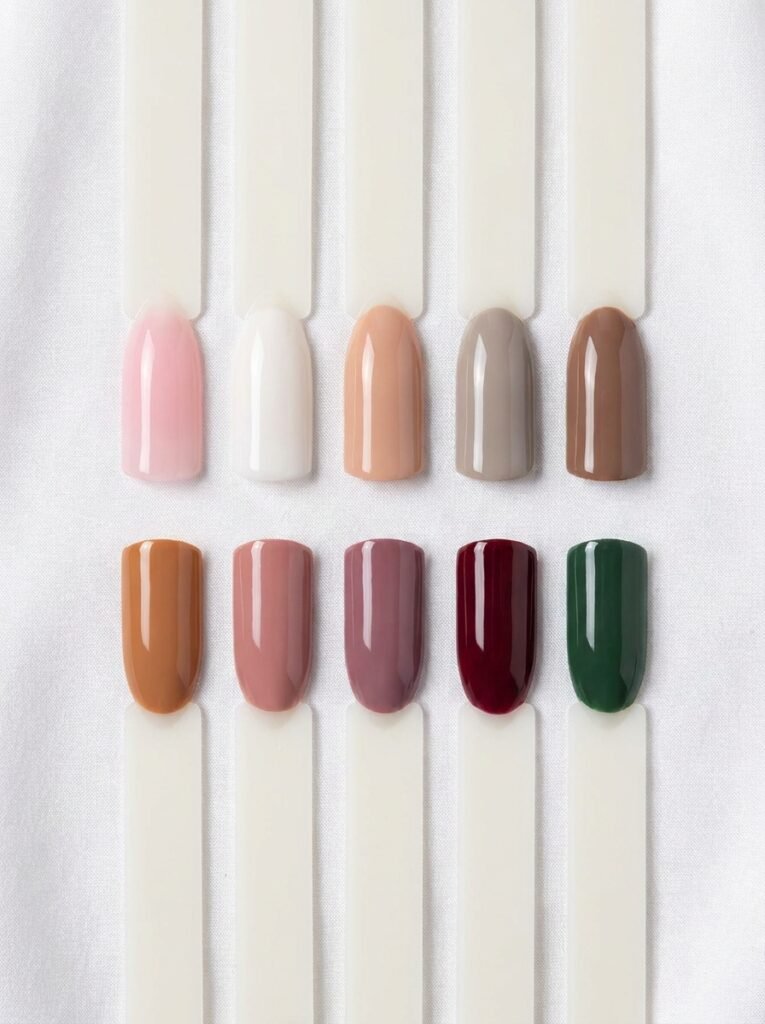
Shades that help:
- Warm nudes matched to your skin tone
- Sheer pinks and milky whites
- Mocha, caramel, and cocoa browns
- Muted mauve, dusty rose, soft greige
- Anything with a glossy top coat
Shades that visually shorten:
- Bright white
- Neon anything
- Full coverage chunky glitter on every finger
- Thick traditional French tips
- Wide horizontal designs across the nail
The nude rule deserves a note. It is not about picking beige. It is about picking a nude that sits close to your own skin tone, so the eye reads finger and nail as one continuous line. A nude that is too pale or too pink against your skin creates a break, and a break makes the nail look shorter.
Dark shades are absolutely allowed, by the way. Burgundy, forest green, navy, and plum look excellent on short almond nails. They just require a tidier application, because sloppy edges on dark polish are impossible to hide.
Three People, Three Very Different Hands

My sister works in a hospital lab. Her nails have to stay short and she washes her hands constantly. She keeps them at about two millimeters, soft almond, with a strengthening clear coat and nothing else. Her hands always look neat and she has not caught a nail on a glove in years.
A friend of mine is a rock climber and keeps her nails filed almost flush. She still shapes them into a soft almond curve rather than leaving them square, purely because square corners catch and tear on holds. Hers barely reads as almond to a stranger, but the corners never snag.
And then there is me, someone who types all day and absentmindedly picks at things. Short almond in a warm nude gel is the only manicure I have ever kept looking presentable for three straight weeks. Chips at an almond tip blend into the curve instead of showing up as a hard horizontal line, which quietly buys you several extra days.
Three completely different lifestyles, same shape, all working. That flexibility is why short almond keeps coming back around while sharper shapes cycle in and out.
Stuff You Might Still Be Wondering
My nail beds are wide and short. Will this look strange? Wide nail beds are honestly where this shape performs best. Slimming the sidewalls narrows the nail visually, which balances the width. Just make sure you have a couple of millimeters of growth first.
Do almond nails break more easily than square? A soft rounded tip is usually stronger than a square corner, because square corners are what catch on fabric and hair. Sharp points break easily, soft peaks do not. Keep a little thickness at the free edge and you will be fine.
How often do I need to refile? A quick pass every one to two weeks is plenty. Full reshaping every time just wears the nail down.
Is gel better than regular polish for this? Gel holds up better at the tip, which is the most vulnerable part of an almond shape. Regular polish works fine, you will just be touching up more often. The shaping process is identical either way.
What if I bite my nails? Spend two or three weeks on cuticle oil and a strengthening base coat before you try shaping anything. Once you have a small free edge, soft almond is actually a helpful goal, because there is no sharp corner sitting there tempting you to pick.
Can I buy short almond press ons instead? Yes, and there are far more short and medium-short almond sets available now than there were a few years ago. Measure your nail beds before ordering. Width matters more than length with press ons.
Will this shape suit short fingers? It works well. The tapered sides create a vertical line, and vertical lines lengthen. Pair it with a nude close to your skin tone if that is the effect you are after.
Where to Start This Week
If your nails are already at two millimeters or more, you can do this tonight. Grab a 180 grit file, sit somewhere with good light, flatten the tips, slim the sides, soften the peaks, and put on a sheer nude.
If you are shorter than that, spend the next two weeks on cuticle oil and a base coat, then come back to the filing steps.
Either way, go slower than feels necessary and check the shape from the side before you commit to another pass. Nails grow. If a shape does not work out, you file it back to round and try again in a fortnight, and nobody but you will ever notice.
Short almond is not a downgrade from long almond. It is its own shape, and on a lot of hands it looks better.