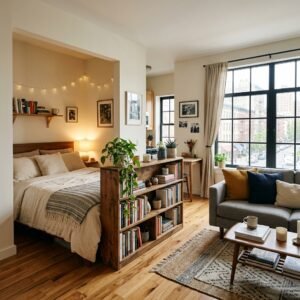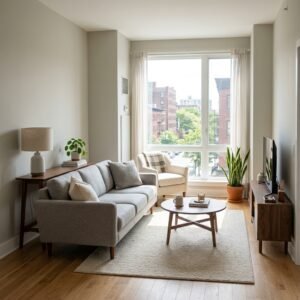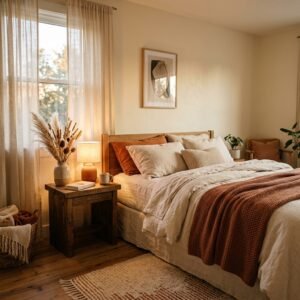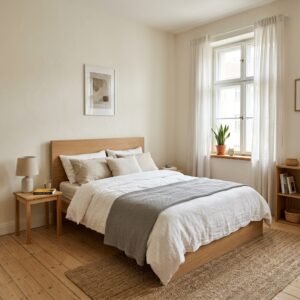
Dorm Room Decor Ideas for Small Spaces
Dorm decorating runs on one condition that no other room has: everything has to come back down in May without leaving a mark. No paint, no nails, no swapping the light fixture, no moving a wall that was built to serve two people at once. Whatever goes up has to come off cleanly, fold flat, and fit in a car.
That rules out most standard decorating advice, which quietly assumes a drill and a landlord who does not care. What is left still covers plenty. The ideas below stay reversible, work with furniture that cannot be replaced, and focus on the three things a student actually controls: color, light, and fabric.
Work With the Three Surfaces You Are Allowed to Touch
Almost every dorm gives you the same three levers. The bed frame, the desk, and the closet are fixed. The walls, the floor, and the textiles are yours.
What is safe to put on the wall
Removable adhesive strips with pull tabs, painter’s tape for lightweight paper, tension rods that press instead of mount, and peel and stick panels rated for renters. Test a single strip in a low corner first, because cinder block and freshly painted drywall behave differently.
What tends to cause charges: poster putty, packing or duct tape, thumbtacks, and any adhesive without a listed removal method. Cheap knockoff hooks are the usual culprit when paint comes off in a strip.
What plugs in
Outlets are the scarce resource in most residence halls, and rules around them are strict for good reason. Look for a UL or ETL mark on lights and power strips, use one surge protected strip rather than chaining several, and keep string lights away from fabric and ceilings. Campus fire safety guidance from the US Fire Administration explains which items cause the most residence hall incidents, and the Consumer Product Safety Commission covers what overloading a strip looks like in practice.

Choose the Palette Before Anything Ships
This is the step that separates a room that looks put together from one that looks accumulated, and it costs nothing.
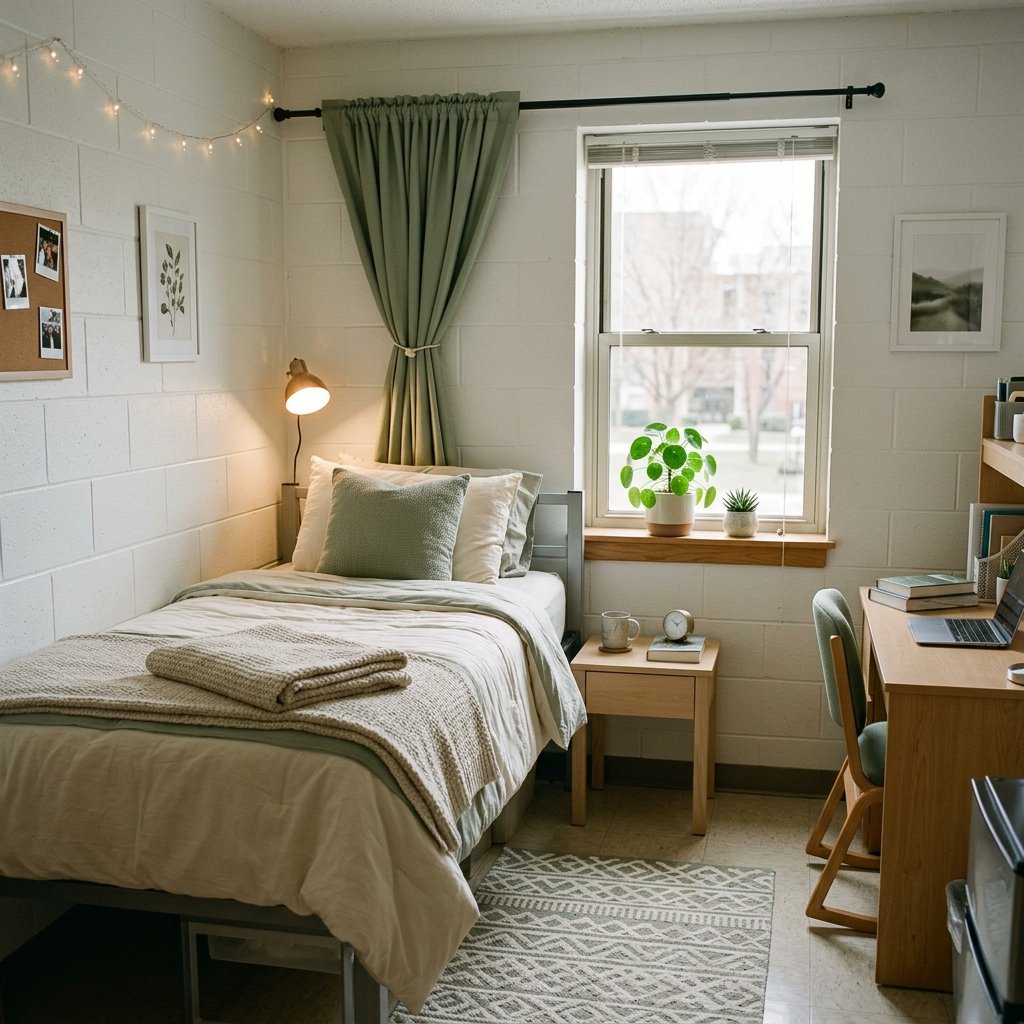
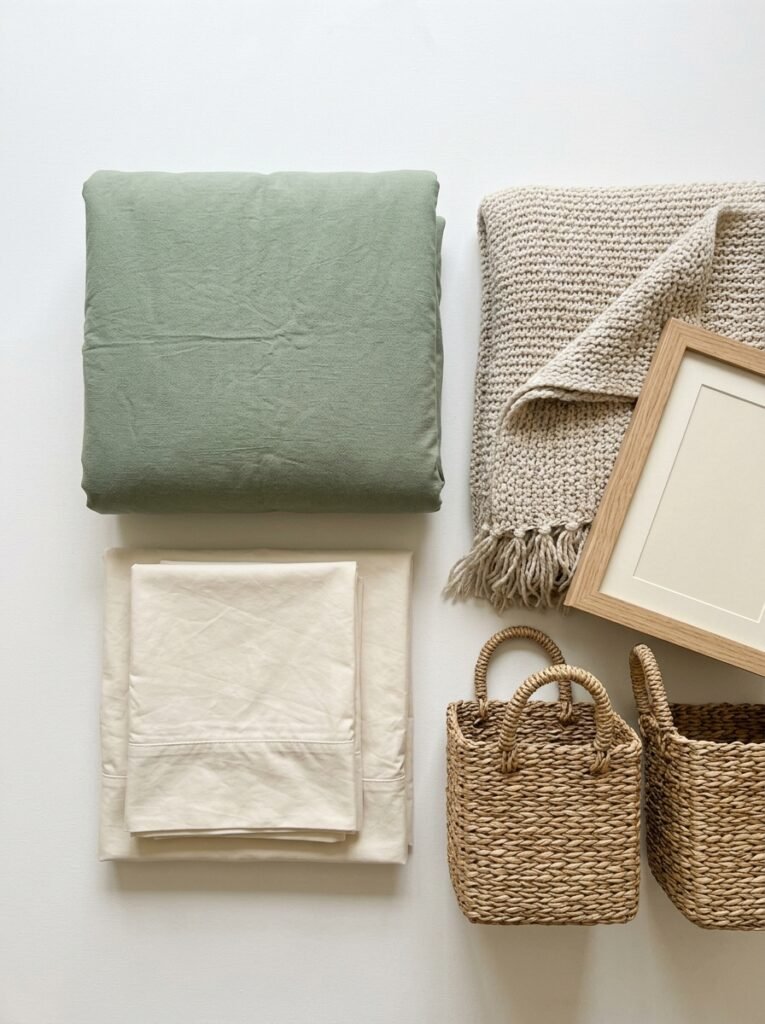
Pick two main colors and one accent, then filter every purchase through that. Bedding, rug, storage bins, and throw pillows all fall in line, and the mismatched institutional furniture stops being the loudest thing in the room.
Palettes that hold up against white walls and beige tile:
- Cream and warm wood tones, the fastest way to soften a cold room
- Sage with off-white, calm and widely available in bedding
- Terracotta and oatmeal, warm without going dark
- Navy with brass or gold accents, which photographs well under poor lighting
- Black, white, and one bright accent, easiest to coordinate with a roommate
In a shared room, this conversation goes better in July than in August. Two competing color schemes in 150 square feet is the most common visual problem in a double, and it cannot be fixed later without buying everything twice.
Ideas Sorted by the Problem the Room Hands You
Rather than shopping by category, it helps to work backward from the specific thing that feels wrong.
The floor is already full
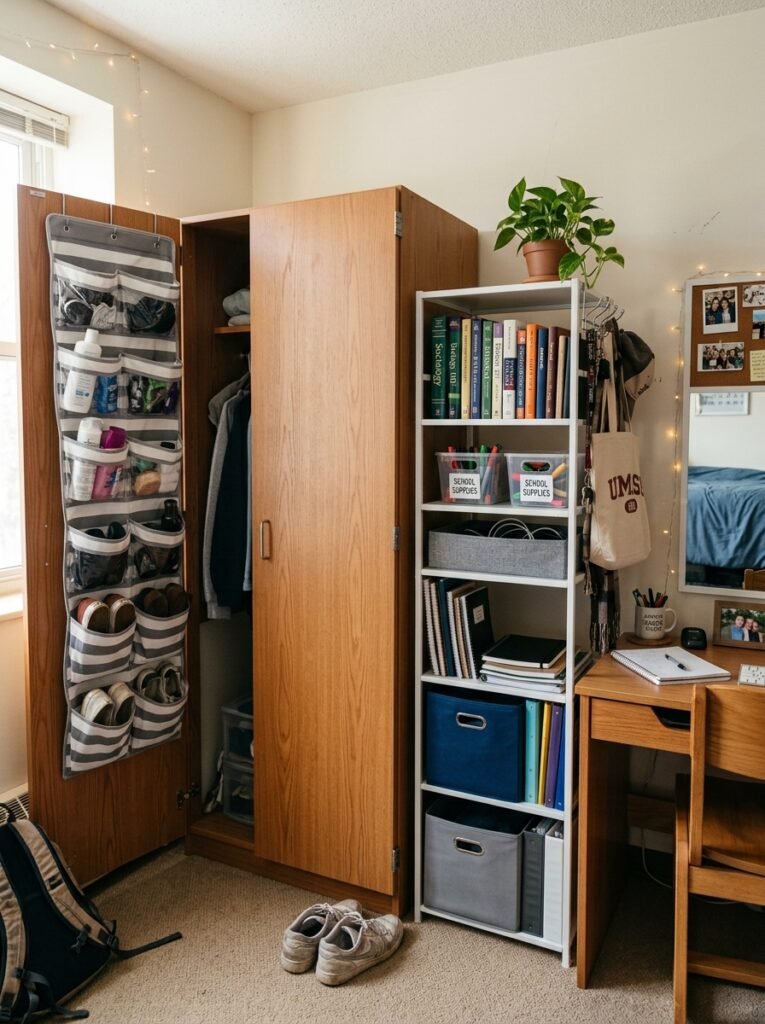
Beds, desks, and dressers claim most of the footprint before you unpack. The answer is vertical.
- Over-the-door organizers for shoes, toiletries, snacks, or chargers
- A narrow shelf under 12 inches deep, slotted into the gap beside the desk
- Hooks along the side of the wardrobe for bags, towels, and jackets
- A tension rod across a corner, turning dead space into hanging storage
- Stackable cubes that stand tall now and travel flat in spring
Keep the tall pieces grouped on one side. Height spread across all four walls makes the room read as a storage unit.
There is nowhere to sit
Dorm rooms are designed for sleeping and studying, and then everyone brings four friends over.
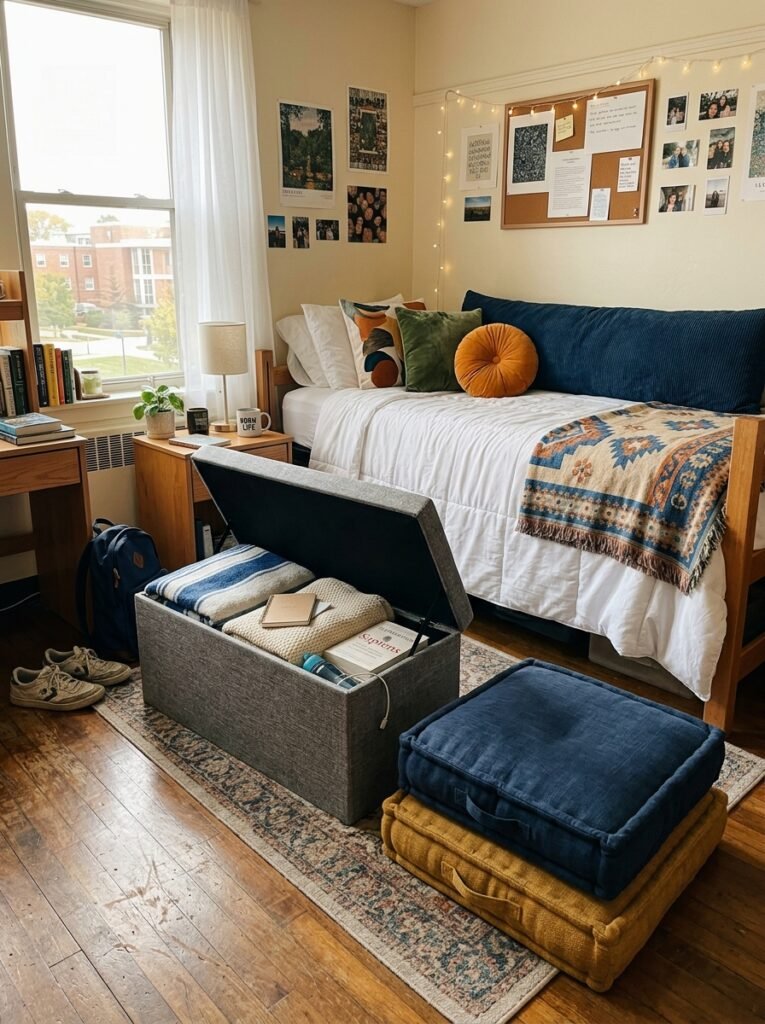
Floor cushions stack in a closet when they are not in use. A storage ottoman works as a seat, a footrest, and a bin at the same time. A folding chair hangs on a hook behind the door. If the bed lofts, the area underneath becomes the only real seating in the room. If it does not, a bolster pillow along the wall turns the bed into a couch without buying anything else.
The overhead light is unpleasant
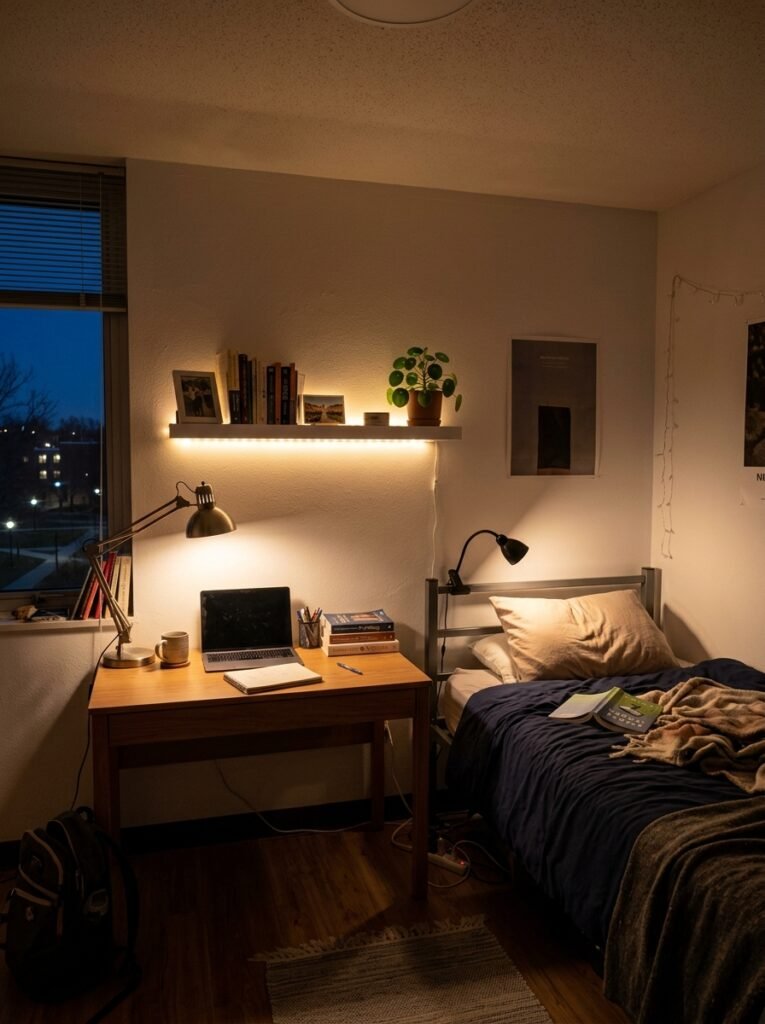
One ceiling fixture with a cool white bulb makes everything look clinical. Three smaller warm sources at different heights fix it for very little money.
Clip-on lamps attach to a bed frame or shelf edge and need no surface at all. A desk lamp with a bulb in the 2700K to 3000K range changes the mood of the whole room. LED strips with adhesive backing run along the back of a desk or the underside of a lofted bed. The Department of Energy’s Energy Saver pages explain color temperature and efficiency if you want to compare options before ordering.
There is no privacy
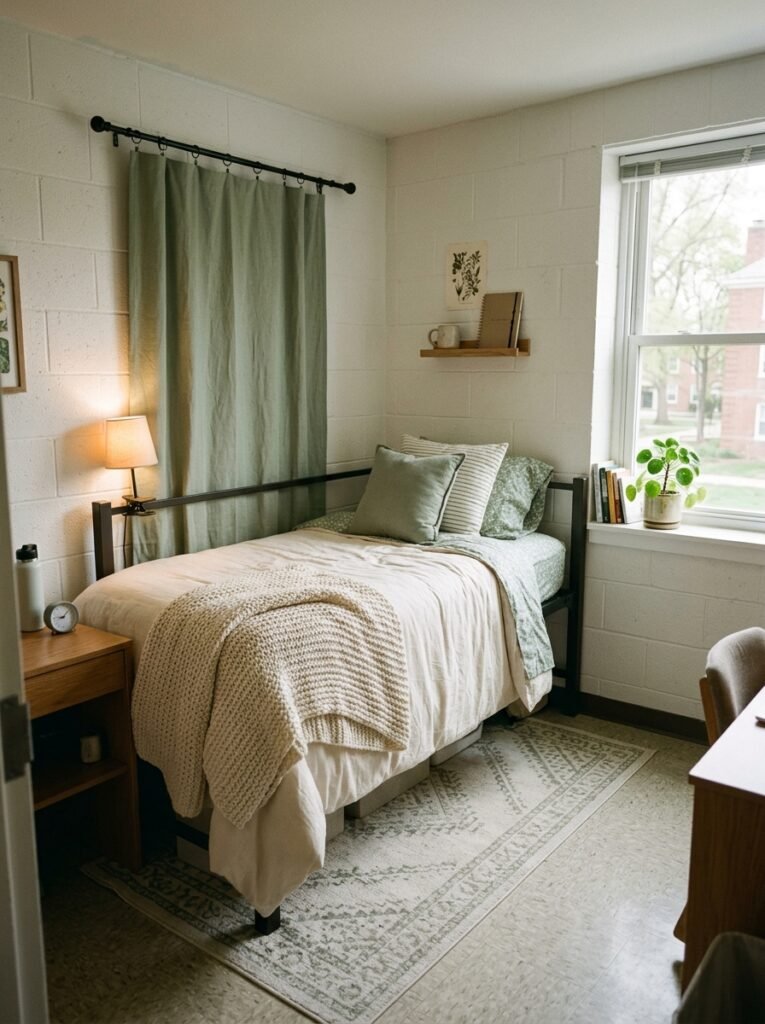
A bed curtain on a tension rod or clip rings creates a private corner without dividing the floor. Hung on both beds rather than one, it reads as a design choice instead of a barrier. Blackout panels on the window handle the courtyard light that most rooms deal with all night.
The walls are blank and institutional
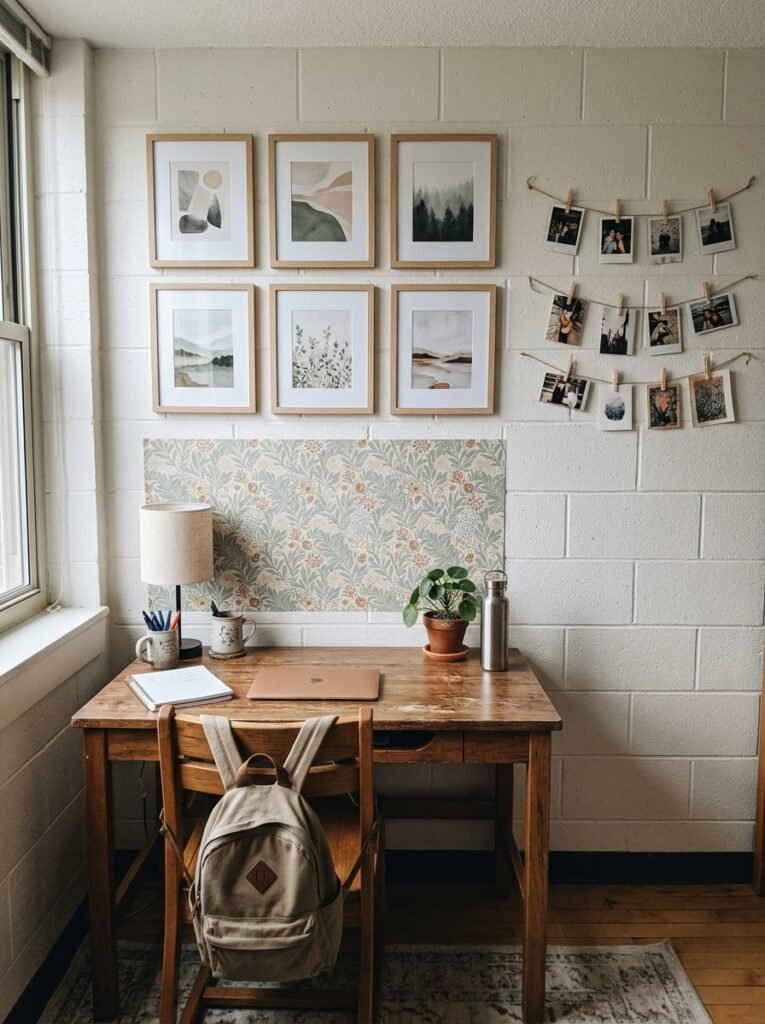
- A grid of prints in matching lightweight frames, acrylic or cardstock rather than glass
- A single large tapestry flat on the biggest bare wall, which covers the most surface in one move
- A photo string with clips that fills in over the semester
- Peel and stick wallpaper on one small section, such as behind the desk or the back of a shelf
- A leaning pegboard or fabric corkboard on the desk, holding notes and photos without touching the wall
Hang things lower than instinct suggests. Most time in a dorm is spent seated, so eye level sits about a foot below where you would hang art at home.
The room feels cold and hard
Every surface is laminate, tile, or painted block, which is why dorm rooms echo. A low pile rug, even a 5×7, changes both the sound and the temperature underfoot. Layered bedding, a washable throw, and curtains soften the rest. One or two plants add the only living texture in the room, and pothos or snake plants survive a dark corner and a spring break with nobody watering.
Pieces That Earn Their Space Twice
In a room this size, single-purpose items are a luxury. The pieces worth the money do two jobs.
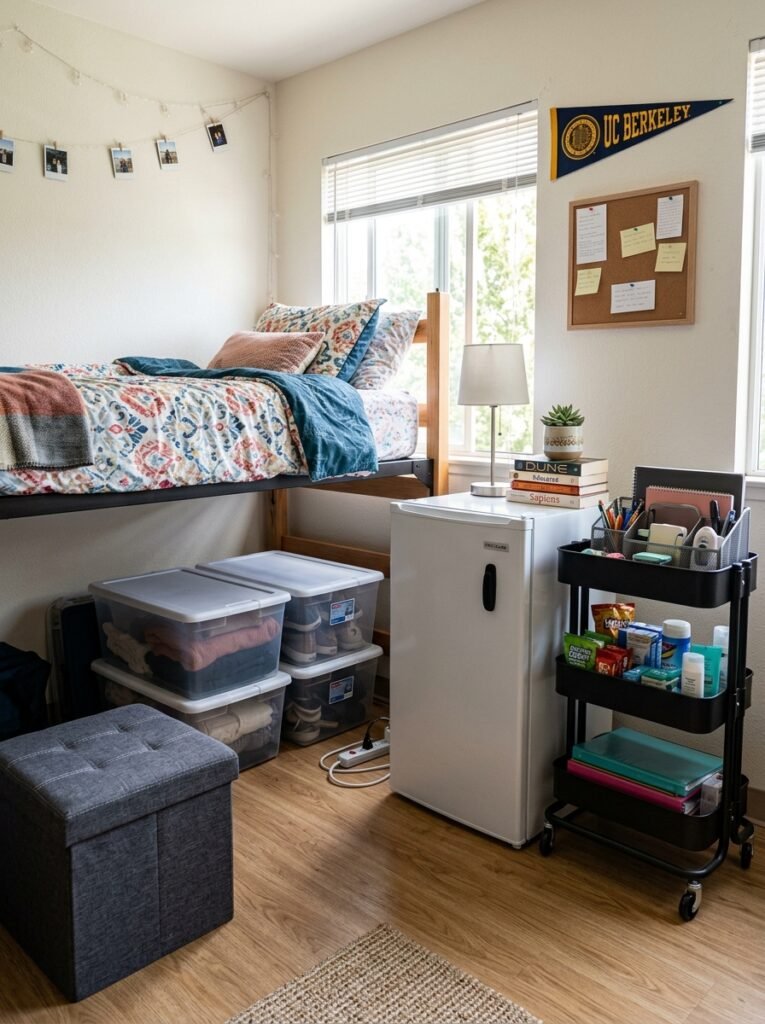
- Storage ottoman: seat, footrest, and hidden bin
- Bed risers plus flat bins: turns dead floor into a second closet
- Rolling three-tier cart: snacks, supplies, or laundry, and it moves out of the way
- Full-length mirror mounted on the closet door: most rooms do not include one
- Mini fridge with a flat top: nightstand, printer stand, or microwave base
- Folding side table: desk overflow during finals, gone the rest of the year
- Vacuum bags: off-season clothes compress to a fraction of the space
Refreshing the Room Without Storage for Decor
Nobody has room to store a bin of seasonal decorations, so the swaps have to be small and flat.
A change of throw pillow covers, rather than pillows, takes almost no space. A different throw blanket folded at the foot of the bed shifts the palette. Printed art swapped in the same frames costs a few dollars. A garland or a string of dried stems along a shelf edge stores rolled up. Removable wall decals go up for a season and come off in one piece.
The trick is choosing pieces that flatten. Covers, prints, and textiles fit in a drawer. Anything with a fixed shape does not.
Details That Get Overlooked
The parts of a room that affect daily comfort are rarely the decorative ones.
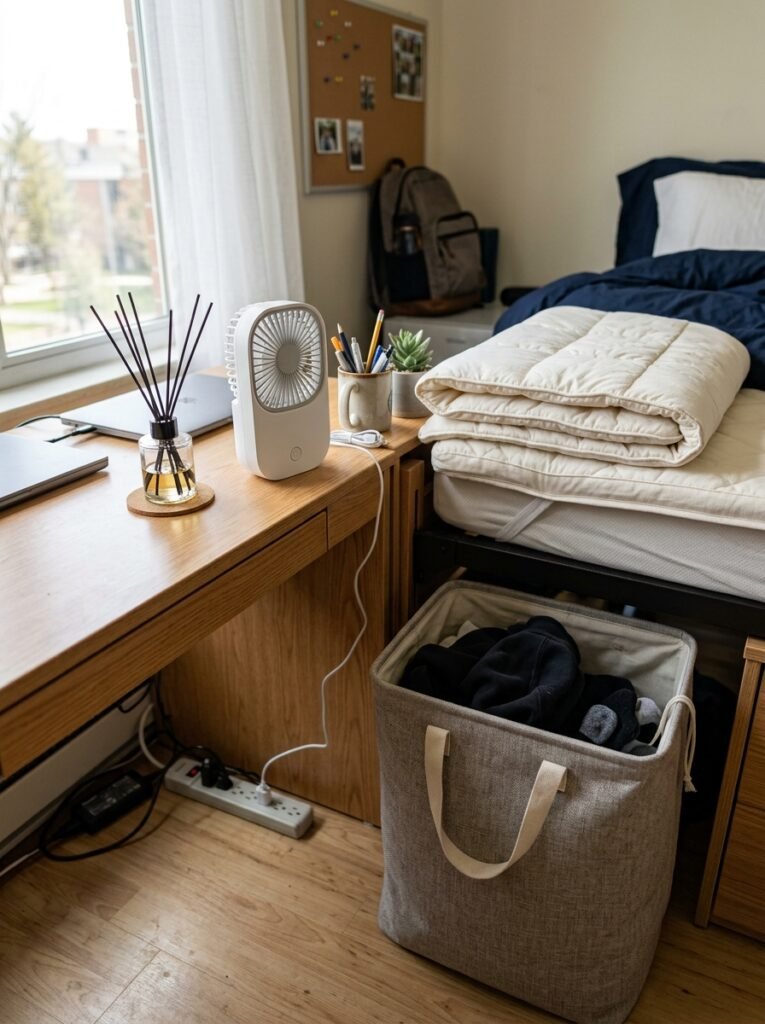
Sound carries in a hard room, so a rug and fabric curtains do more for sleep than anything else. Scent matters because candles are banned nearly everywhere, which leaves reed diffusers, room sprays, and dryer sheets in the closet. Mattress comfort is worth solving early, since dorm mattresses are firm and heavily used, and a topper is a better investment than most decor. Air in a closed room goes stale fast, so a small fan improves both temperature and circulation. Laundry is a decor problem in disguise, because a hamper sits in view all year and might as well match the palette.
A Realistic Way to Split the Budget
Rough proportions, useful for a couple hundred dollars or a thousand:
- Bedding and mattress topper, around 40 percent. It is the largest visual surface and the thing used most.
- Storage, around 20 percent. Bins, risers, cart, organizers.
- Lighting, around 15 percent. Two or three lamps and bulbs.
- Rug and curtains, around 15 percent.
- Wall decor and extras, around 10 percent. This is the part that always tries to grow.
Wall decor being last is deliberate. It is the most fun to shop for and the least useful when the room turns out to have nowhere to put anything.
Buy in Three Rounds, Not One
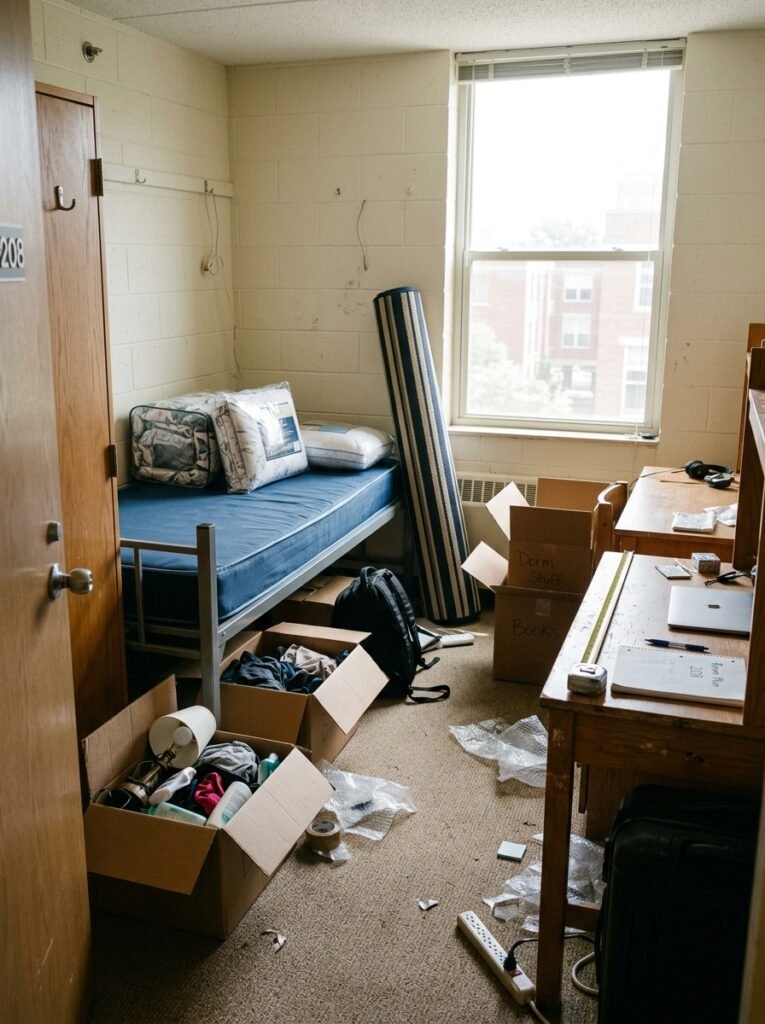
The single most expensive dorm mistake is buying everything in July from a floor plan.
Before move-in: bedding, towels, a topper, a power strip, basic toiletries, and a laundry hamper. These are needed on night one and do not depend on the layout.
First week, after seeing the room: rug, storage bins, lamps, and anything sized to the furniture. Measure the window, the closet, and the gap under the bed first.
After a few weeks: wall decor, seating, and the pieces that solve problems you have actually run into. By then it is obvious whether the issue is storage, light, or somewhere for people to sit.
Where Small Rooms Go Wrong Visually
- Too many small objects. Fifteen little things look cluttered where four larger ones look calm.
- Dark bedding in a room with one window. It absorbs the light there is.
- Height on every wall. Group the tall pieces and leave the rest low.
- Art hung at home height. Too high for a room used mostly from a seated position.
- Two palettes fighting. The most common issue in shared rooms, and the hardest to undo.
- Every surface covered. Desks, dressers, and windowsills are working surfaces first.
Getting Started
Set up the fixed pieces, then add the rug, then the bedding, then lighting. Walls come last, once the furniture has landed where it is actually going to stay. Most rooms need fewer items than the shopping lists suggest, and the ones that feel finished usually repeat three colors and light themselves properly.
For layout thinking that carries over to apartments and other shared spaces, the room by room ideas section covers similar constraints, and the wider home decor ideas category collects seasonal styling that adapts to a rented room.