Transitional Outfits for August to September
The hardest six weeks to dress for are not the coldest ones. They are the stretch that starts in mid August and runs through late September, when a morning needs sleeves and the same afternoon hits 88 degrees. Nothing in the closet is wrong exactly. The summer clothes still fit the weather and the fall clothes still look right in photos, and neither one works from 8 a.m. to 8 p.m.
Retail makes it worse by putting wool coats on the shelf while the air conditioning is still running. So the useful question is not what is new for fall. It is which pieces cover a 25 degree swing without a costume change at lunch.
Below are outfit ideas, fabric swaps, and a short capsule list built for exactly that window.
What Actually Changes Between August and September
Very little changes at once, which is why the season feels confusing. Three things shift, and they shift on different schedules.
The spread, not the peak
Daytime highs in early September often match late August almost exactly across much of the US. The mornings are what move first, sometimes dropping 15 to 20 degrees below the afternoon high. Checking the local forecast spread rather than the headline number changes what you reach for, and the National Weather Service forecast pages show the overnight low right next to the high for the day.
Daylight and sun angle
Sunset creeps earlier through September, so evening plans get cooler faster than they did in July. The sun also sits lower, which affects how strong midday exposure feels even when the temperature drops. The EPA sun safety pages cover how UV levels behave through late summer if that factors into your outfit choices.
Where you are going
Offices refill, classes start, and evening events move indoors. Outfits that were fine for a July patio start to feel underdressed by the third week of September, even when the weather has not changed much at all.
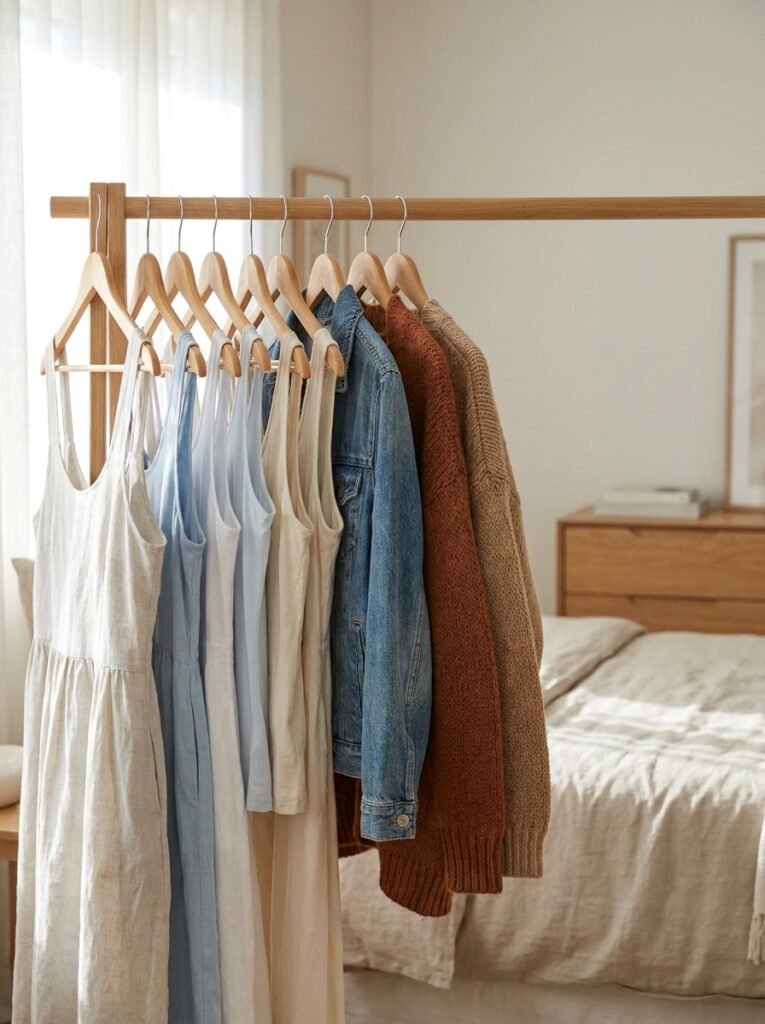
Fabric Choices Matter More Than Layer Count
Piling on layers in 85 degree weather does not work. Changing what the layers are made of does.
Fabrics that bridge the two months well:
- Cotton poplin and lightweight twill. Structured enough to read as fall, breathable enough for a warm afternoon.
- Linen blends rather than pure linen. The blend holds shape better and wrinkles less, so it stretches further into September.
- Fine-gauge knits. A thin merino or cotton knit tee gives the visual weight of a sweater at a fraction of the warmth.
- Mid-weight denim. Rigid or lightly stretched, in a longer cut than summer shorts.
- Tencel and lyocell. Drapes like silk, handles heat better than most polyester, and takes the deeper fall colors nicely.
- Jersey in darker shades. Same comfort as a summer tee, different mood.
Fabrics worth leaving for October and later include chunky boucle, heavy wool, thick cable knits, corduroy over 14 wale, and anything lined. Cotton Incorporated publishes useful breakdowns of fabric weights if you want to compare before buying.
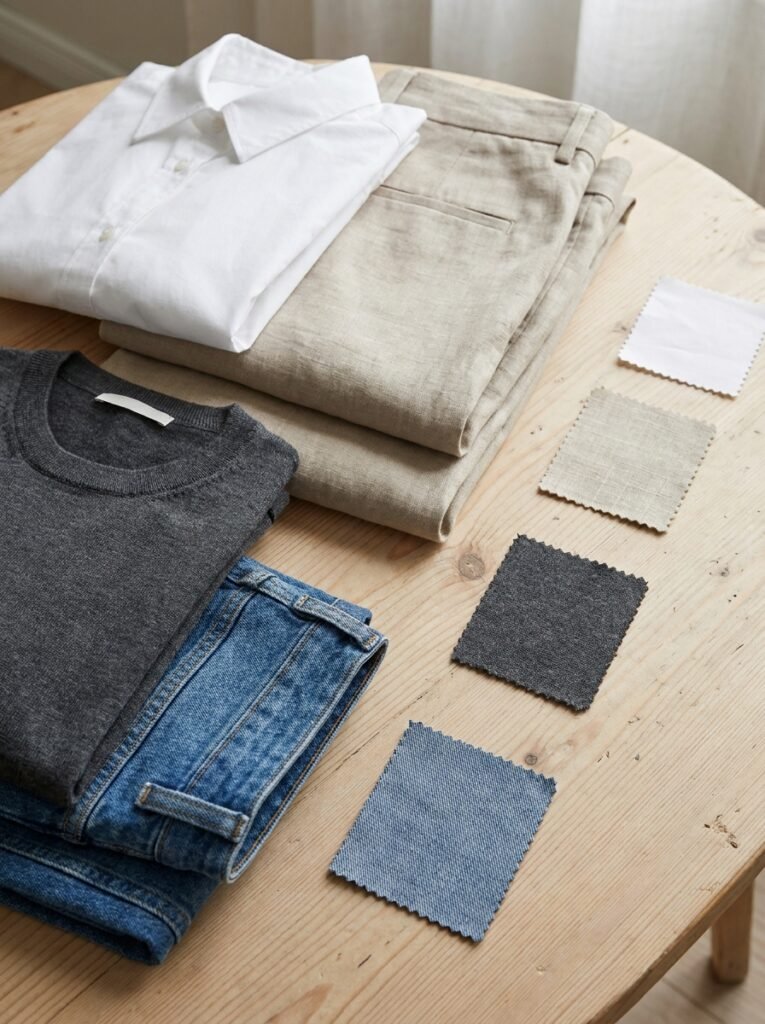
Outfit Formulas That Work Across Both Months
These combinations hold up whether the day turns out to be a summer one or an early fall one.
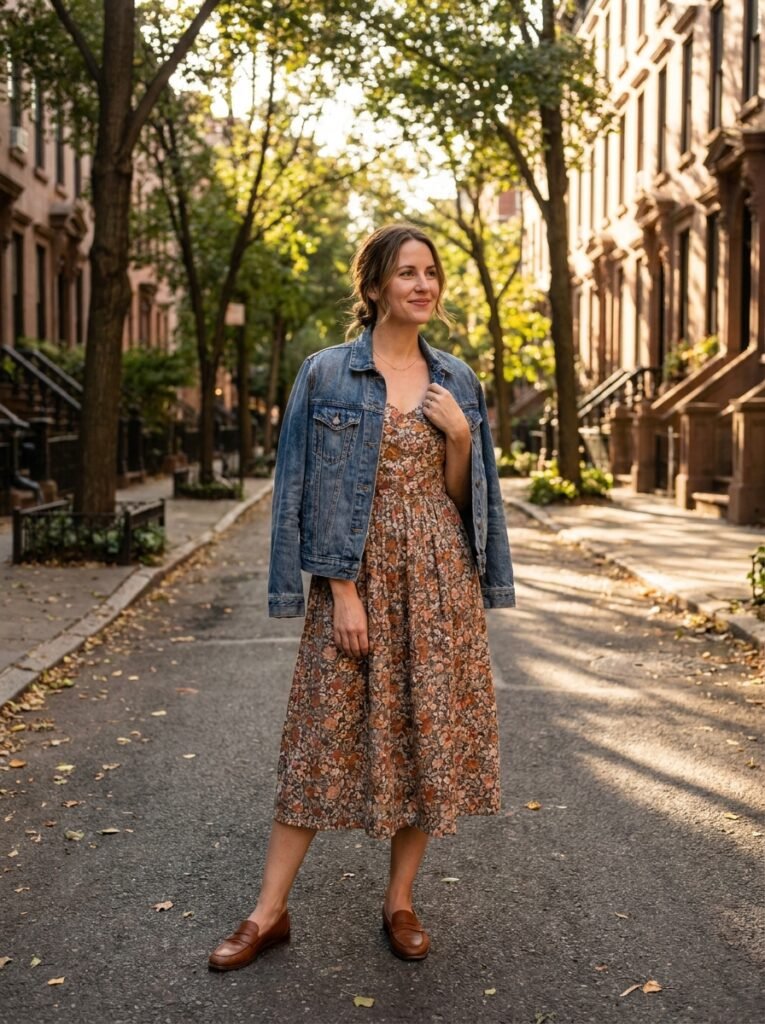
Summer dress with closed shoes
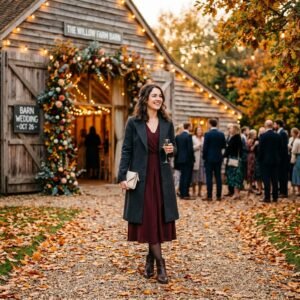
The fastest transitional swap in the closet costs nothing. Take a floral midi or a cotton sundress, then replace sandals with loafers, ballet flats, or white sneakers. The dress reads as seasonal instead of leftover, and a denim jacket over the shoulders covers the cool morning.
White tee, straight jeans, and a third piece
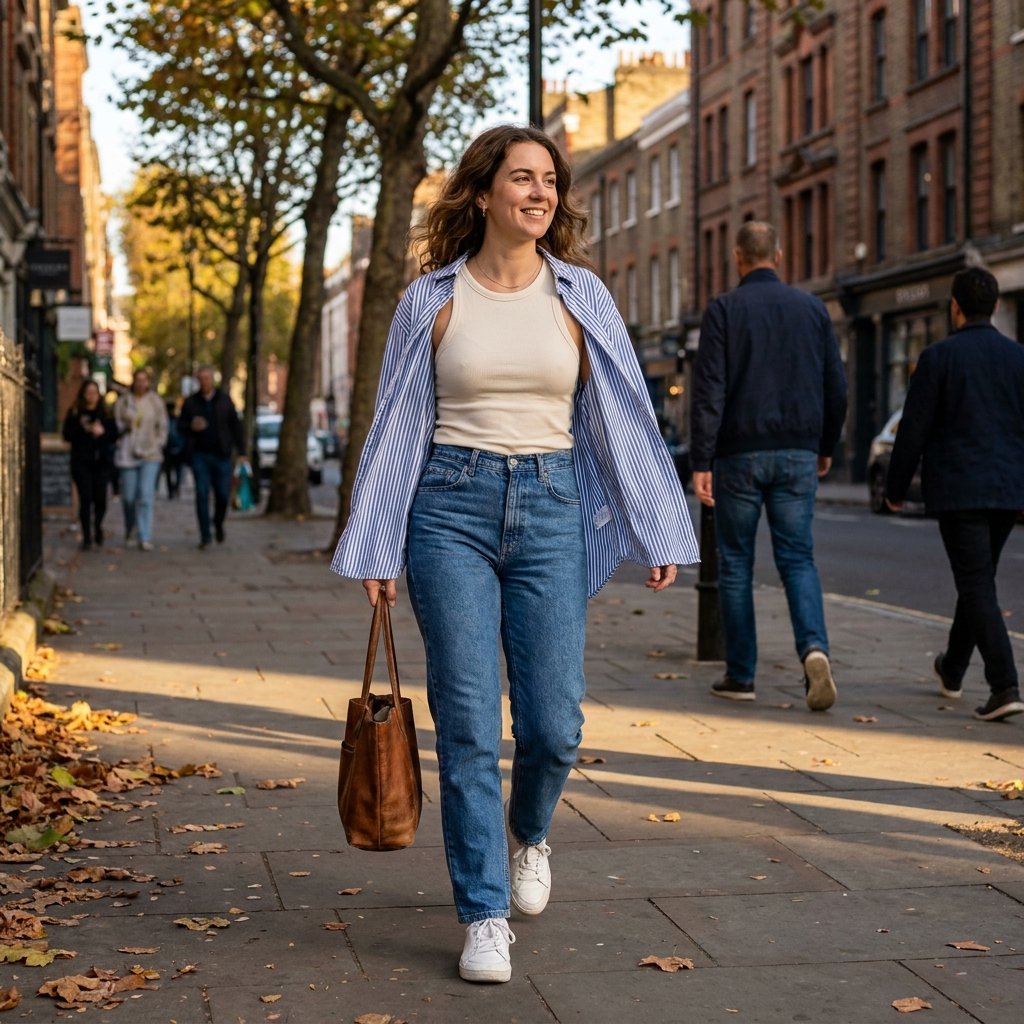
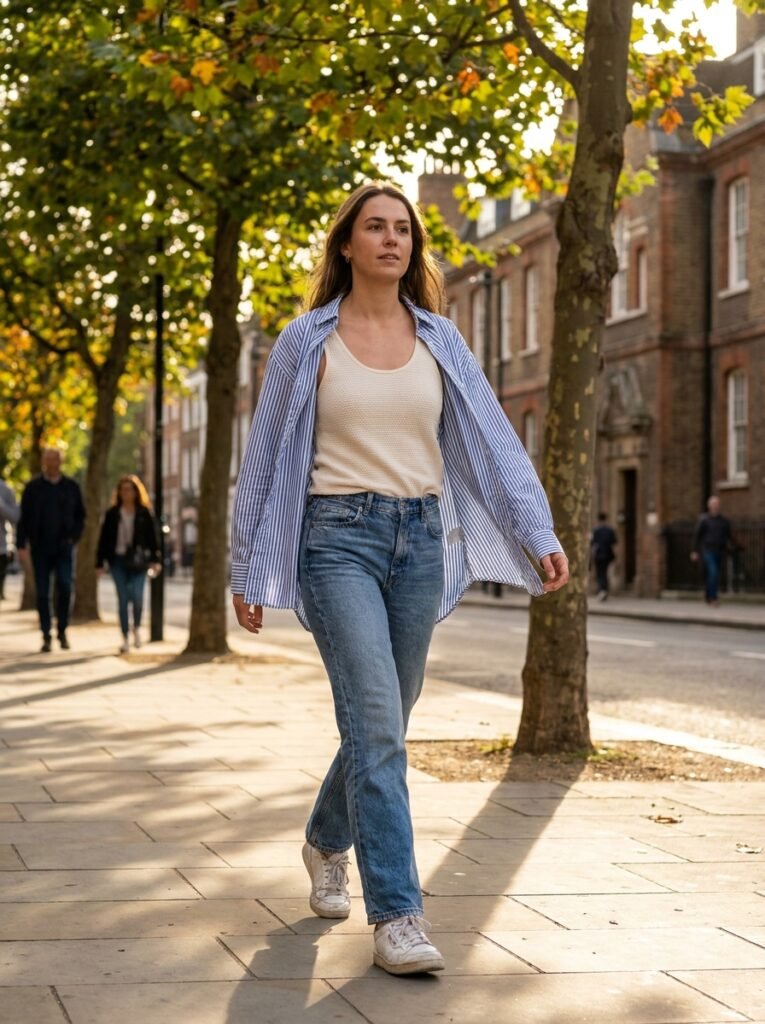
Plain, and that is the point. The base is season-neutral, so the jacket does the talking: denim in late August, a shirt jacket by mid September, a lightweight trench once the mornings get real.
Midi skirt with a fitted knit top
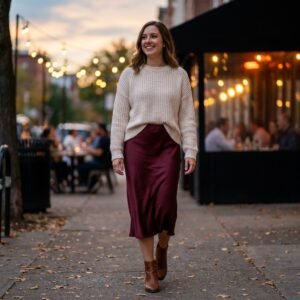
A satin or cotton midi skirt with a thin knit tee is one of the easiest September looks. The skirt keeps things light, the knit adds a bit of texture, and the whole thing works with flats, boots, or sneakers depending on the day.
Long sleeves on the top, bare legs below
Shorts with a long-sleeve linen shirt or a lightweight sweater sounds odd and looks great. It also handles the exact problem of a cool morning and a hot afternoon better than most outfits, since sleeves can be pushed up and left there.
Sleeveless top with wide-leg trousers
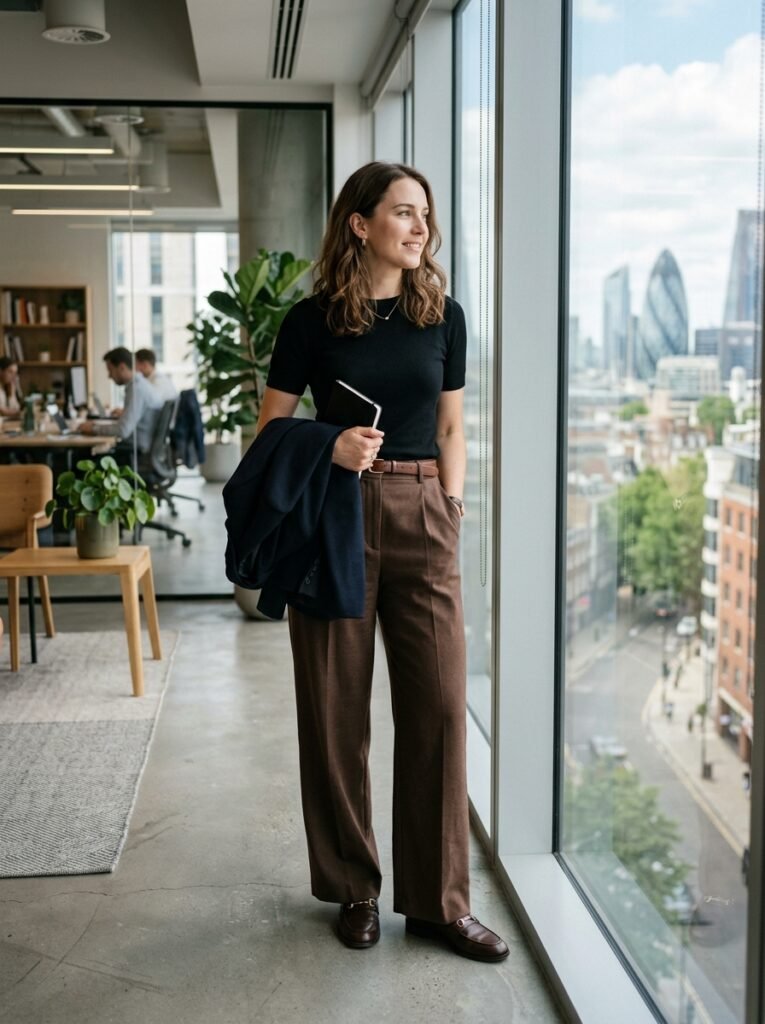
Covered legs in a breathable fabric, bare arms up top. Add a blazer for an office or an evening, take it off outside. This one works from a Tuesday at a desk through dinner without changing anything.
Sneakers with a slip dress
The contrast keeps a summer dress from looking too formal for September errands. Crew socks with sneakers has moved from questionable to normal, and it adds a little coverage on the cooler days.
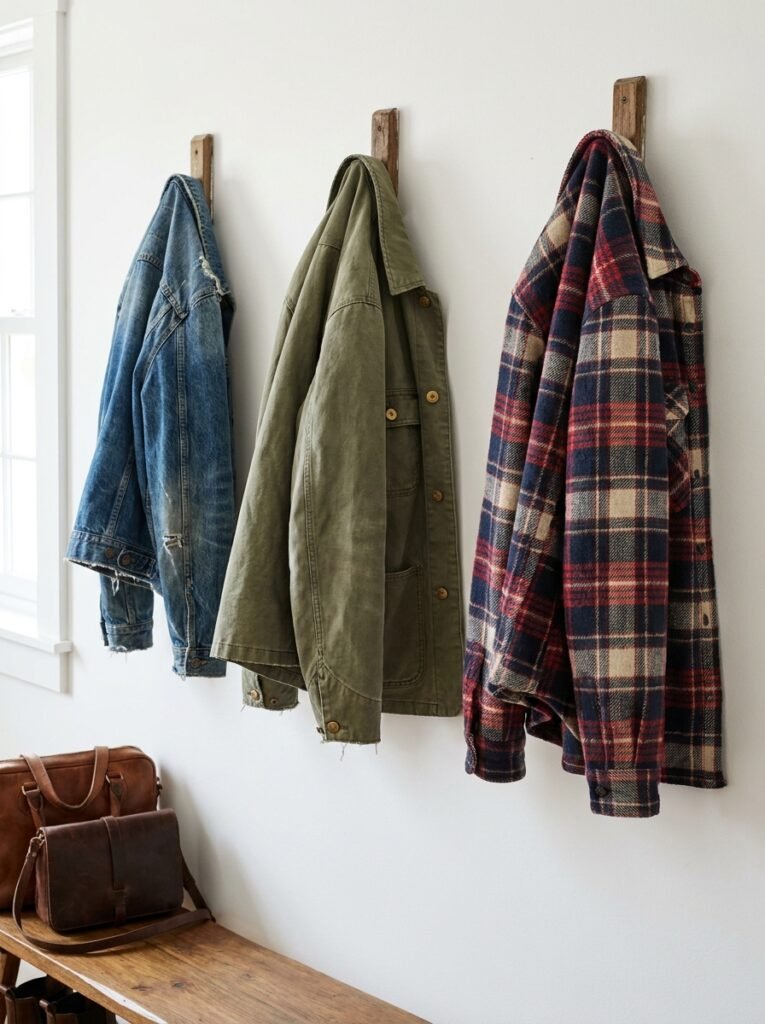
The Third Piece Does the Heavy Lifting
A top and a bottom is an outfit. A top, a bottom, and something over it is a look. In transitional weather the third piece also needs to come off easily and not be a hassle to carry.
Options ranked roughly by how warm they are:
- Oversized button-down worn open. Barely warm, mostly visual, easy to tie at the waist.
- Denim jacket. The default for late August. Works over dresses, tees, and tanks.
- Utility or chore jacket. Cotton canvas in olive, tan, or black. Slightly more structured than denim.
- Shirt jacket. Flannel or brushed cotton, sits between a shirt and a jacket, ideal for mid September.
- Cardigan. Cropped over high-waisted pieces, longline over slim ones. Fine-gauge for now.
- Lightweight trench. For rainy weeks and cooler evenings, and it dresses up a plain base instantly.
- Knit or quilted vest. Adds core warmth with no sleeves, which suits a warm afternoon.
Color Shifts That Signal Fall Without the Heat
Color is the cheapest way to move an outfit forward a season, because it costs nothing in warmth.
Keep the summer whites and creams. The old rule about white after Labor Day has not applied for decades, and winter white is a standard fall category now. What helps is switching stark optic white for softer cream, ivory, or oatmeal, which sit better beside deeper shades.
Colors that read September without looking costume-like:
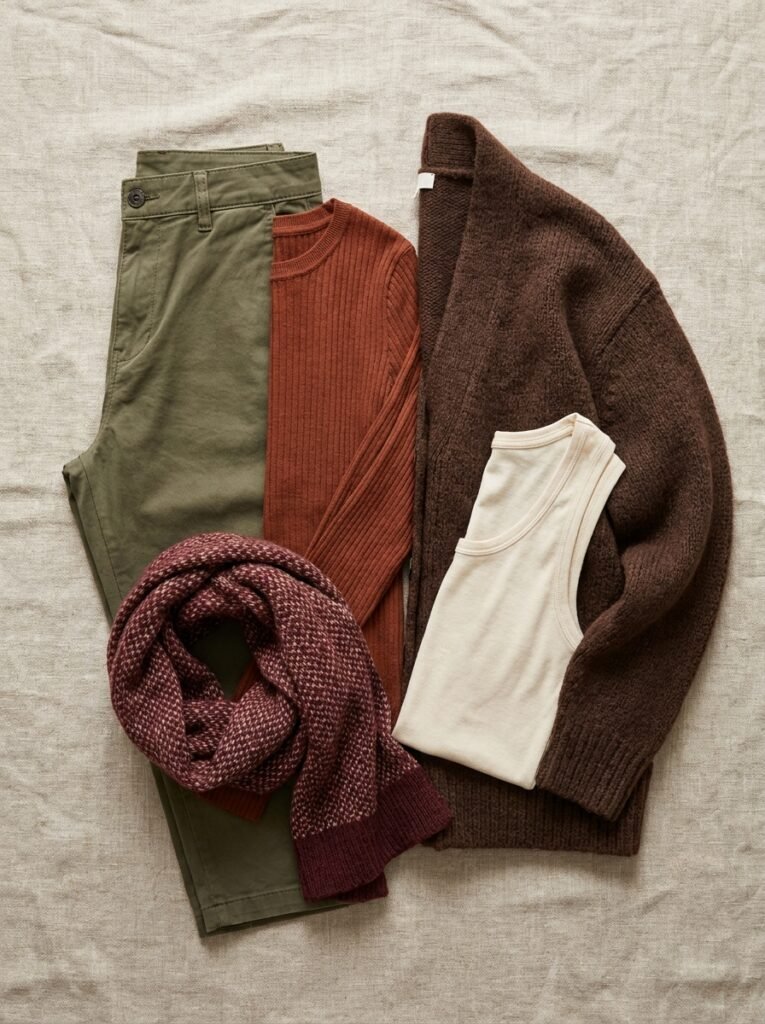
- Olive and moss, which pair with denim, cream, and black equally well
- Rust, terracotta, and warm caramel
- Chocolate brown, which has largely replaced black as the neutral of choice for daytime
- Burgundy and deep wine for evenings
- Navy and slate as an alternative to black
- Butter yellow and sage as the last of the summer brights, worn with darker bottoms
A practical approach: keep the light bottoms you already wear, then bring the darker colors in on top. The eye reads the upper half first, so the outfit shifts season even with white jeans still in the rotation.
Shoes That Bridge the Gap
Shoes date an outfit faster than anything else. Sandals in September look like the outfit was assembled in a hurry.
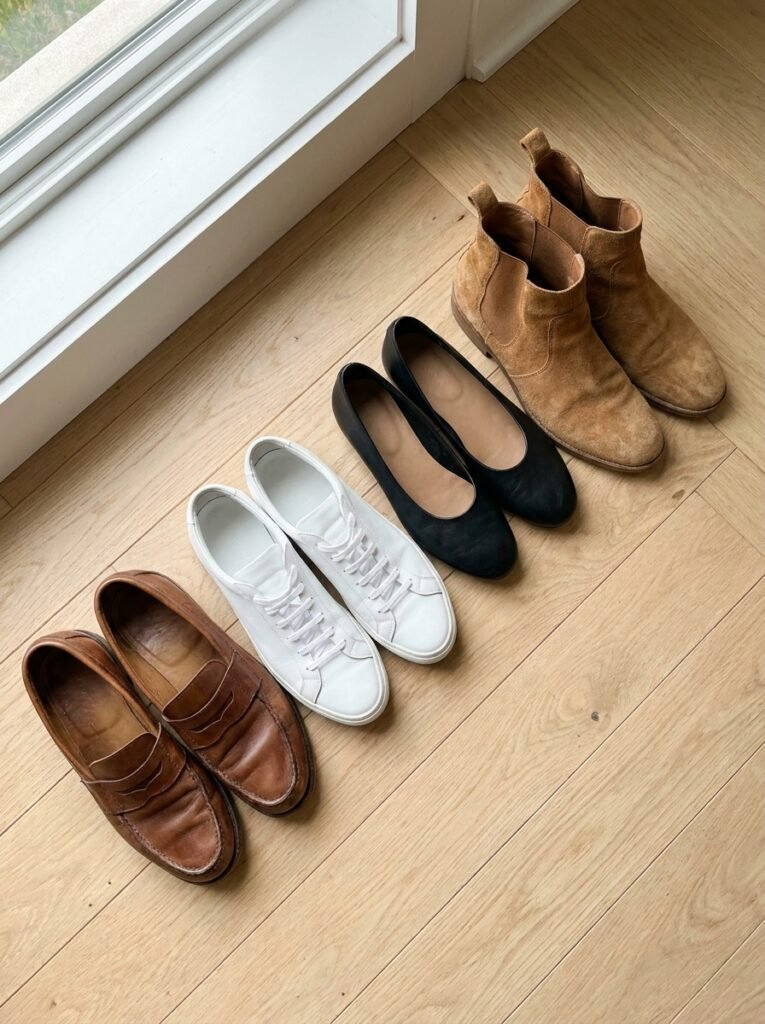
- Loafers, with or without visible socks, work from August straight through November.
- Ballet flats and mesh flats keep dresses feeling light while covering the toes.
- White or cream sneakers, the easiest option for errands and travel days.
- Mules, closed toe with an open back, which splits the difference in a hot week.
- Ankle boots, usually fine from mid September in cooler regions, later in the South.
- Kitten heels or block heel slingbacks for evenings that start warm and end cool.
Ideas Sorted by Where You Are Going
Office and hybrid days
Wide-leg trousers with a fitted knit tee and loafers covers most business casual settings. Keep a blazer or a cardigan at your desk rather than carrying one through a hot commute. A shirt dress with a belt and flats is the one-piece version of the same idea.
Weekend and errands
Straight jeans, a cotton tank, an open button-down, and sneakers. Or bike shorts under an oversized shirt if the day is going to stay hot. Add a tote large enough to hold the layer you take off by noon.
Evening plans
A slip dress with a leather or faux leather jacket handles a patio dinner that runs late. A satin midi skirt with a plain black knit is the low-effort alternative. Both work with the same shoes you wore during the day.
Travel days
Airports and cars run cold while the sidewalk runs hot. A jersey set or matching knit separates, sneakers, and a large scarf covers both ends. The scarf doubles as a blanket, which is more useful than a jacket you have to hold.
Campus and class
Layered basics win here because buildings vary wildly. A tee, a zip hoodie or cardigan, straight jeans or a denim skirt, and sneakers. Choose a bag with room for the layer once the walk across campus warms things up.
Accessories and Finishing Details
Small things carry a lot of the seasonal signal, and none of them add heat.
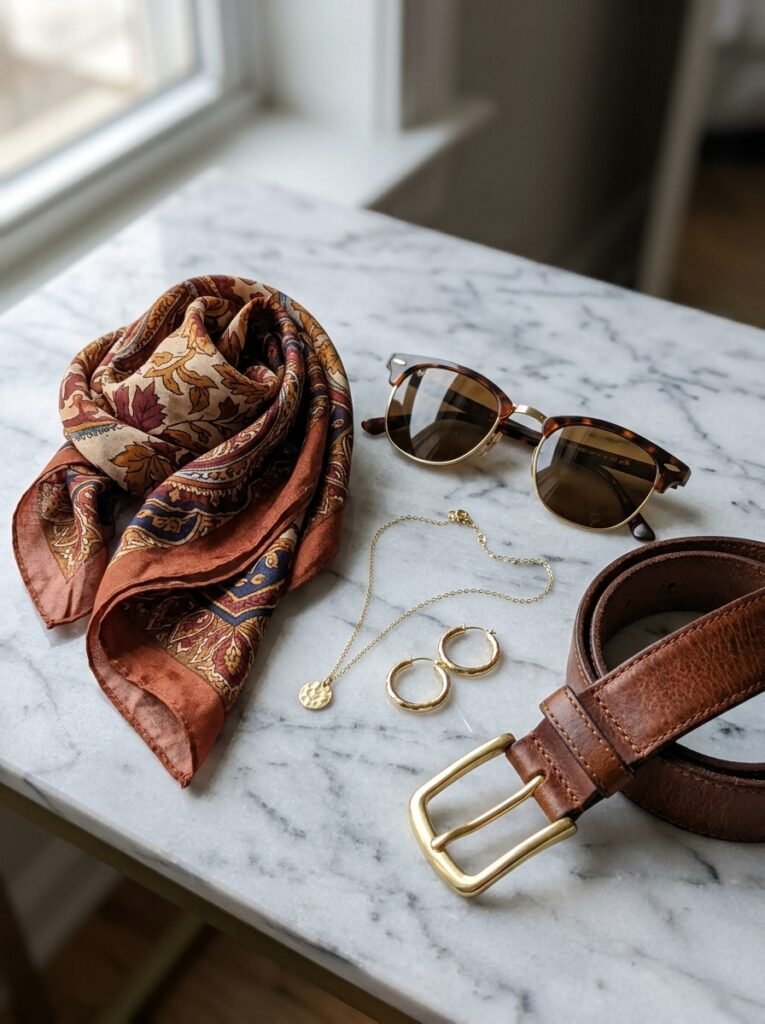
A lightweight scarf in a fall color knots at the neck in the morning and lives in a bag by noon. A leather belt breaks up a dress or ties a tee to trousers. Gold jewelry, hoops, and a stacked chain warm up an otherwise plain outfit. Sunglasses in a tortoise or amber frame feel more September than a bright summer pair.
Grooming details tend to shift in the same weeks. Manicure shades move from bright coral toward mocha, wine, and sheer neutrals, and shape matters as much as color. The site’s guide to almond nails on shorter lengths covers how that shape works when the length is not there yet. Hair moves in a similar direction, with more texture and softer layers as the humidity drops.
A Small Capsule for the Six Week Window
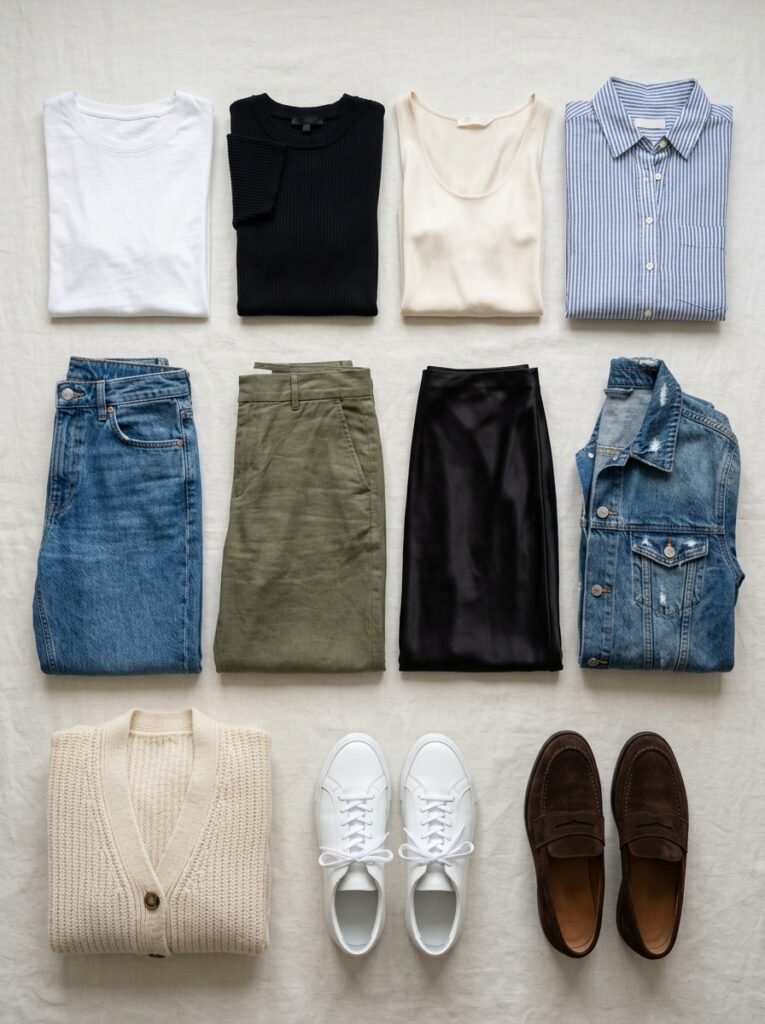
Twelve to fourteen pieces cover the whole stretch if they share a color story. One version:
Tops: white tee, black fine-gauge knit tee, cream tank, oversized striped button-down Bottoms: straight blue jeans, wide-leg trousers in olive or chocolate, satin or cotton midi skirt Dresses: one printed midi, one plain slip dress Layers: denim jacket, shirt jacket, cropped cardigan Shoes: white sneakers, loafers, one pair of ankle boots for later in the run
That set produces more than thirty outfits without much thought, and everything works with everything else because the palette stays in the same family. More fashion and styling ideas are collected in the fashion section of the site.
What Tends to Go Wrong
A few patterns show up in transitional outfits that never quite land:
- Dressing for the forecast high only. The 7 a.m. version of the outfit matters just as much as the 3 p.m. one.
- Heavy fabrics in fall colors. A rust-colored wool sweater in 84 degree weather is still a wool sweater.
- Layers that cannot come off. Anything that requires a mirror to take off will stay on and stay uncomfortable.
- Summer sandals with fall pieces. The single fastest way to make an outfit look unresolved.
- Buying the full fall wardrobe in August. Most of it sits unworn for two months, and by then the newness has worn off.
- Ignoring the bag. If layers come off during the day, something has to carry them.
Working Through the Stretch
Transitional dressing is mostly a swapping exercise. The same dress, the same jeans, and the same tank stay in rotation. What changes is the shoes, the third piece, and the color sitting closest to the face.
Start with two or three formulas that already work, then adjust one variable at a time as the mornings cool off. By the time real fall arrives, most of the wardrobe has moved over on its own.