Teacher Outfit Ideas for the First Week Back
The first week back is not really a teaching week. It is a moving week. Furniture gets rearranged, bulletin boards go up, supply boxes come down from a shelf that is too high, and somewhere in there a class list changes twice. Add a building where the air conditioning either has not been switched on yet or is running like it is January.
So the clothes have to do a lot. They need to look put together on day one, survive squatting next to a desk, handle a marker cap that leaks, and stay comfortable through a day that involves a surprising number of steps.
Below are outfit ideas built around those specifics, including a five day set for the first week, a base wardrobe that stretches, and the details that tend to decide whether an outfit works past 10 a.m.
What the First Week Asks of an Outfit
It has to move
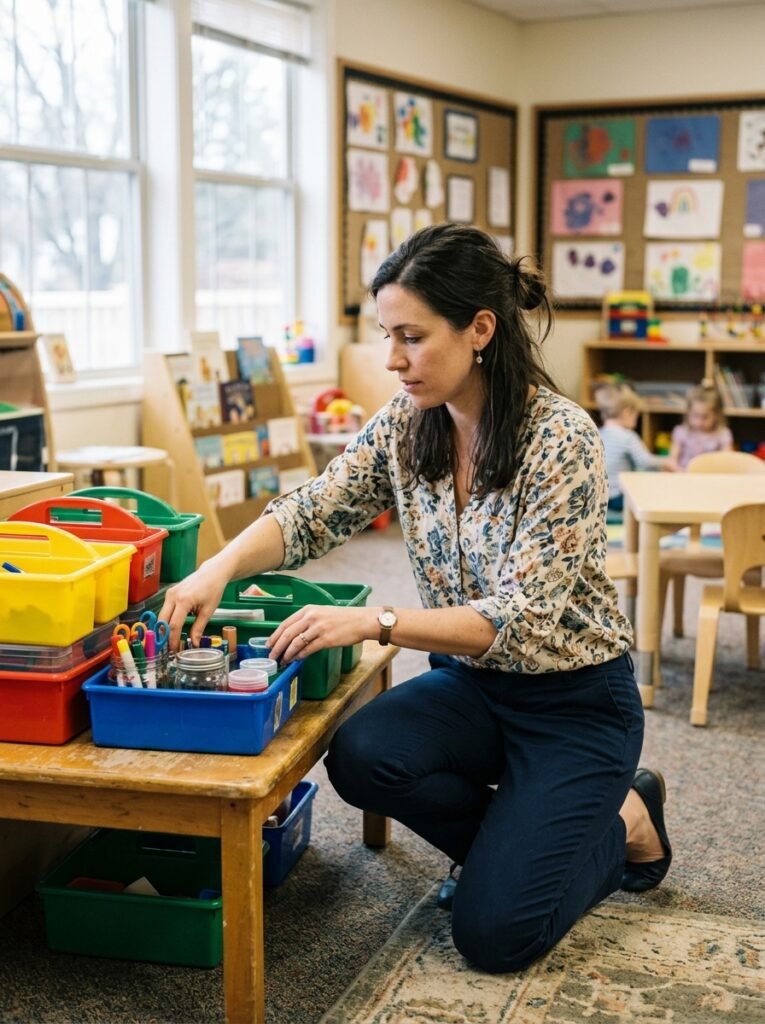
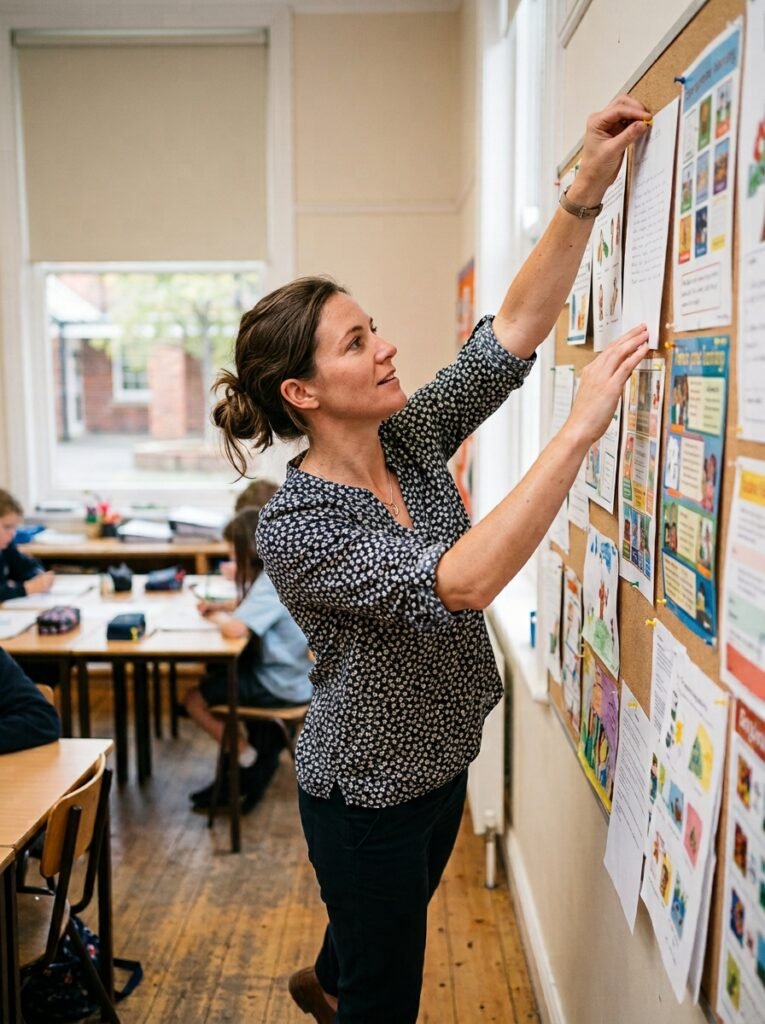
Teaching involves crouching, reaching, kneeling, carrying, and standing for most of the day. Anything that rides up when you bend or pulls across the shoulders when you reach overhead is out, regardless of how it looks standing still.
The simple test is to squat all the way down and raise both arms in front of a mirror before leaving the house. Most outfits that fail during the day fail that test at home.
The room temperature is unpredictable
Classroom conditions vary building to building and sometimes hour to hour. A room can sit at 82 degrees in the afternoon and 68 by first period the next morning. The EPA keeps guidance on indoor air quality in schools that explains why older buildings swing so much. In practical terms, it means every outfit needs a layer that comes off easily, and a spare cardigan should live in the classroom.
The dress code question
Codes vary by district and often by building, and enforcement varies more. Jeans on certain days, sleeve length, open toe rules, and leggings policies are worth confirming before the first week rather than after. District policy is usually in the staff handbook, and the National Education Association publishes general workplace resources if you need context on how these are typically set.
A Five Day Set for the First Week
Each of these uses pieces that repeat, so the week takes five decisions instead of fifteen.
Monday: the first impression day
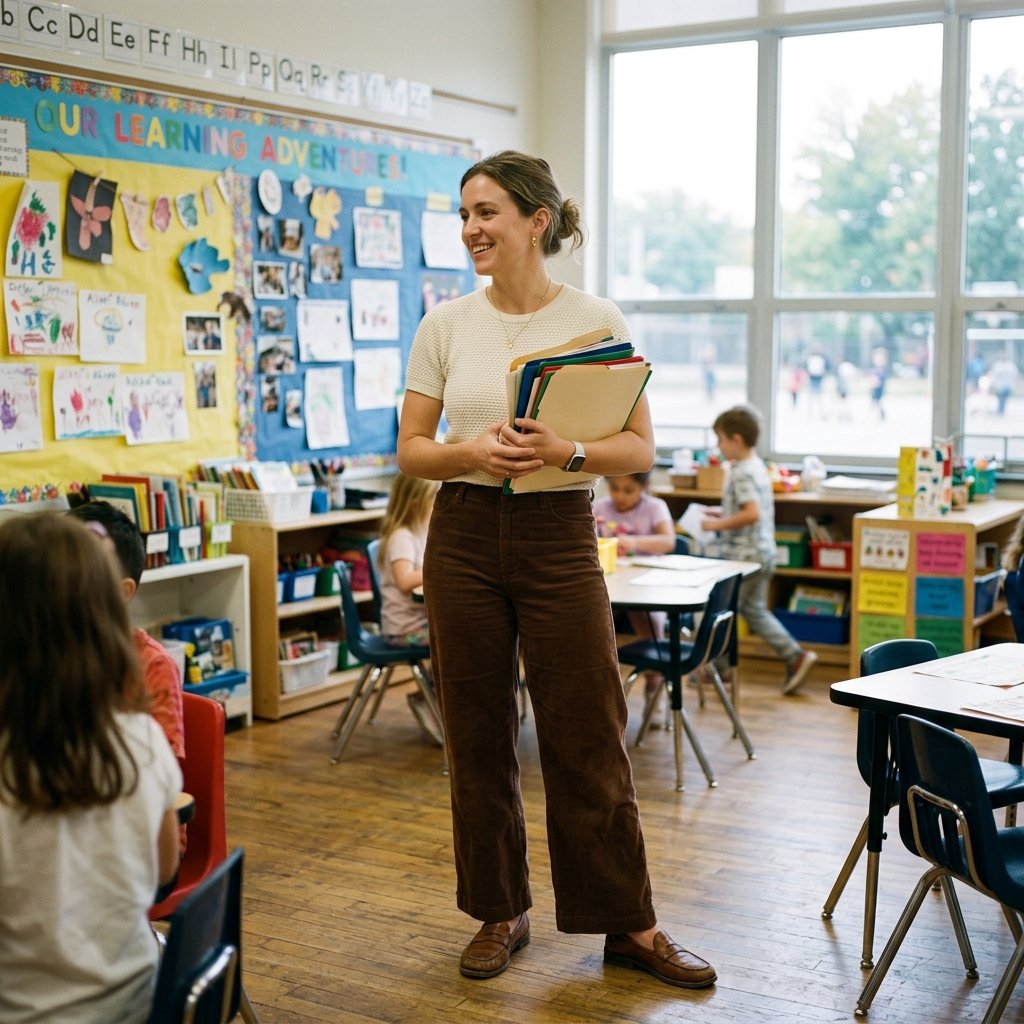
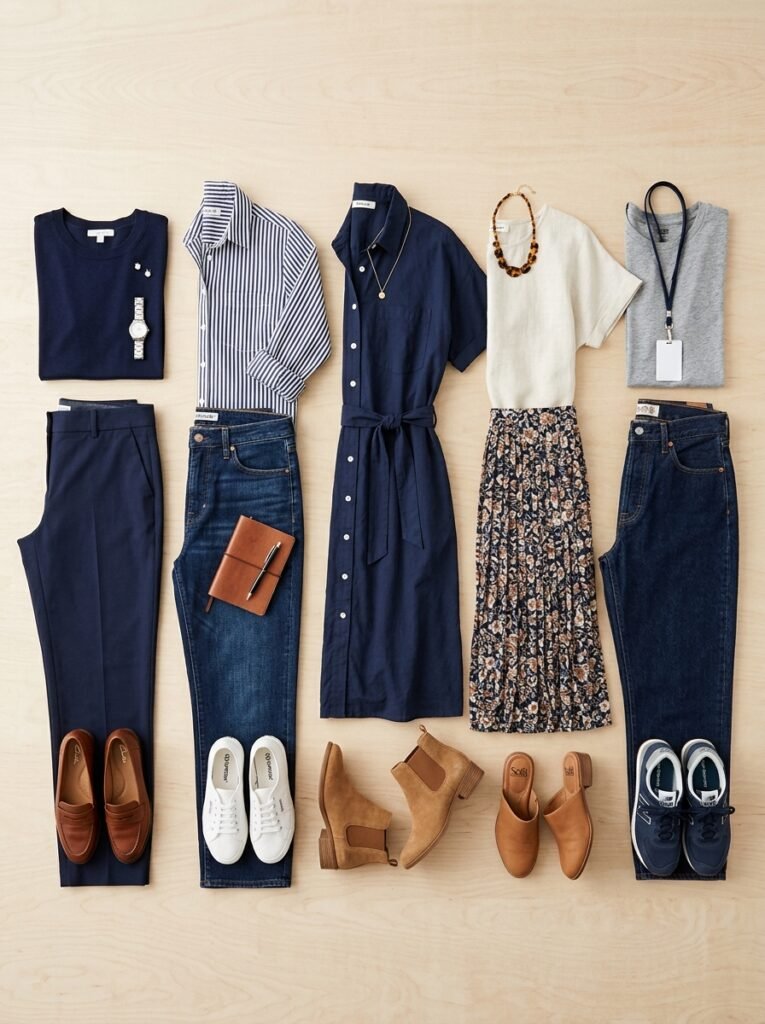
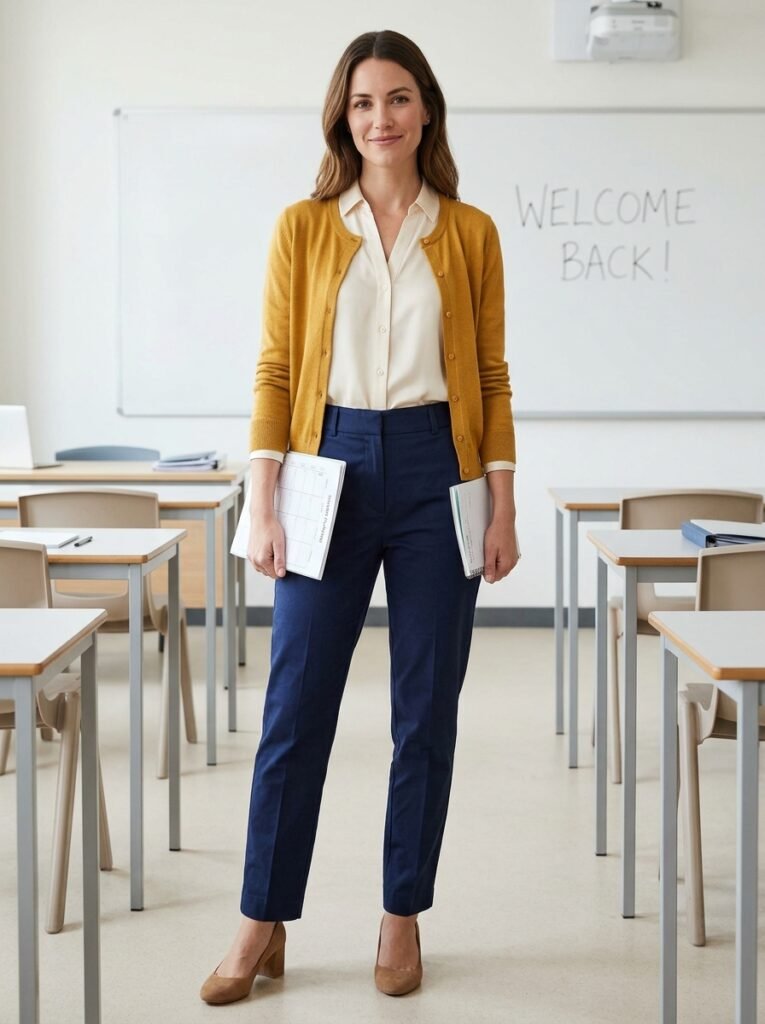
Wide-leg trousers in navy or chocolate, a fitted knit tee, loafers, and a light blazer carried rather than worn. Structured enough to look intentional on day one, comfortable enough for a room that will not stop moving.
Tuesday: the setup day
Straight jeans if the code allows, or ponte pants if not, with a striped cotton button-down and white sneakers. This is usually the day the furniture moves, so choose the outfit that can sit on the floor.
Wednesday: the hot classroom day
A cotton shirt dress with a belt and flats. One piece, no waistband, breathable, and it looks more considered than the effort it takes. Add a thin cardigan for the walk through an over-cooled hallway.
Thursday: meet the families
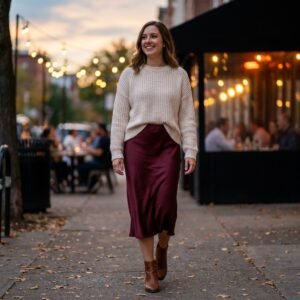
A midi skirt with a tucked knit top and block heel sandals or loafers. Slightly dressier without a suit, and it photographs well for the class newsletter photo somebody will inevitably take.
Friday: spirit or casual day
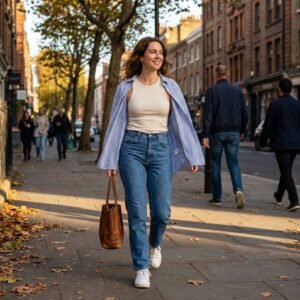
School shirt or a plain tee with dark straight jeans and sneakers. Push the sleeves, add a belt and small gold hoops, and it stays on the right side of casual.
Bottoms That Hold Up All Day
- Ponte or knit trousers. Look like dress pants, move like leggings, and hold a crease through a full day.
- Wide-leg or straight trousers in a mid-weight fabric. Room to move without extra bulk.
- Trouser style jeans in a dark rinse, where jeans are permitted. Reads more formal than a five pocket.
- Midi skirts with stretch, long enough that sitting on the floor is not a calculation.
- A-line or shirt dresses, which remove the waistband problem entirely.
Two practical notes. Pockets are worth prioritizing, since a phone, a marker, and a key card have to go somewhere. And light colors on the first week are a gamble in a room full of dry erase markers, glue sticks, and coffee.
Tops That Survive Markers and Reaching
The top takes most of the abuse, so a few features matter more than style.
- Busy prints and mid-tone colors hide marks far better than solid white or black.
- Knit tees in a slightly thicker cotton hold shape through a day of movement.
- Button-downs worn open over a tank, which double as the layer.
- Sleeves that stay pushed up. Anything that slides back down while writing becomes a distraction.
- Higher necklines, because bending down to a desk happens roughly four hundred times a day.
- Wrinkle resistant fabrics, since the outfit sits in a car seat and then works for eight hours.
Avoid anything dry clean only during the first week. Something will happen to it.
Shoes Are the Real Decision
Teachers cover a lot of ground without noticing, and the shoe choice tends to determine how the afternoon feels.
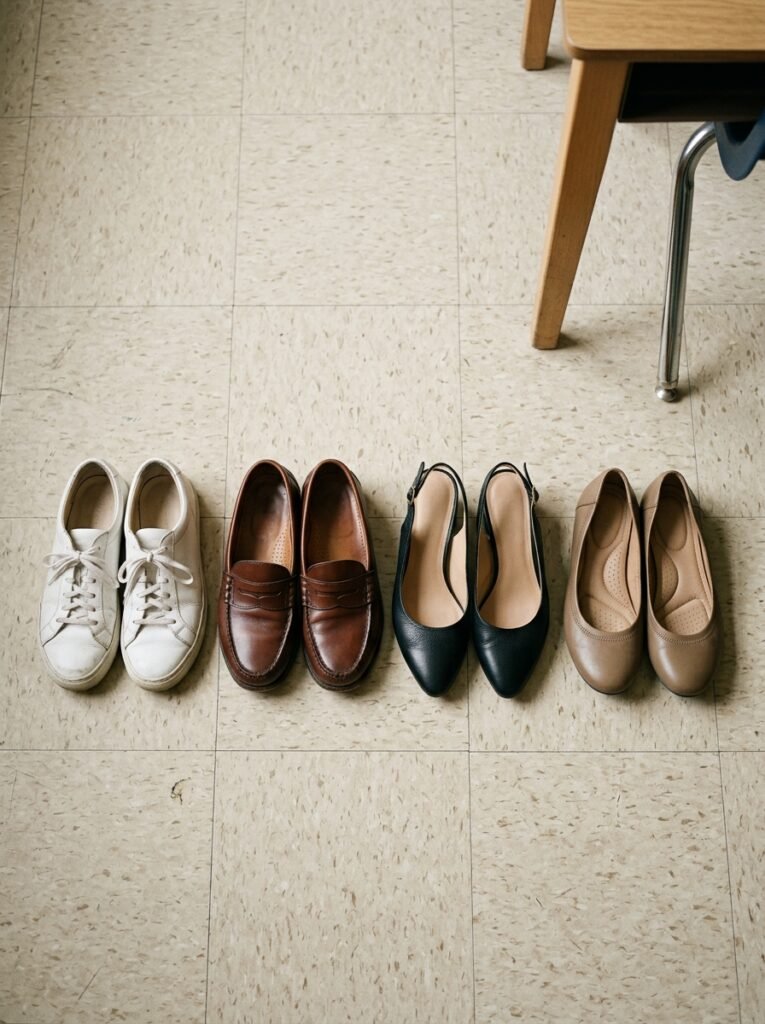
- Clean sneakers in white, cream, or black, which now read as acceptable in most buildings
- Loafers with a cushioned sole, the middle ground between casual and formal
- Block heel sandals or slingbacks for meet the teacher night, not for a setup day
- Ballet flats with real support, as opposed to the paper-thin versions
- Ankle boots once the weather turns, usually late September
Break new shoes in before the first day rather than during it, and keep a second pair under the desk. The American Podiatric Medical Association publishes general guidance on supportive footwear if you are choosing a pair to wear five days a week.
The Layer Problem
One layer per outfit, chosen for how fast it comes off.
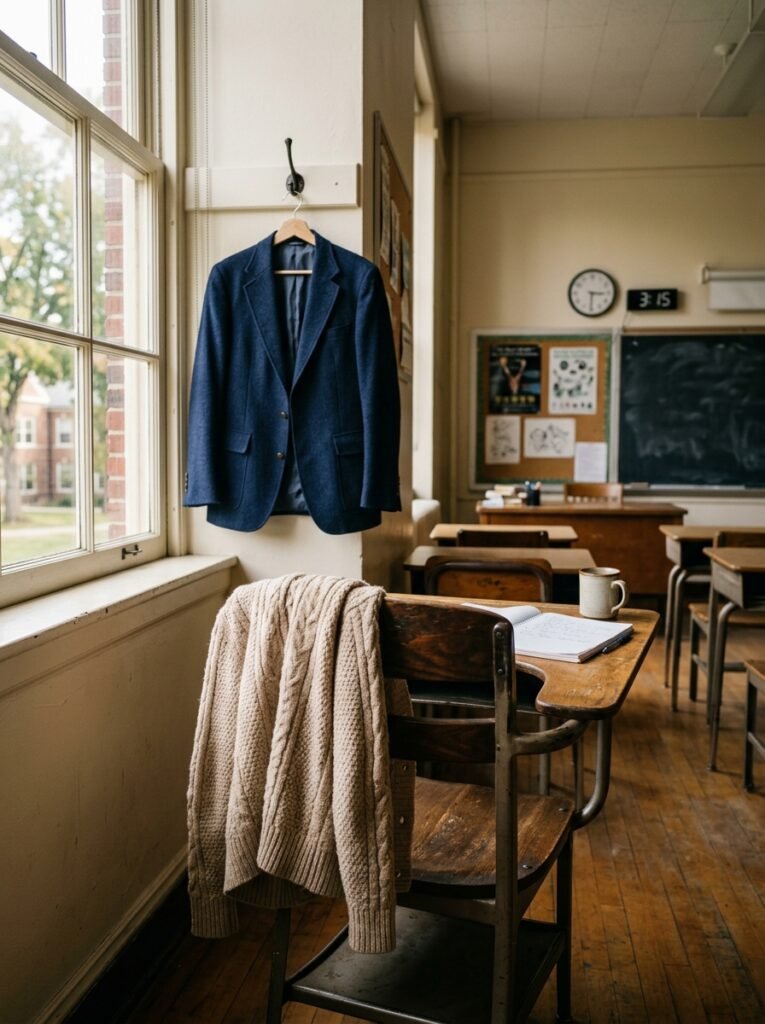
A cropped or longline cardigan is the default and can stay in the classroom permanently. An unstructured blazer dresses up jeans for a family night. A denim jacket works on casual days. A knit vest adds warmth without sleeves that catch on things. A kimono or long open shirt covers a sleeveless top in a building with sleeve rules.
Keep one spare in the room. Somebody will need it, and often that somebody is you.
Dressing by What You Teach
Elementary
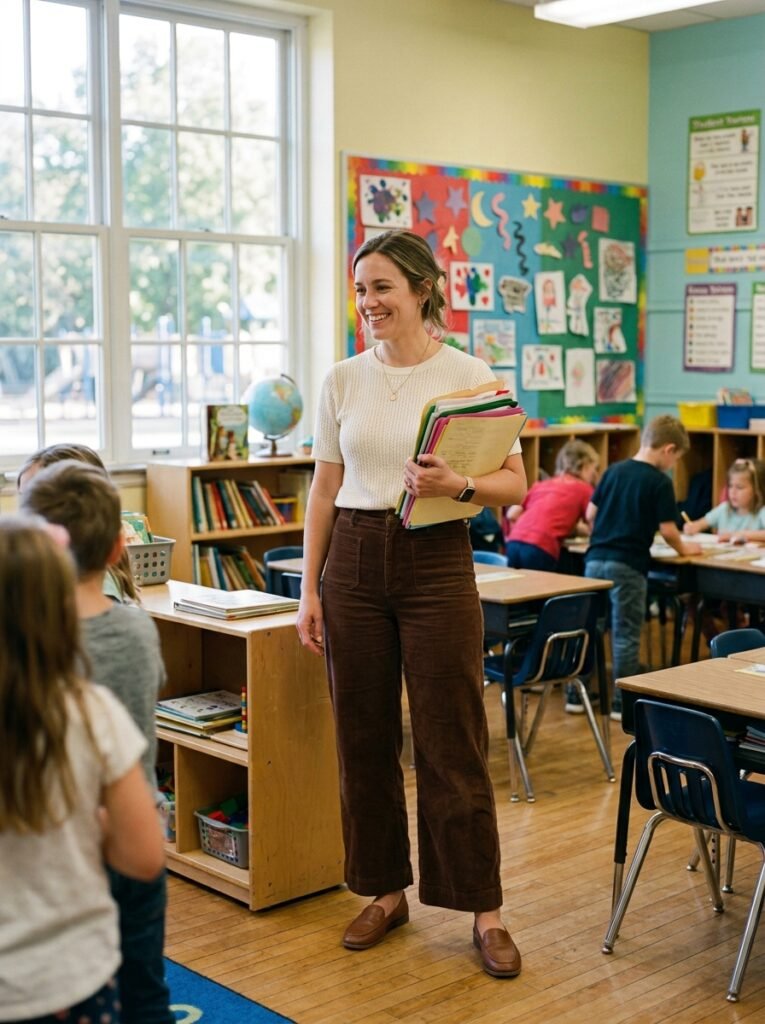
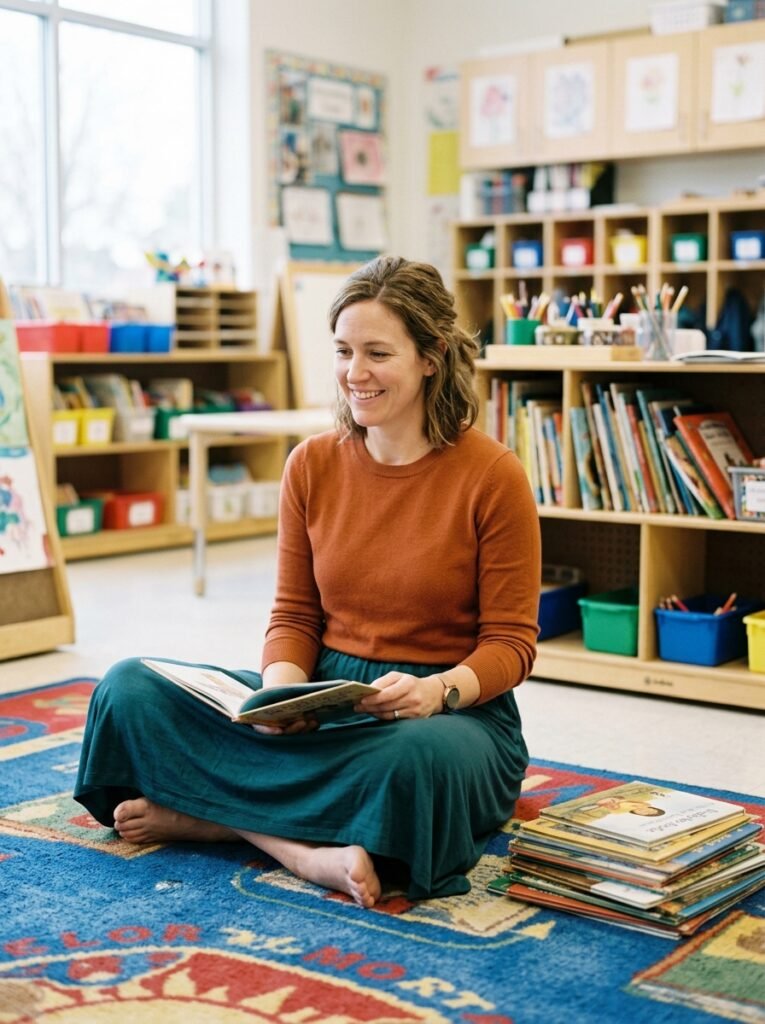
The floor is part of the job. Choose bottoms that allow sitting cross-legged, tops that stay put when leaning over a table, and fabrics that wash without ceremony. Skip long necklaces and dangly earrings, which small hands find fascinating. Wipeable shoes are worth more than pretty ones.
Middle school
Slightly more polish, same practicality. Students at this age notice everything, so a consistent, low-key uniform of a few repeating pieces works better than a wide rotation.
High school
Structured pieces read well here. Trousers, blazers, button-downs, and loafers, with sneakers on the days that call for it. A tote large enough for a laptop matters more than at other levels.
Specials and labs
Art and science come with their own rules. Aprons over everything, closed-toe shoes without exception, sleeves that can be secured near open flames, and no loose scarves near equipment. PE and music have their own practical needs, usually involving movement and standing.
Details That Earn Their Place
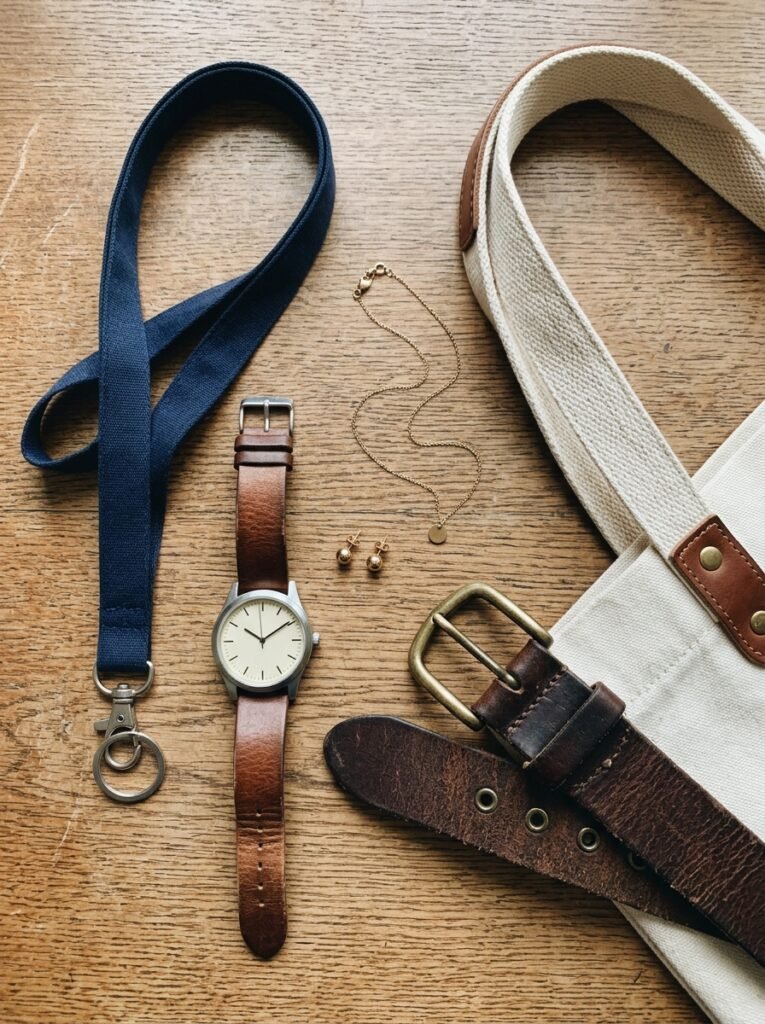
A lanyard is required in most buildings, so choosing one that is not a giveaway freebie is a small upgrade. A watch is more useful than a phone during class. Small stud earrings and one simple necklace survive a day that involves hugging six-year-olds. A belt pulls a tucked top together and takes three seconds.
Nails end up short and practical in this job whether or not that is the plan, since typing, laminating, and cutting paper all conflict with length. The site’s guide to almond shape on shorter nails covers how to keep the shape looking finished at a length that is actually workable.
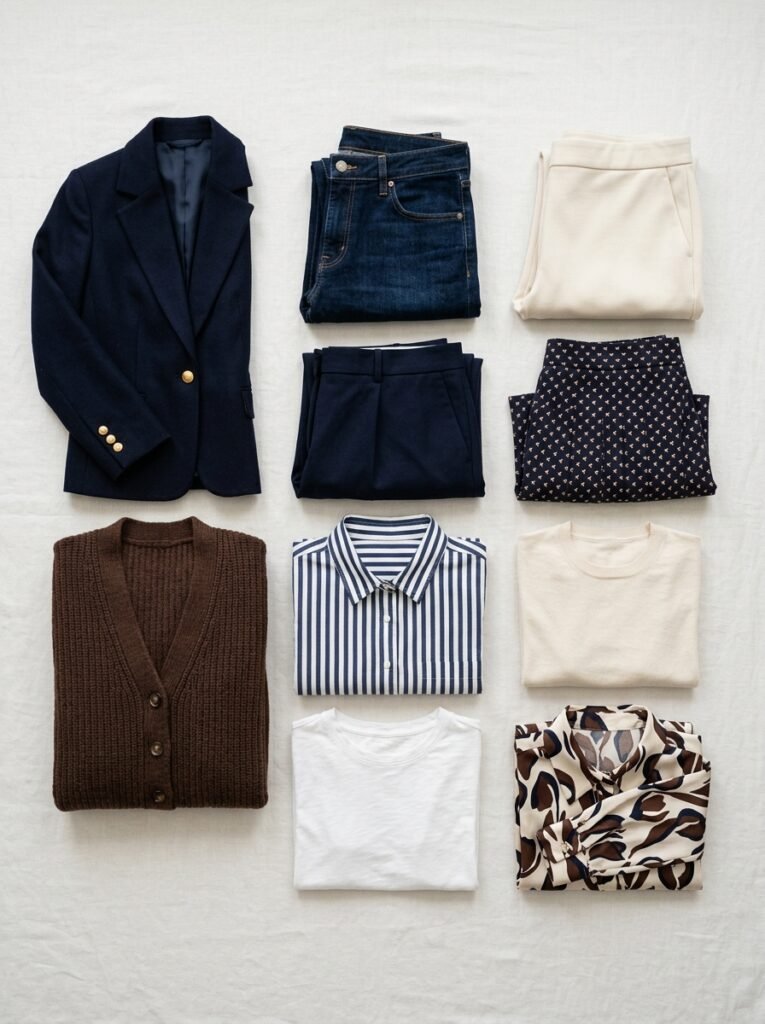
A Ten Piece Base That Covers Five Weeks
Everything here works with everything else, which is the whole point.
Bottoms: navy or chocolate wide-leg trousers, black ponte pants, dark straight jeans, one midi skirt Tops: white knit tee, black knit tee, striped button-down, one printed blouse Dresses: one cotton shirt dress Layers: cardigan, unstructured blazer, denim jacket Shoes: white sneakers, loafers
Keep the palette to two neutrals plus one accent color. That is what allows a ten piece base to produce a month of outfits without anyone noticing the repetition.
Habits That Make the Mornings Shorter
- Plan five outfits on Sunday and hang them together. The first week has enough decisions in it.
- Keep a backup outfit at school, or at minimum a spare top. Coffee, paint, and glue are all real risks.
- Stash a stain pen in a desk drawer.
- Steam or hang clothes the night before, since ironing at 6:30 a.m. never happens.
- Photograph outfits that worked so the good combinations are not re-invented every August.
What Does Not Survive the First Week
- Brand new shoes. Day one of a nine month school year is the worst possible day to break them in.
- Anything that needs adjusting. A skirt that rides up or a top that gaps at the bust will be adjusted all day.
- All white outfits in a room being set up.
- Heavy fall pieces in August. The building may not be cooled, and wool in a warm classroom is a long day.
- Long, loose sleeves near laminators, glue guns, and burners.
- Statement jewelry that gets grabbed, caught, or lost.
Setting Up the Rotation
Start with the shoes, then the bottoms, then build tops around what already fits both. Most teachers end up wearing the same six or seven combinations most of the year, so the goal for the first week is finding out which of them actually work in your particular building.
More seasonal styling ideas and outfit formulas are collected in the fashion section of the site.