
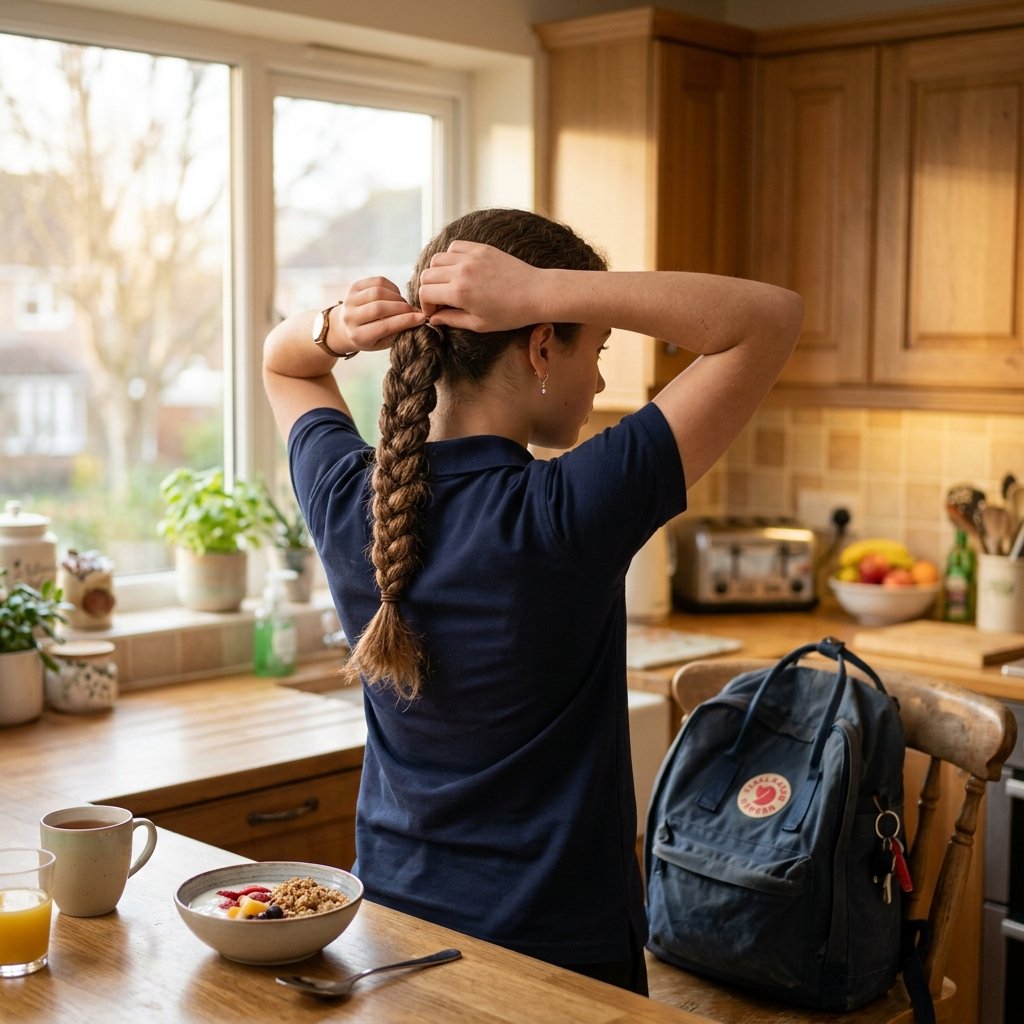
Back to School Hairstyles for Busy Mornings
School mornings do not really have a hair problem. They have a time problem. Between the alarm and the bus there are maybe forty minutes, and hair gets whatever is left after breakfast, the missing shoe, and the permission slip nobody mentioned until 7:15.
So the useful list is not the prettiest styles. It is the ones that can be done in one pass, without a second mirror, on hair that may or may not have been washed, and that still look fine at pickup after gym class and a backpack strap.
Everything below is sorted by how long it takes, with variations by hair type and a few night-before habits that make the whole thing shorter.
What Separates a School Style From a Weekend One
Two things, mostly, and both are practical rather than aesthetic.
It has to hold for eight hours
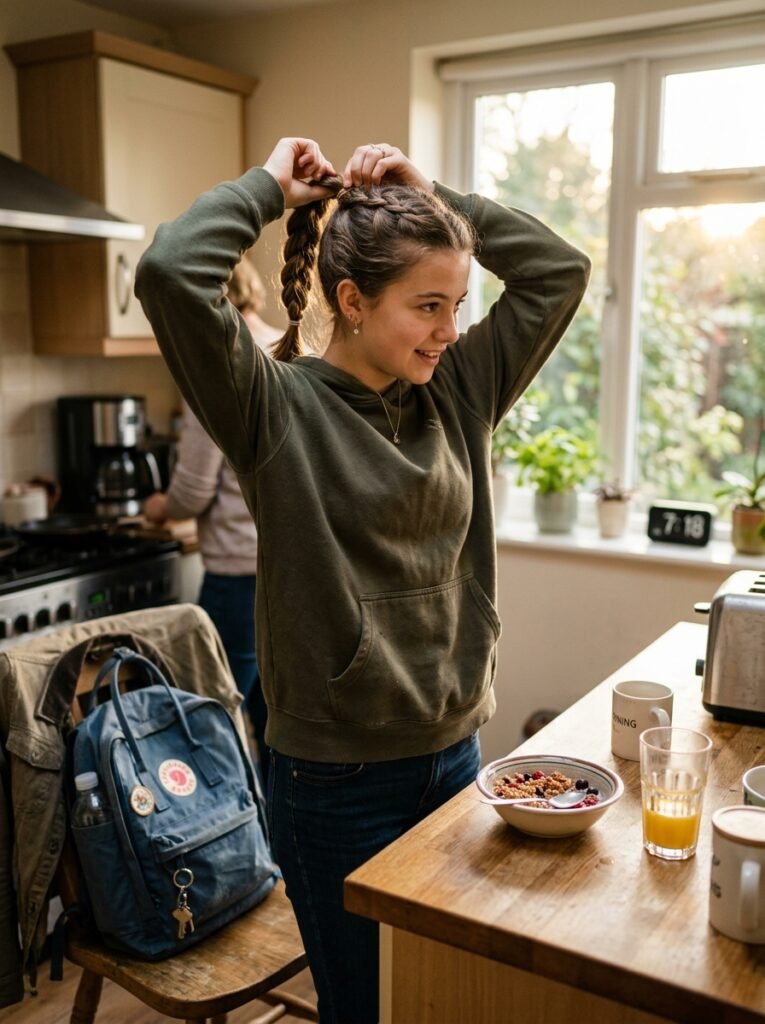
Hair on a school day goes through more than most styles are designed for. Backpack straps rub the lower layers, PE happens, hoods go up and down, and by early afternoon a style that was only lightly secured is halfway out.
The fix is usually the anchor rather than the style. A ponytail secured twice, a braid tied slightly tighter at the ends, or a bun with two pins crossed instead of six placed randomly will outlast something that looked neater at 7:30.
It has to be done without help
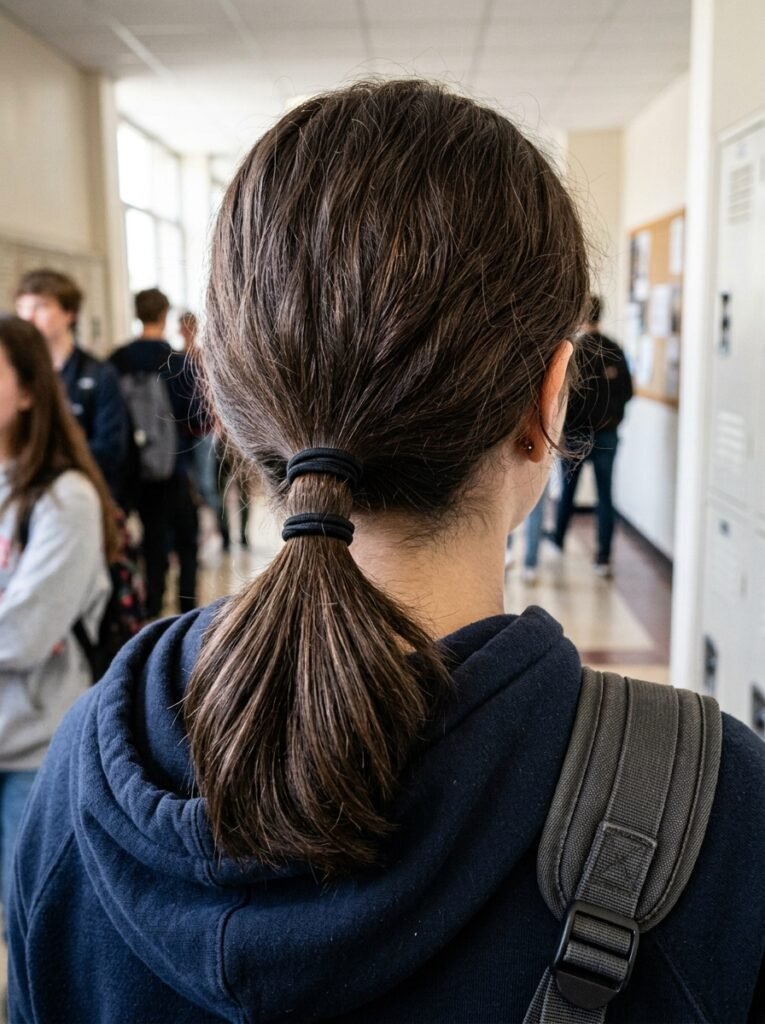
Anything that requires two hands behind the head and a second mirror is a weekend style. School morning styles use the front hairline, one section at a time, or a shape that does not need to be symmetrical to look intentional.
Tight styles worn every day are worth watching, since constant tension along the hairline is hard on hair over time. General hair care guidance from the American Academy of Dermatology covers this if you want the background before setting a daily routine.
Night Before Habits That Buy Back Ten Minutes
The fastest morning styles usually start the night before.
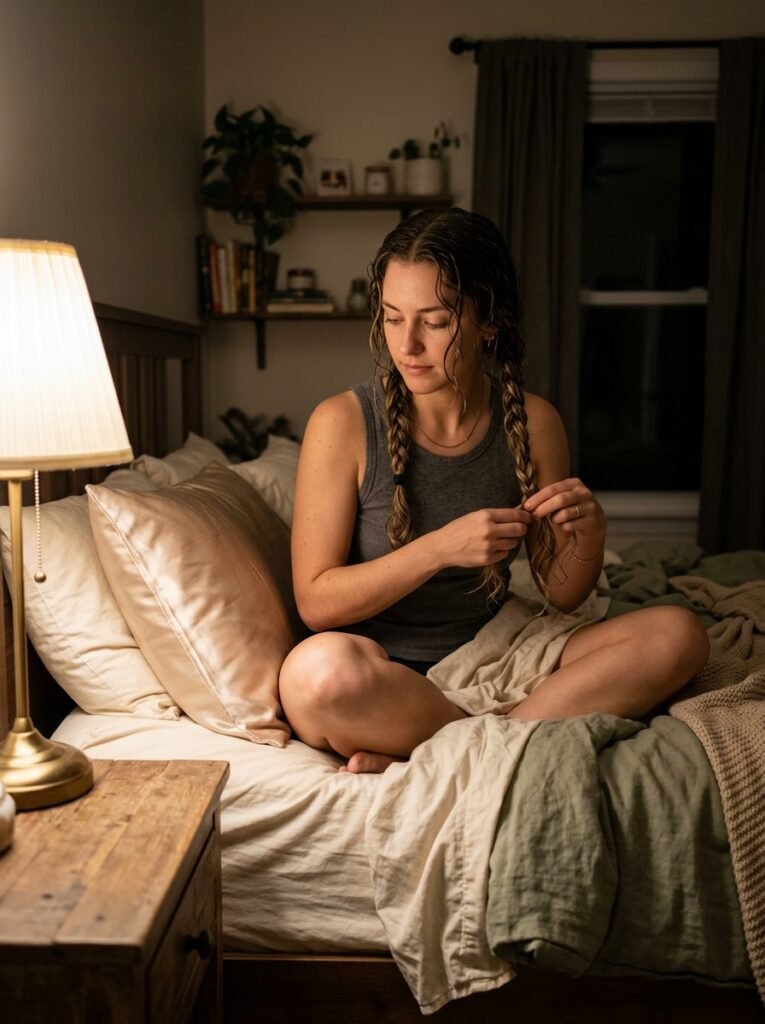
- Braid damp hair loosely before bed for soft waves by morning. Two braids for looser waves, four for tighter texture.
- Sleep on satin or silk, or use a bonnet or scarf. Less friction means less frizz to fix.
- Wash at night, not in the morning. Hair that has settled overnight styles faster than hair still damp at 7 a.m.
- Apply dry shampoo before bed rather than at breakfast. It absorbs while you sleep and looks less powdery.
- Set out the tools. Elastics, a claw clip, and a brush in one spot by the door removes the daily search.
- Twist and pin damp hair for heatless texture if the morning calls for something more than straight.
Styles That Take Under Two Minutes
These are the everyday defaults. None of them need a straightener or a second person.
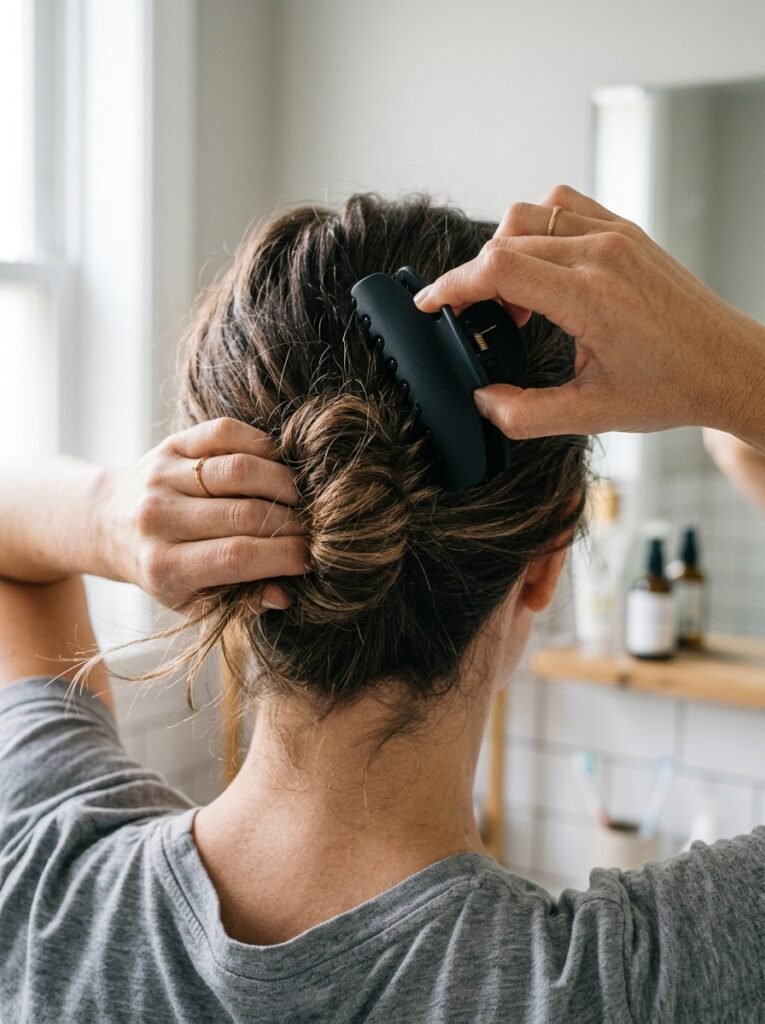
- The claw clip twist. Gather all the hair, twist once from the base, fold the twist upward, and clip. Works better on second day hair than clean hair.
- Low bun with spin pins. Two corkscrew pins hold more than a handful of bobby pins and take about fifteen seconds.
- Half up claw clip. Take the top section from temple to temple, twist, clip. Keeps hair off the face without a full style.
- Wrapped ponytail. Standard ponytail, then wrap a small piece of hair around the elastic and pin it underneath. The wrap is what makes it look finished.
- Headband push back. A fabric or padded headband over loose hair, pushed forward slightly then settled back for volume at the crown.
- Low knotted pony. Split the ponytail in two, tie a single knot, secure with a second elastic. Reads as effortful and is not.
Three to Five Minute Styles
A little more structure for days with slightly more room.
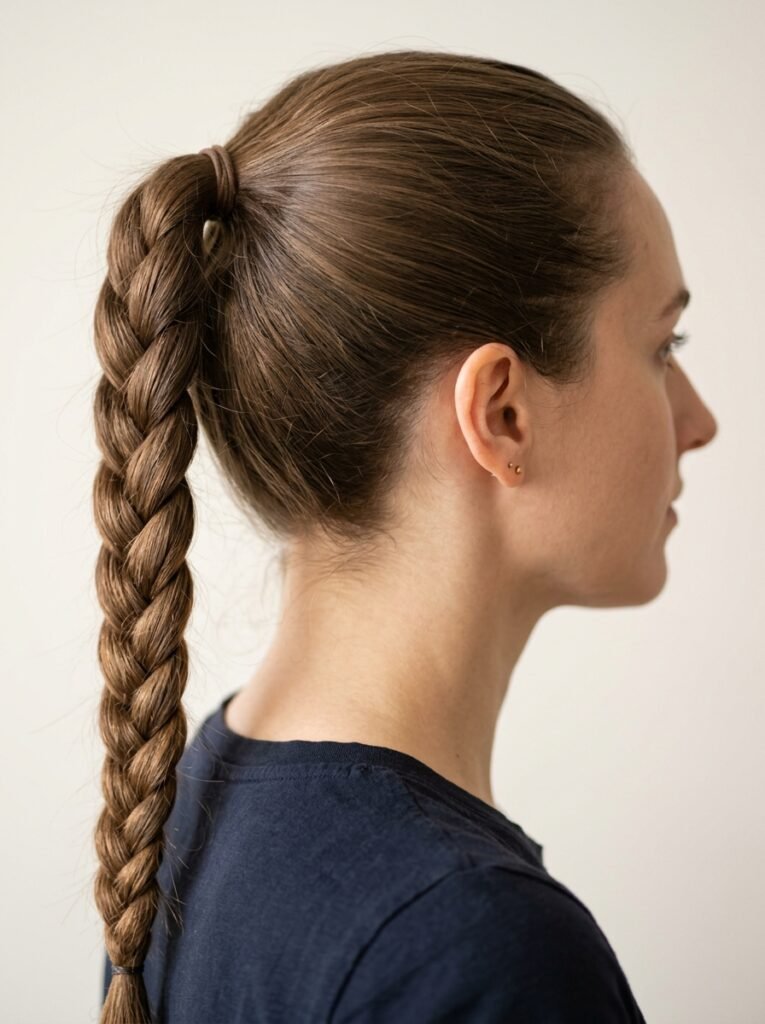
- Braided ponytail. Regular ponytail, one three-strand braid, elastic at the end. It keeps hair contained through the whole day.
- Bubble ponytail. Elastics spaced every two inches down the length, each section gently pulled wider. Popular with younger kids and genuinely fast.
- Twisted half up. Two small twists from each side, joined in the back with a clip or elastic. Forgiving on layered hair.
- Low twisted bun. Twist the ponytail, coil it, secure with one elastic and two crossed pins.
- Single side braid. French or three strand, starting at one temple and finishing behind the ear.
- Double ponytails, stacked. One high pony, one just beneath it, brushed together so they read as one long thick ponytail.
When There Are Five to Ten Minutes
Reserve these for days when the alarm actually worked.
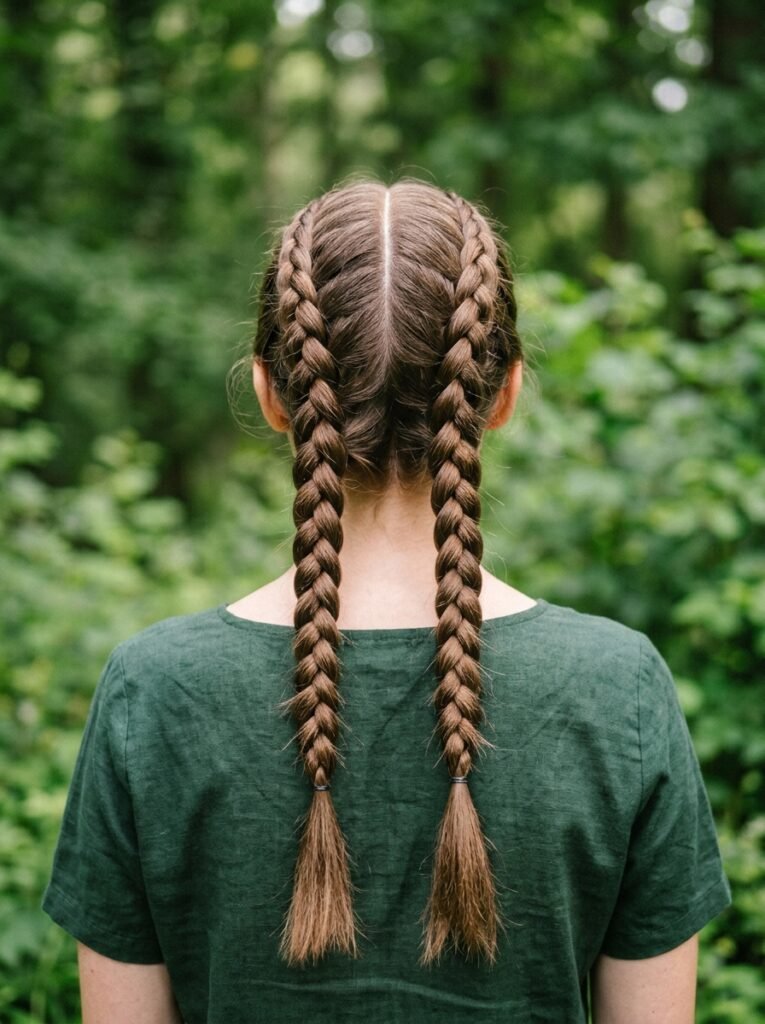
- Two dutch braids. Take practice but hold better than anything else on this list, and last two days.
- Braided crown. One braid from each side, pinned across the back. Good for photo days and warm weather.
- Half up bun with face framing pieces. A small bun on top, the rest left down, two thin pieces pulled loose at the front.
- Space buns. Two high buns, twisted rather than braided, with the ends tucked.
- Braid into a bun. Braid first, then coil the braid into a bun and pin. This is the most secure combination for a long day.
- Ponytail with a scarf or ribbon tied at the base, which has come back around and takes seconds once the pony is in.
Adjusting for Hair Type
The same style behaves differently depending on what it is working with.
Fine or thin hair
Clips slip on clean fine hair, so texture spray or dry shampoo at the roots helps more than product on the lengths. Loosening a braid slightly by pulling at the edges makes it look fuller. Cut matters too, and the site’s guide to layers on medium length fine hair covers how the shape of the cut affects what styles will actually hold.
Thick or very long hair
Ponytails on thick hair need a strong elastic and often two. Splitting the hair into two sections and braiding each is faster than fighting one thick braid. Buns hold better when the hair is braided first, since a coiled braid has something for pins to grip.
Curly and coily hair
Most of the work happens the night before. Pineapple the hair on top of the head for sleep, then release and shake out in the morning. Twist outs and braid outs set overnight and take a minute to unravel. Protective styles like flat twists or box braids remove the morning decision entirely for a week or more.
Short hair and bobs
Mini claw clips at the sides, a headband, or two small twists pinned back handle most of what short hair needs. A tiny half up bun works on anything past chin length.
Growing out bangs or layers
Twist the front sections back and pin, use small snap clips, or pull the shortest pieces into a half up section so they are not falling forward all day.
Sports and PE Days
Anything that has to survive practice needs a different approach.
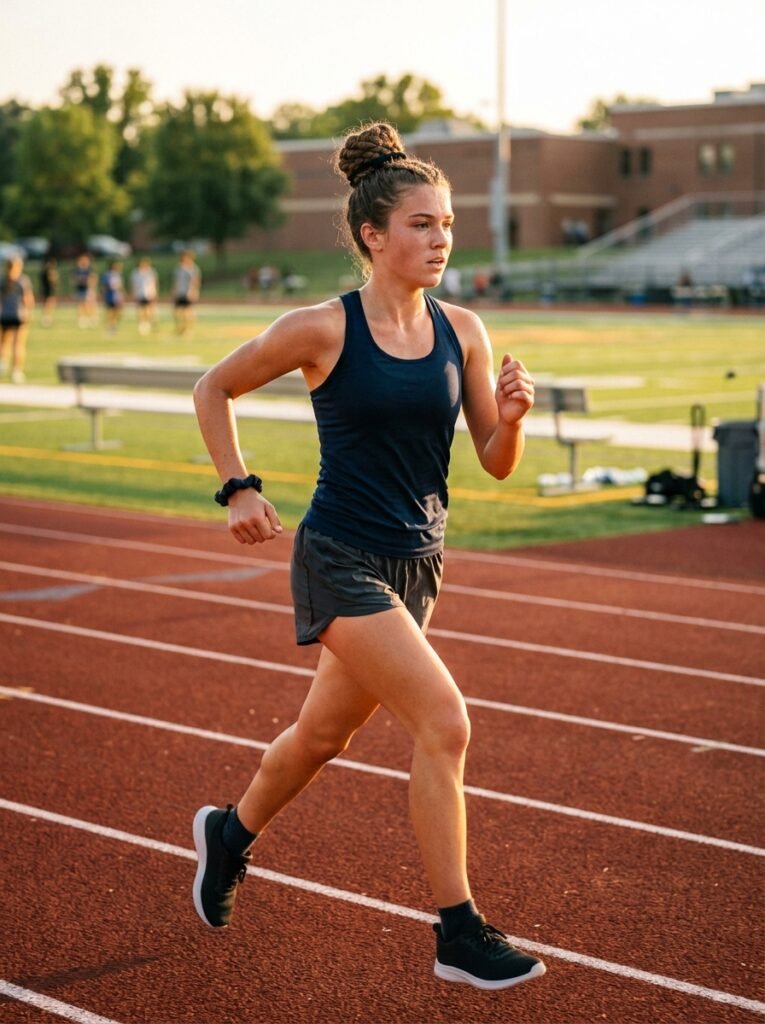
Braid before securing rather than after. Use two elastics instead of one, placed an inch apart. Skip metal clips and hard barrettes, which are uncomfortable under helmets and can be a hazard in contact sports. A braided bun sits flat enough for a swim cap or a headgear strap. Sweat loosens most styles, so slightly tighter than usual at the base is the right call on those days, without pulling at the hairline.
Second and Third Day Hair
Most school styles look better on day two anyway, since clean hair is slippery.
- Dry shampoo at the roots, brushed through, then a claw clip twist
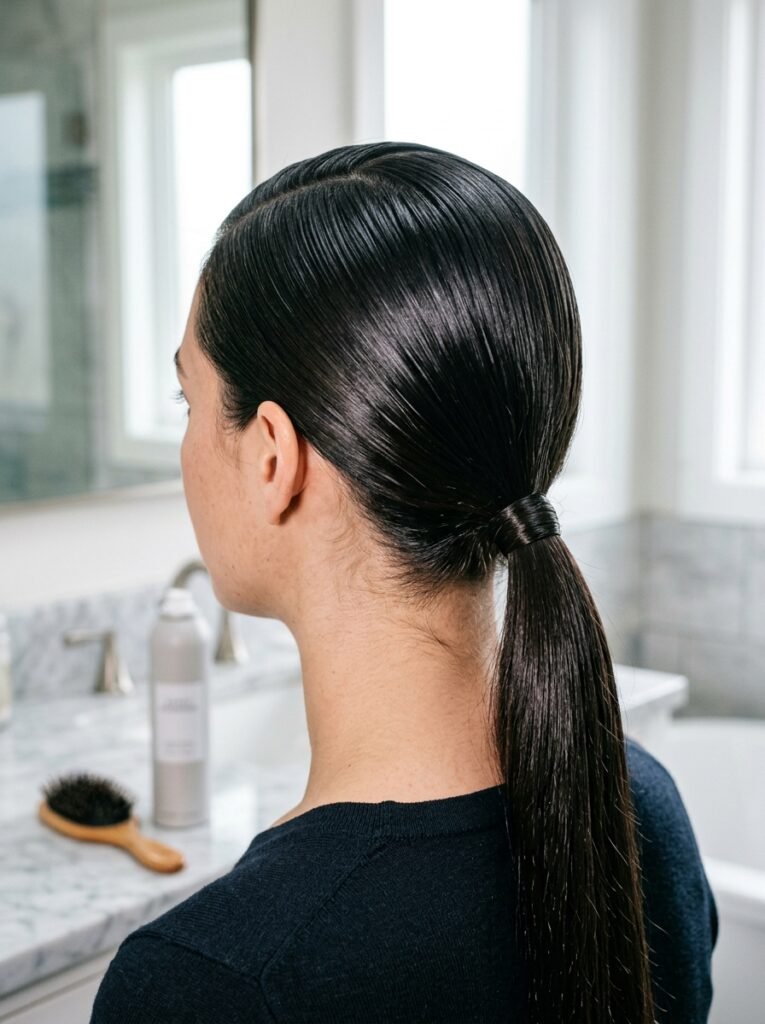
- Slicked back low ponytail, which turns oily roots into a deliberate look
- Braids, which hide texture differences entirely
- A wide headband covering the front section on the third day
- A quick root refresh with a cool blow dryer, which lifts flatness in under a minute
The Small Kit That Makes Mornings Faster
Keep this in one drawer or a small pouch by the door.
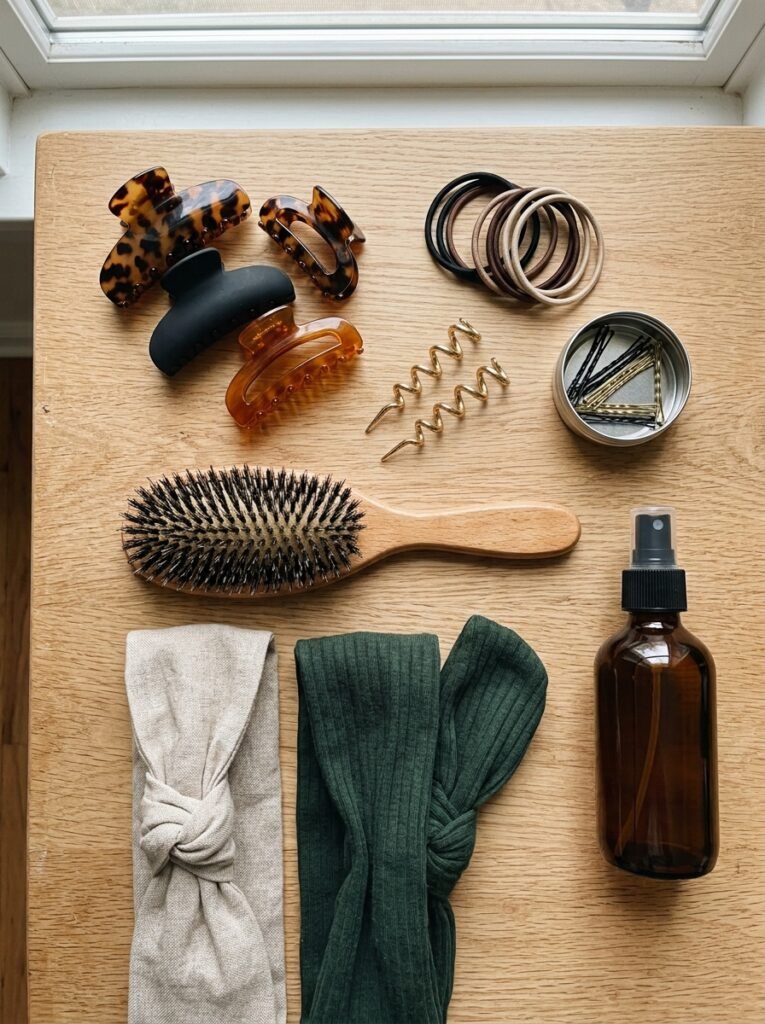
- Snag-free elastics in a hair color match, plus a few clear ones
- Two or three claw clips in different sizes
- Spin pins and a small tin of bobby pins
- A detangling brush that works on wet hair
- Dry shampoo and a light texture spray
- A leave-in or detangler spray for the after-school knots
- Two or three fabric headbands
- Small snap clips for short front pieces
That is the whole list. Most fast styles use three items or fewer, and having them in one place is a bigger time saver than any single technique.
Getting Younger Kids Through It
Hair is often the part of the morning that produces the most resistance.
Detangle from the ends upward rather than starting at the scalp, and use a spray so the brush glides. Doing hair at the breakfast table, while they are already sitting and occupied, avoids a second negotiation. Offering two options rather than an open question moves things along. And keeping a second set of elastics in the backpack means a fallen-out braid does not become a problem at school.
Why Styles Fall Apart by Lunch
- Elastic too loose at the base. The style slides down and takes the shape with it.
- Pins placed the wrong way. Bobby pins hold when the wavy side faces the scalp and two are crossed against each other.
- Clips on freshly washed hair. Clean hair has no grip. A little texture product fixes it.
- Too many pins. Six loose pins do less than two placed correctly.
- Brushing a braid out and restyling at school. Once it is in, leave it.
- Heat every single morning. Daily heat is hard on hair over time, and product safety information from the FDA cosmetics pages is worth reading if heat protectants and styling products are part of the routine.
Making It a Routine
Pick two styles that work on clean hair and two that work on day two, then rotate. Most people do not need a large repertoire, they need four reliable options and the tools sitting in one place.
More cuts, styling ideas, and length-specific guides are collected in the hairstyle section of the site.