What to Wear to a Fall Wedding as a Guest
Fall weddings sit in an odd spot on the calendar. The invitation says October, so the instinct is to reach for a coat and boots, but the ceremony might start at 4 p.m. in direct sun with the reception moving indoors an hour later. Dressing for one temperature usually means being wrong for the other half of the day.
Most of the confusion is not about style. It is about timing, fabric, and reading the few clues a couple actually gives you before the big day. Below is a practical way to work through the decision, from the dress code on the card to the coat you will need for the walk to the car.
Start With the Invitation, Not the Calendar
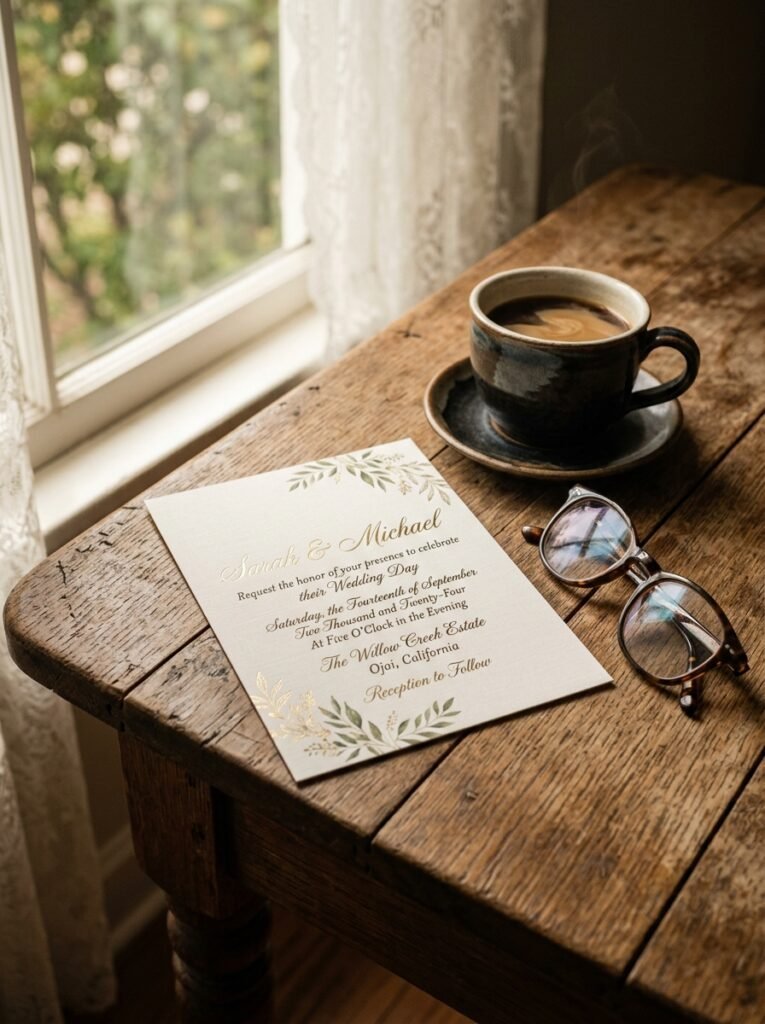
The wording on a wedding invitation carries more information than most guests use. Before thinking about fall colors or layers, the dress code line settles the biggest question: how dressed up does this actually need to be.
A few phrases show up again and again, and each one narrows the closet down differently:
- Black tie. Floor-length gowns or formal cocktail dresses, and the most structured end of the fall wedding spectrum.
- Black tie optional. A slightly softer version of the above. A long dress still works, but a shorter formal dress is also acceptable.
- Formal or semi-formal. The broadest category, and the one that causes the most second-guessing.
- Cocktail attire. Knee-length or midi dresses, dressy separates, nothing overly casual.
- Casual or festive. Still a wedding, just with more room for color, texture, and a lower heel.
If the card says nothing at all, the venue is the next clue. A barn or vineyard leans dressy-casual even without the word printed anywhere. A hotel ballroom or a downtown venue usually pushes things more formal by default.
Reading the Season Right
Fall is not one temperature. A wedding in early September behaves like summer with slightly cooler evenings, while a late November date can dip close to winter. Knowing where on that spectrum a specific wedding falls changes almost every choice that follows.
Three details matter more than the month printed on the invite:
- Ceremony time. A 2 p.m. outdoor ceremony runs warmer than a 6 p.m. one, even in the same week.
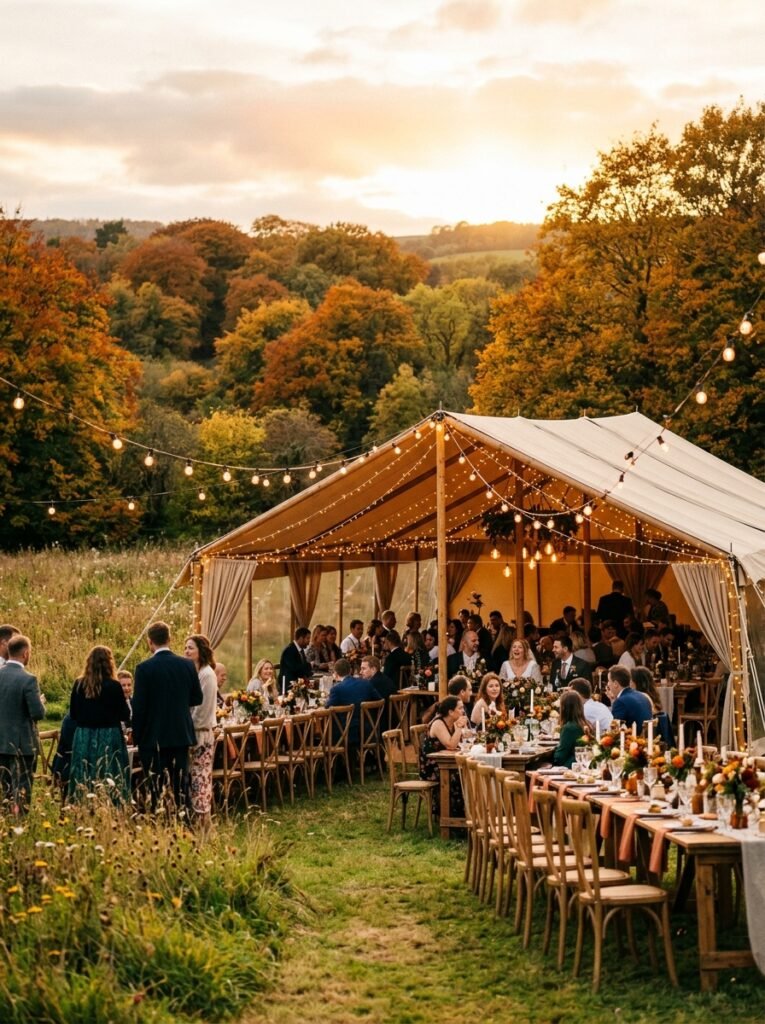
- Indoor versus outdoor. Tented receptions can trap heat during the day and turn cold once the sun sets, which is worth planning for separately.
- Region. A fall wedding in the Southeast rarely calls for the same weight of fabric as one in the Northeast or Midwest.
A short text to the couple or a look at the venue’s website usually answers most of this. Barns, farms, and outdoor ceremony spaces tend to mention rain plans or tent details, which is a useful hint about how exposed the day will actually be.
Dress Code, Explained Without the Guesswork
Black Tie and Black Tie Optional
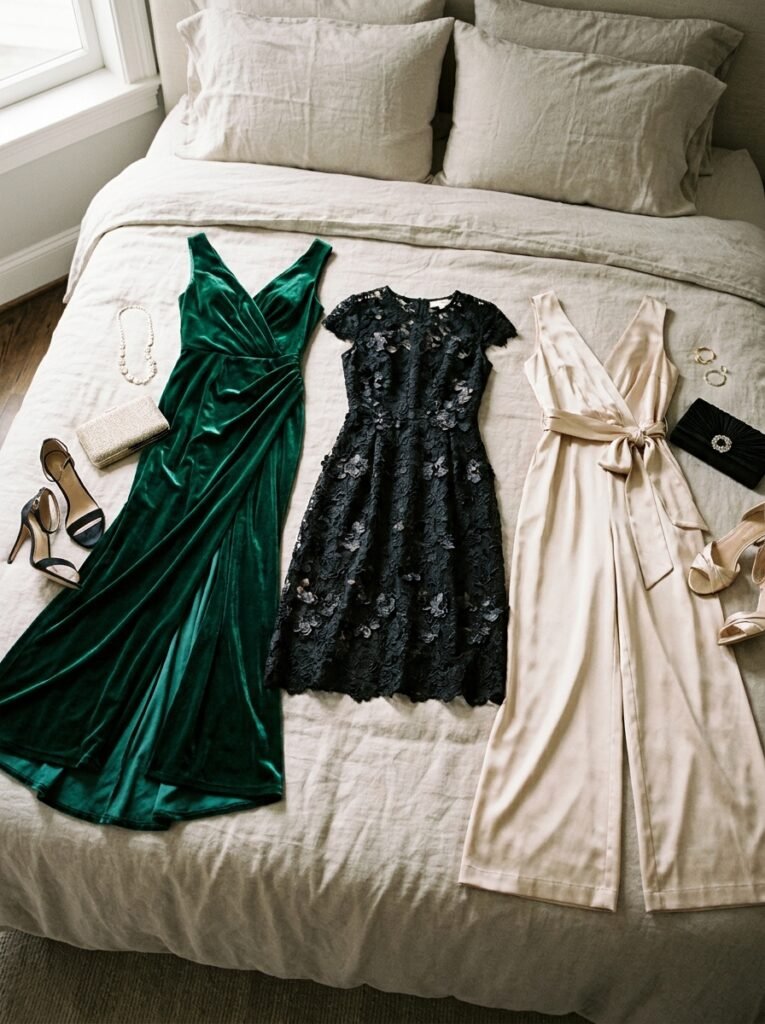
This is the one dress code where erring formal is always the safer read. A floor-length gown in a rich fall shade, or a well-cut cocktail dress in velvet or satin, both fit comfortably here. Sequins and metallics work better at black tie than at almost any other wedding tier, since the setting is already dressed up to match.
For black tie optional, a shorter dress in a formal fabric like satin or crepe still reads correctly. What tends to miss the mark is a casual dress made formal only by accessories. The fabric itself needs to carry the weight.
Formal and Semi-Formal
This tier covers the widest range of actual weddings, which is exactly why it causes the most hesitation. A midi or knee-length dress in a structured fabric works well, as does a well-tailored jumpsuit. Separates are fine here too, provided the pieces read as a coordinated outfit rather than two unrelated garments worn together.
Fabric does a lot of the talking at this level. A cotton sundress reads too casual even in a formal print, while the same silhouette in crepe or a heavier knit moves up a full category without changing shape.
Cocktail Attire
Cocktail is the classic fall wedding dress code, and the one most guests already own something for. A knee-length or midi dress, a dressy jumpsuit, or a tailored pantsuit all fit. Bold color and rich fabric are more welcome here than at any casual event, which makes it the easiest place to actually wear the deep fall palette everyone associates with the season.
Casual or Festive
Casual does not mean anything goes. It means the formality drops one notch, not several. A midi dress with boots, wide-leg trousers with a dressy top, or a jumpsuit without much shine all land correctly. What tends to miss is treating “casual” as permission to wear something built for brunch instead of a wedding.
Colors That Actually Work for Fall Weddings
Fall gives more room for color than any other wedding season, and that is worth using rather than defaulting to black every time.
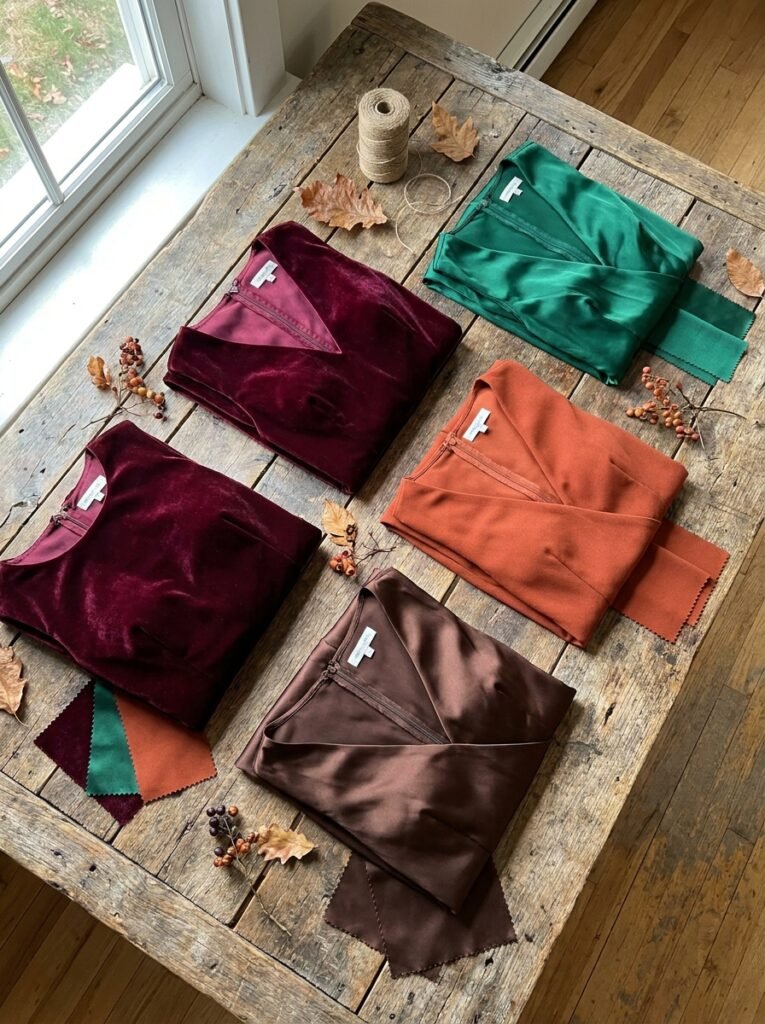
Shades that consistently photograph well and suit the season:
- Deep burgundy and wine, which work at nearly every dress code tier
- Emerald and forest green, especially for evening ceremonies
- Rust, terracotta, and copper, which pair naturally with an outdoor or barn setting
- Chocolate brown and espresso, increasingly used as a neutral instead of black
- Navy, a safer alternative to black that still photographs as formal
- Mustard and amber, best kept to accents or one statement piece rather than a full look
White, ivory, and anything that could be mistaken for it from a distance is still off-limits for guests, regardless of season. Pale blush is worth checking against the wedding’s own color palette if it is known, since it can read too close to a bridal shade in photos.
Fabric and Layering for the Actual Weather
Fall weddings punish outfits built around a single temperature. The right approach layers for the coldest point of the day while keeping the base outfit light enough for a warm afternoon.
Fabrics worth reaching for:
- Crepe and matte jersey, which hold shape and layer well under a coat
- Velvet, ideal for evening weddings and cooler months without adding bulk
- Wool blends, in dresses, blazers, or trousers, for late fall dates
- Silk and satin, for cocktail and formal events where warmth is less of a concern
- Tweed or brushed cotton, for daytime and more casual settings
The layering piece is the part most guests underplan. A blazer, a wrap, or a longline cardigan in a fabric that matches the formality of the dress solves the ceremony-to-reception temperature swing without changing the outfit itself. A jacket that looks like it belongs with jeans will undercut a formal dress no matter how nice the dress is underneath.
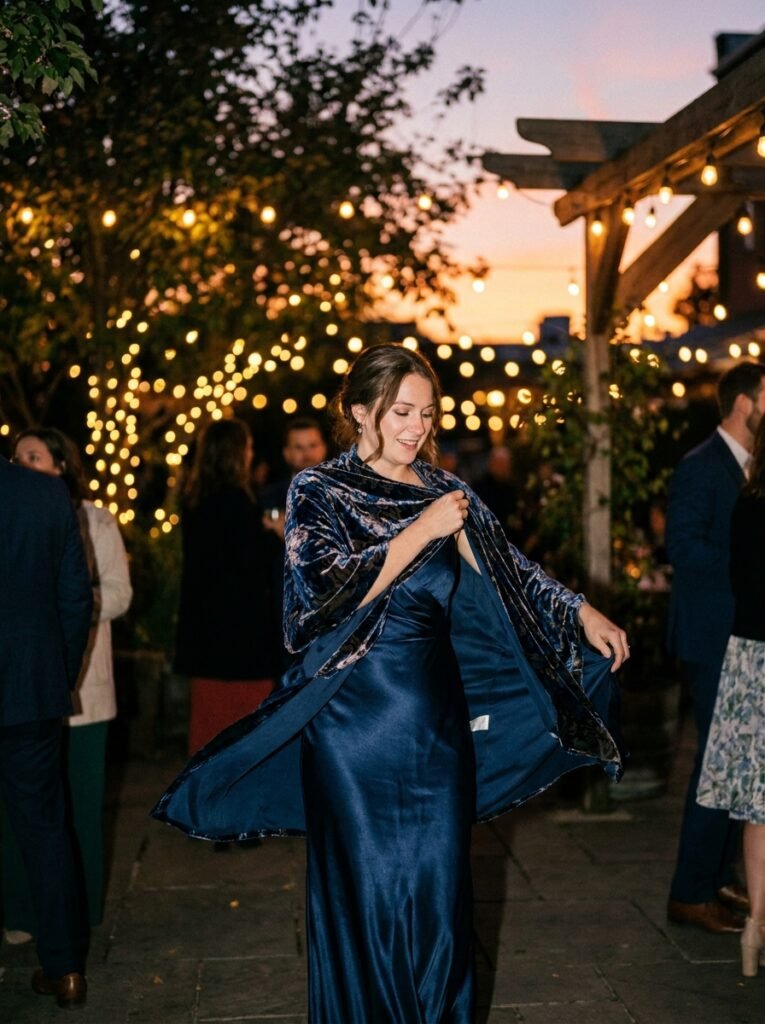
Shoes for a Fall Wedding Guest
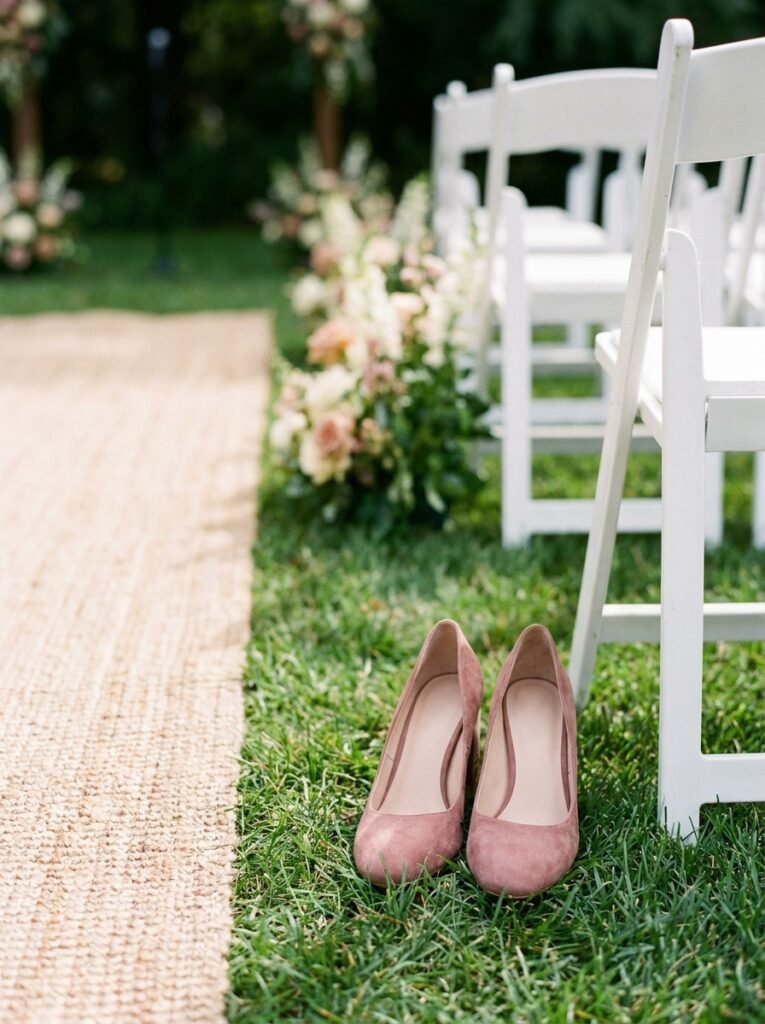
Shoes get decided last and regretted first, usually because the venue gets ignored until the morning of the wedding.
- Block heels or wedges handle grass, gravel, and uneven ground far better than a thin stiletto, and most outdoor or barn weddings call for exactly that kind of surface.
- Closed-toe pumps suit formal indoor weddings and colder dates without looking out of season.
- Ankle boots, if styled cleanly, work for casual and semi-formal weddings held later in fall.
- Flats in a dressier fabric, such as satin or suede, are a reasonable formal option for guests who know they will be standing for hours.
Checking whether the ceremony is on grass, a wraparound driveway, or a hotel floor takes one message to the couple and saves an outfit from being derailed by footwear alone.
Outerwear: The Piece Most Outfits Are Missing
A stunning dress photographed with a puffer coat thrown over it is one of the most common fall wedding mistakes, and it happens because outerwear gets treated as an afterthought rather than part of the outfit.
Options that hold the formality of the outfit underneath:
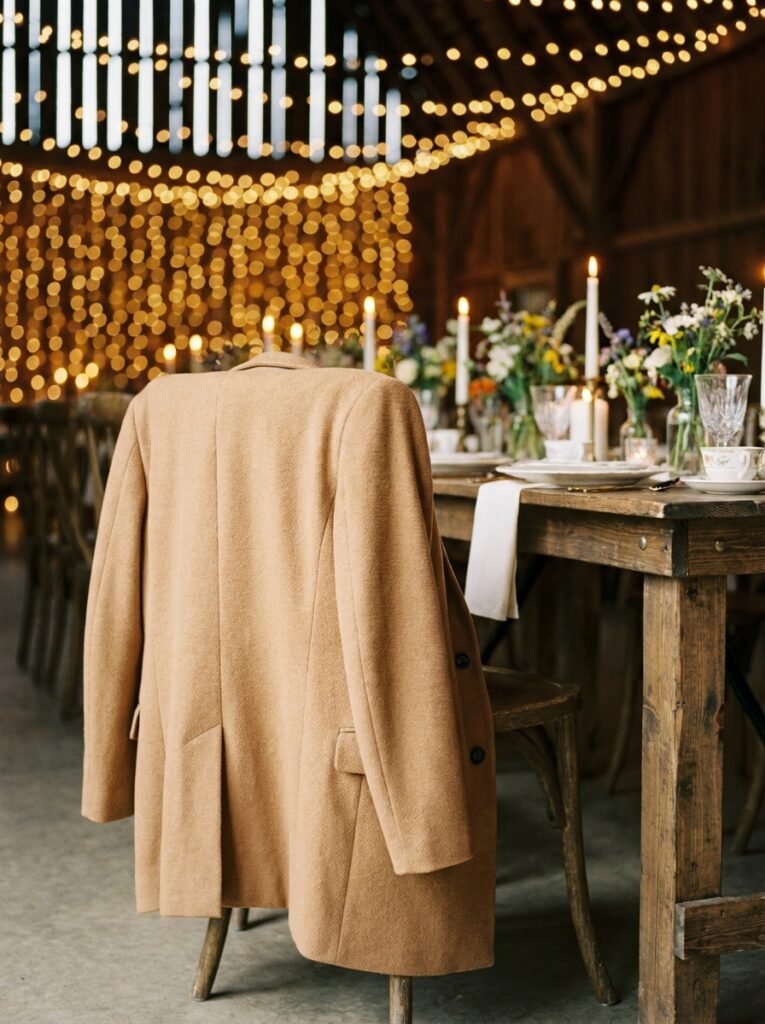
- A tailored wool coat in camel, black, or a deep jewel tone
- A cape or wrap for evening weddings, which layers without hiding the dress
- A long cardigan in a fine knit for casual and semi-formal settings
- A faux fur or shearling-trim coat for colder late-fall dates, kept to one statement piece rather than paired with other bold items
Bringing this piece along even if the forecast looks mild avoids the scramble of borrowing someone else’s jacket for the walk to the car once the sun goes down.
What Guests Who Wear Suits Can Do
The same dress code logic applies here, just translated into suiting. Black tie calls for a tuxedo or a formal dark suit; black tie optional allows a well-fitted dark suit without the tux. Semi-formal and cocktail dress codes open the door to charcoal, navy, deep green, or burgundy suits, paired with a tie for anything above casual.
Fabric weight should track the same seasonal logic as dresses. A lightweight suit reads fine for an early September date, while a heavier wool suit suits a late November wedding better, both in comfort and in how it photographs. A vest adds warmth for an outdoor ceremony without needing a full overcoat throughout the reception.
Common Mistakes to Avoid
A handful of patterns show up at nearly every fall wedding, and most are easy to sidestep once they are named.
- Dressing for the ceremony temperature only, then being cold once the sun sets and the reception moves outside for photos.
- Wearing white, ivory, or head-to-toe pale neutrals that read as bridal in photos, even unintentionally.
- Choosing shoes for the dress instead of the venue, which usually means stilettos sinking into grass.
- Treating outerwear as optional, then borrowing a jacket that clashes with the outfit for every outdoor photo.
- Overdressing for a casual wedding, which can feel just as out of place as underdressing for a formal one.
- Skipping the venue check, since a barn, a beach, and a ballroom all call for different fabric and shoe choices even under the same dress code label.
Putting a Full Outfit Together
A few complete combinations, sorted by dress code, to make the pieces above easier to apply.
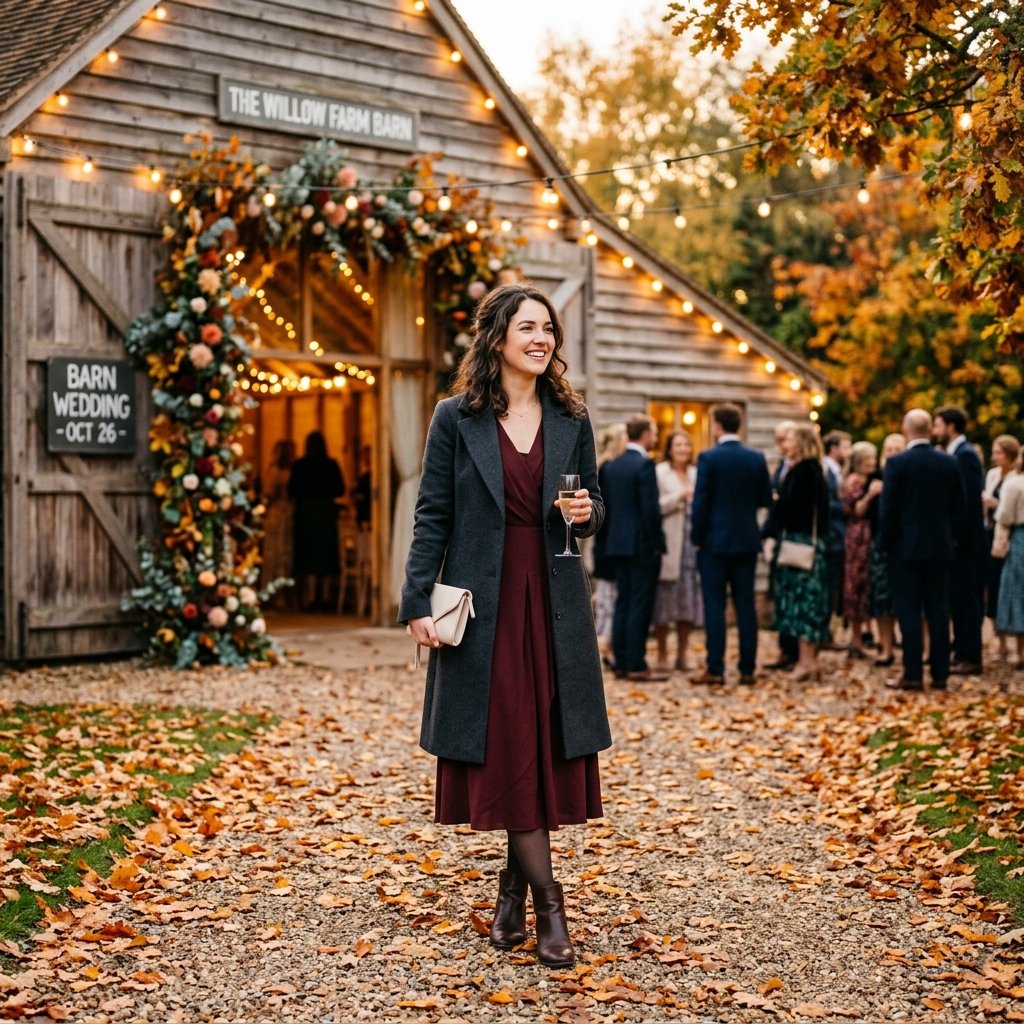
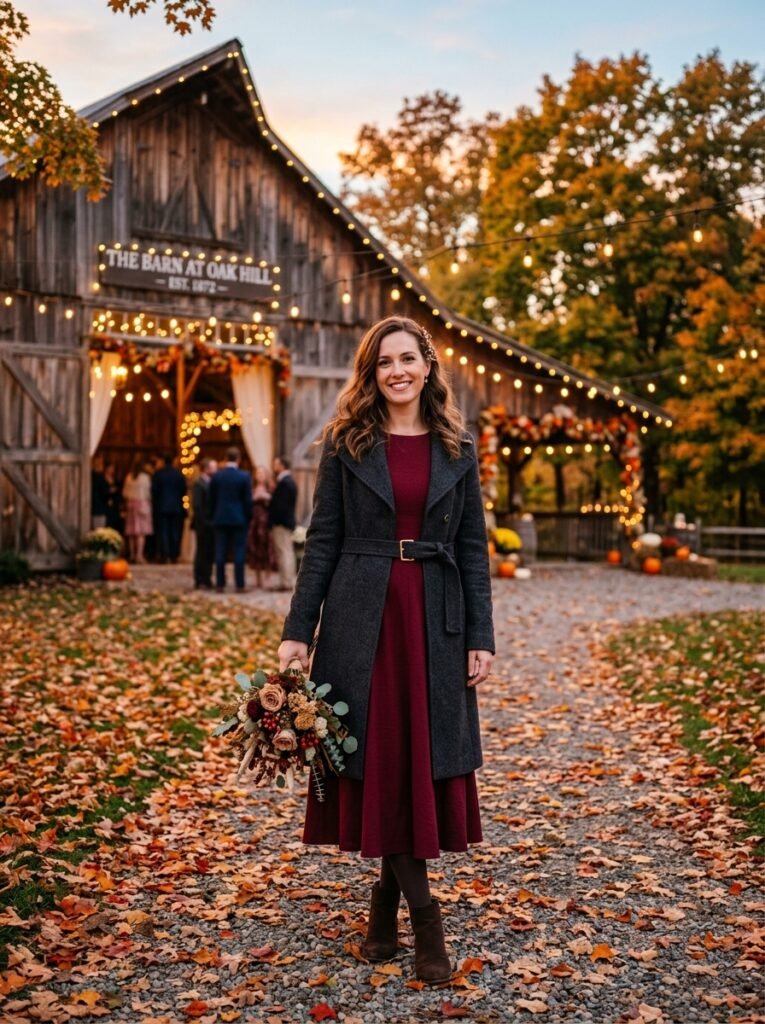
Cocktail: A burgundy midi dress in crepe, block-heel pumps, a tailored wool coat, and gold jewelry kept simple enough not to compete with the color.
Semi-formal, outdoor: A rust or terracotta jumpsuit, ankle boots, a suede jacket, and a crossbody bag small enough to carry through a receiving line.
Black tie optional: A forest green satin gown or short formal dress, closed-toe heels, a velvet wrap, and minimal jewelry to let the fabric do the work.
Casual: Wide-leg trousers, a silk cami, a long cardigan, and loafers or low block heels, dressed up with one statement earring rather than a full jewelry set.
Each formula follows the same order: settle the dress code, pick a color that suits the season, choose fabric for the actual weather, and add outerwear that matches rather than competes. Once that sequence is set, the rest of the outfit tends to fall into place on its own.
For guests also thinking about hair and nails for the same event, the site’s guide to fall nail colors for the season and the breakdown of curtain bangs for round face shapes cover the smaller details that round out a wedding-ready look. Anyone attending a wedding in the earlier, warmer stretch of fall may also find the transitional outfit ideas for August to September useful for the same hot-morning, cool-evening problem in everyday dressing.