Fall Date Night Outfit Ideas That Aren’t Basic
There is a default fall date outfit almost everyone owns without trying: a dark dress, ankle boots, maybe a leather jacket thrown over the back of a chair. It works, and that is exactly the problem. By the third dinner reservation of the season, the same three hangers keep getting pulled off the rail because they are easy, not because nothing else fits.
This is not a list of vague style inspiration. It is a set of specific outfit formulas, color choices, and small details that swap out the obvious pieces without asking for a closet overhaul or a night spent scrolling for ideas an hour before the date.
Why the Same Three Outfits Keep Coming Back
Most people have a fallback date outfit, and it usually falls into one of two categories: the dark dress plus boots combination, or jeans, a sweater, and heels. Neither is a bad choice. Both photograph fine and travel well from a casual dinner to something slightly dressier.
The issue is repetition rather than quality. A fallback outfit gets reused because deciding takes zero effort, and effort is in short supply on a weeknight. The formulas below take roughly the same amount of getting-ready time as the usual rotation. They just start from a different piece.
Outfit Formulas Worth Trying
A handful of combinations deliver the same “put together without overdoing it” feeling as the standard dress-and-boots pairing, just from a different starting point.
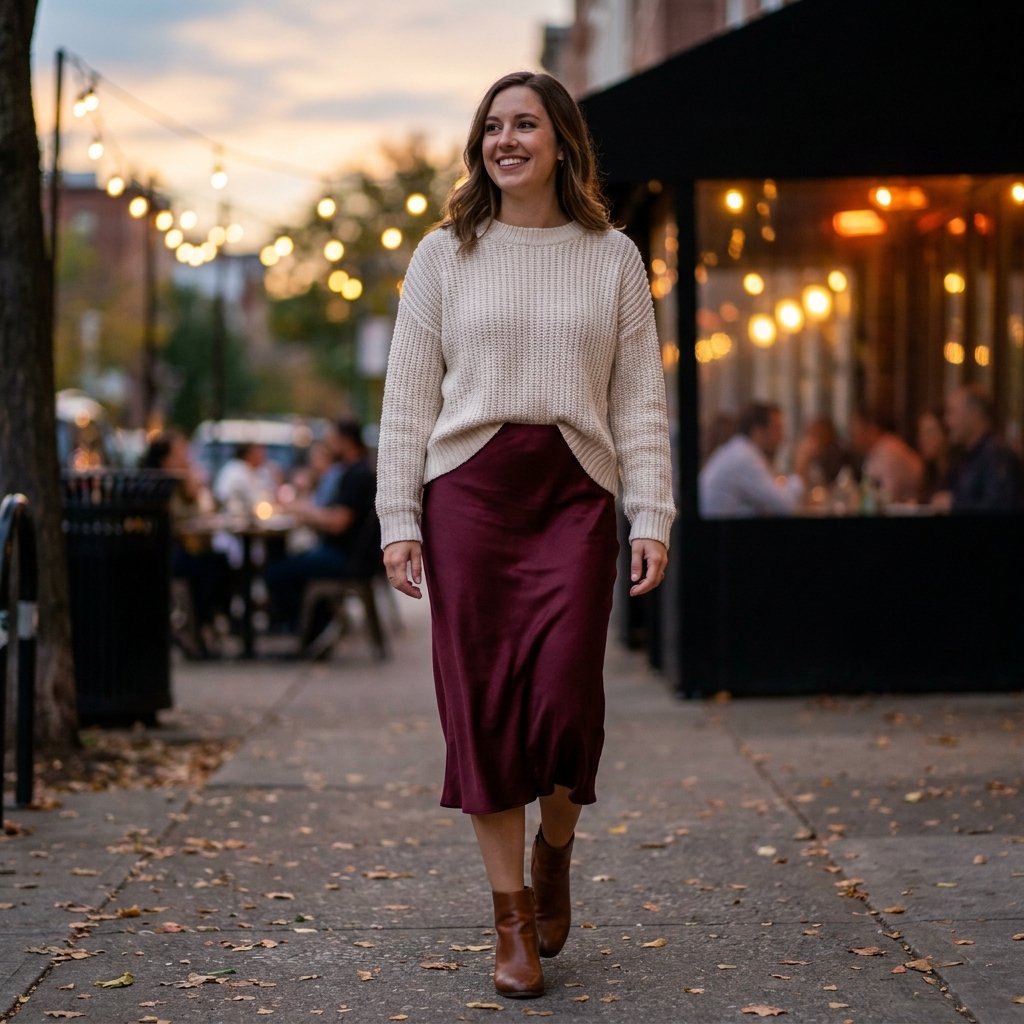
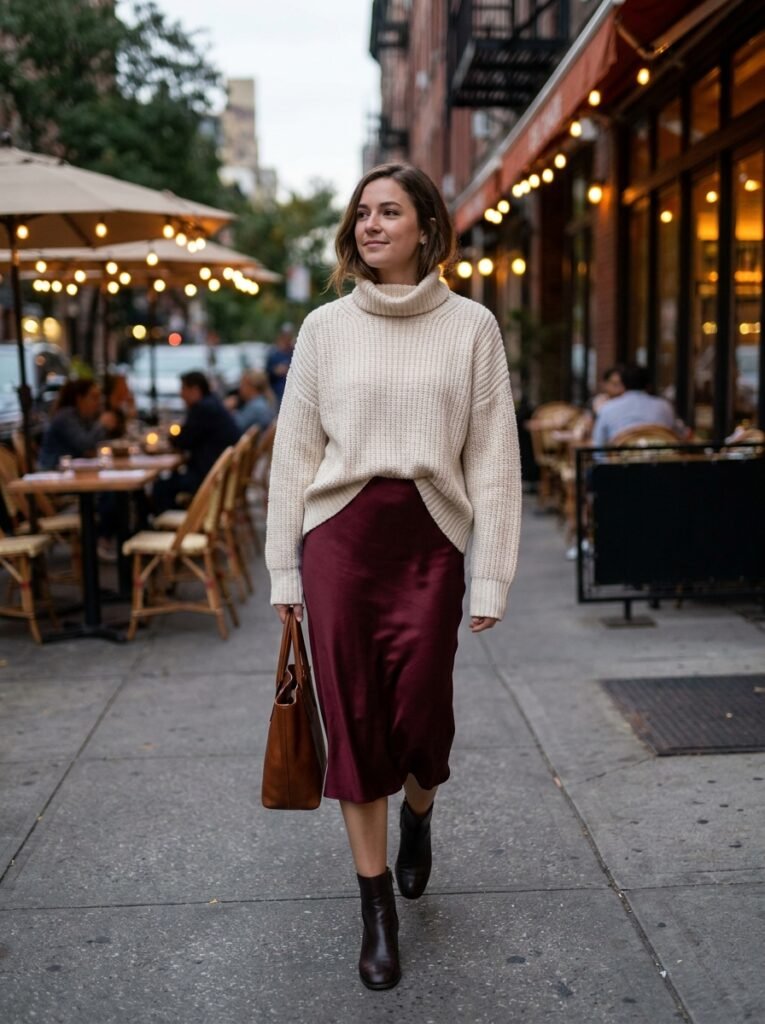
- A slip skirt under a chunky knit sweater. The silk or satin skirt keeps it from reading as loungewear, and the sweater tucked in loosely, not tight, adds shape without extra layers underneath.
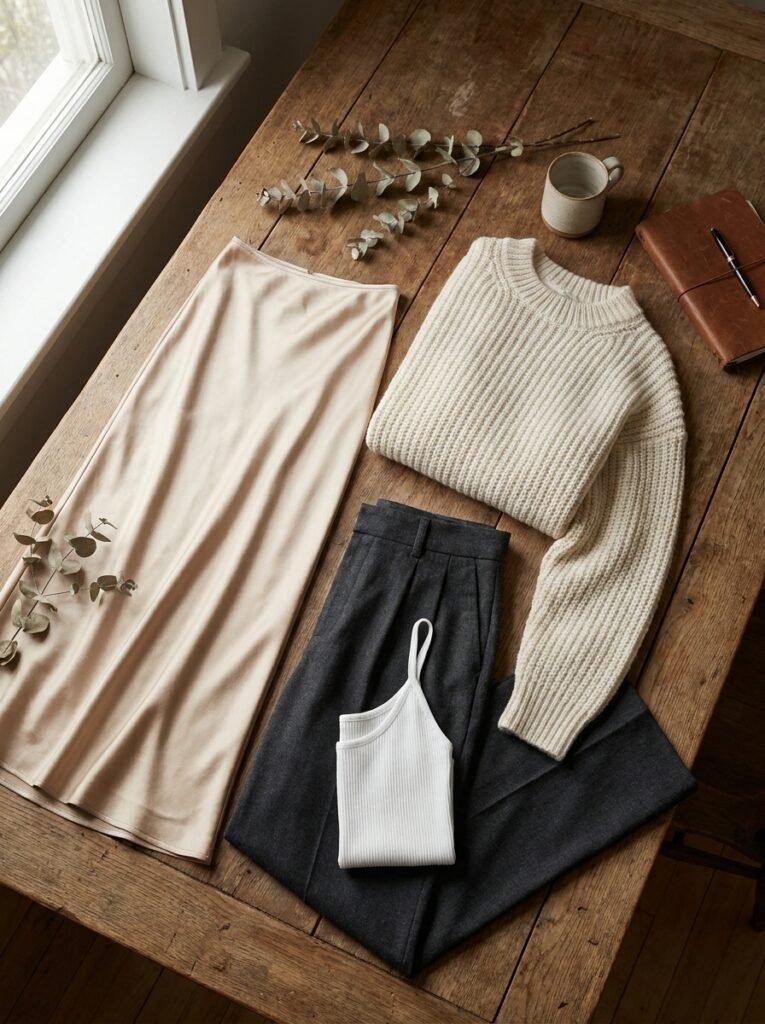
- Wide-leg trousers with a fitted bodysuit or cami. A cropped or fitted top balances the volume of the trouser leg, so the outfit does not read shapeless from any angle.
- A monochrome look in one deep color. Head-to-toe burgundy, chocolate, or ink navy in different textures within the same shade reads more considered than a mixed palette, without needing much extra thought.
- Leather or faux leather pants with a soft, loose blouse. The contrast between a structured bottom and a relaxed top keeps the outfit from feeling like a costume.
- A knit midi dress with a structured jacket layered over it. The dress alone can feel too soft for a night out. A blazer or a fitted moto jacket adds an edge that a cardigan will not.
- A jumpsuit with a defined waist. One piece, done in under two minutes, and a belt at the waist keeps it from swallowing the shape.
- An oversized blazer worn as a dress with sheer or opaque tights. Buttoned at one point and left open elsewhere, it reads intentional rather than borrowed.
- Corduroy or velvet separates in a rich color. Both fabrics catch the light differently than cotton or denim, which does a lot of the visual work on its own.
Texture Does More of the Work Than Color
Two outfits in the exact same shade of black can look completely different depending on what they are made of. That gap is where most fall date outfits go from ordinary to interesting.
Pairing a satin camisole with a wool-blend trouser, or a soft cashmere-style knit with structured leather, gives an outfit visual depth without adding a single new color to plan around. Corduroy next to silk, suede next to a fine-gauge sweater, and matte fabric against something with a slight sheen all create the same effect.
This matters more in fall than any other season because the fabric options widen so much. Summer clothing is mostly cotton and linen. Fall brings wool, corduroy, suede, velvet, and knits into the mix, and mixing two or three of them in one outfit is often the simplest way to avoid looking like everyone else at the same restaurant.
Color Choices That Read Intentional
Black works for a reason. It is easy, it photographs well in low restaurant lighting, and it goes with everything already in a closet. It is also the default that makes an outfit forgettable.
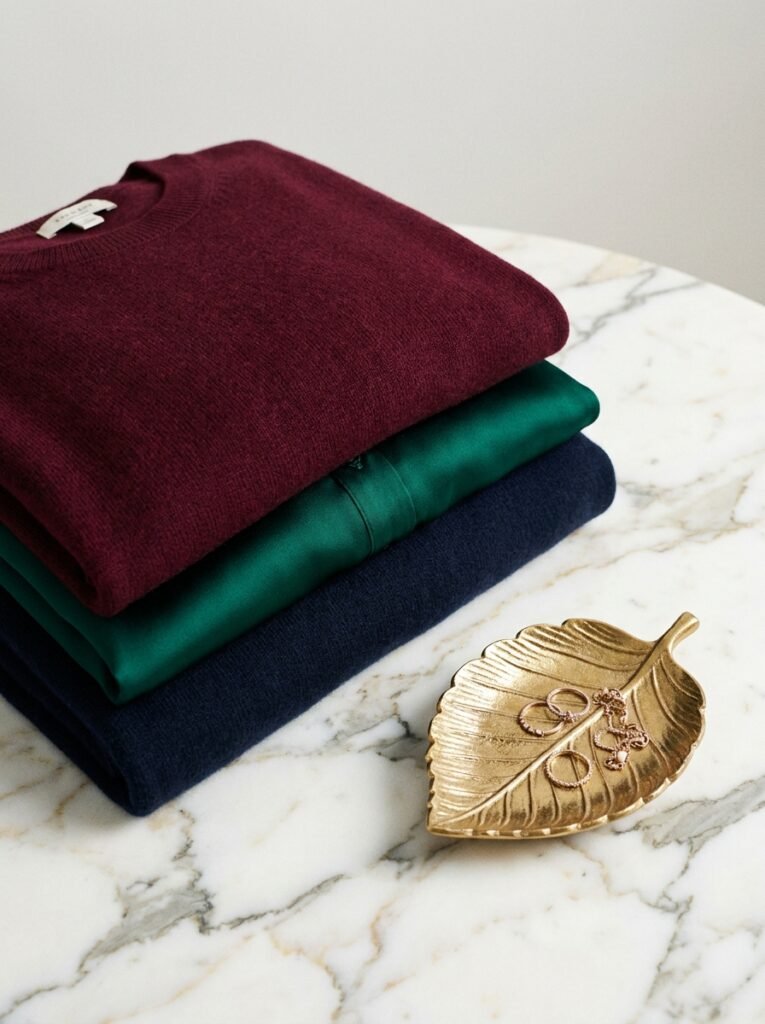
Deep jewel tones do the same practical job while adding something to look at. Garnet, emerald, deep plum, and ink navy all read as dressed-up without reaching for anything bright or seasonal-looking. A single saturated color against neutral shoes and a neutral bag keeps the look from feeling like a costume, while still standing out in a room full of black dresses.
Chocolate brown and rust are worth including too, particularly for anyone who finds pure black slightly harsh against warmer skin tones. Neither color is loud, and both pair easily with the gold jewelry most people already own.
If a manicure is part of the plan, matching the nail color to the outfit’s undertone rather than the exact shade tends to look more finished. A guide like the site’s fall nail colors roundup is a useful reference for shades that pair well with deeper clothing colors without competing with them.
Layering for a Night That Starts Warm and Ends Cold
Fall evenings rarely stay at one temperature. A 6 p.m. dinner reservation can start at 65 degrees and end at 45 by the time the check arrives, especially if the plan includes a walk afterward.
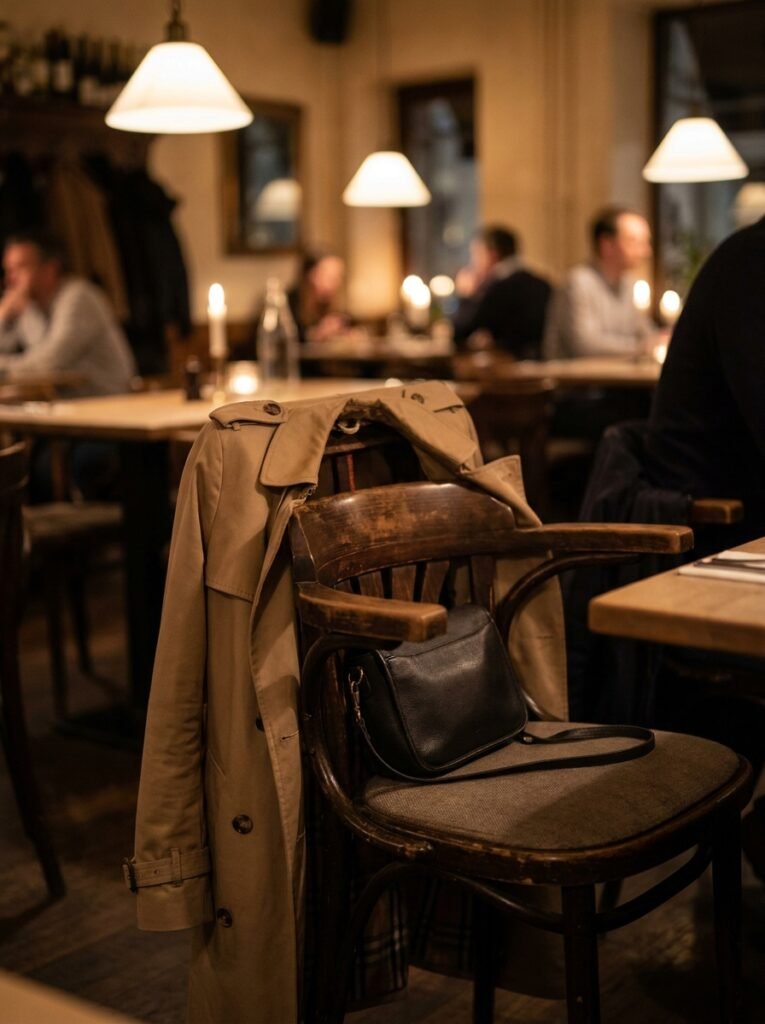
The layer that works for a date needs to do double duty: keep out a real chill, and still look intentional draped over the back of a restaurant chair rather than balled up on a lap. A tailored trench does this well for a dinner setting. A moto jacket works for something more casual. A cropped cardigan handles an outfit that already has enough structure on its own, and a wrap coat covers colder nights without hiding the outfit underneath it.
Checking the actual evening low before deciding matters more than guessing based on the daytime high. The National Weather Service posts the overnight and evening numbers separately from the daily high, which is the number that actually matters once the sun goes down.
Fabric weight plays into this as much as the cut of the jacket. A midweight wool or a brushed cotton holds up through a walk to the car in a way a thin cardigan will not, and fabric weight guides are worth a quick check before buying something that looks warm but performs like a cotton tee. This same overlap between daytime warmth and evening chill shows up across most of early fall, and the site’s guide to dressing through the August to September stretch covers the fabric and layering logic in more detail for anyone still working through that window.
Shoes That Aren’t Another Pair of Ankle Boots
Ankle boots are the fallback for a reason. They are comfortable, they go with almost everything, and they do not require much thought. They are also the shoe everyone else is already wearing to the same restaurants.
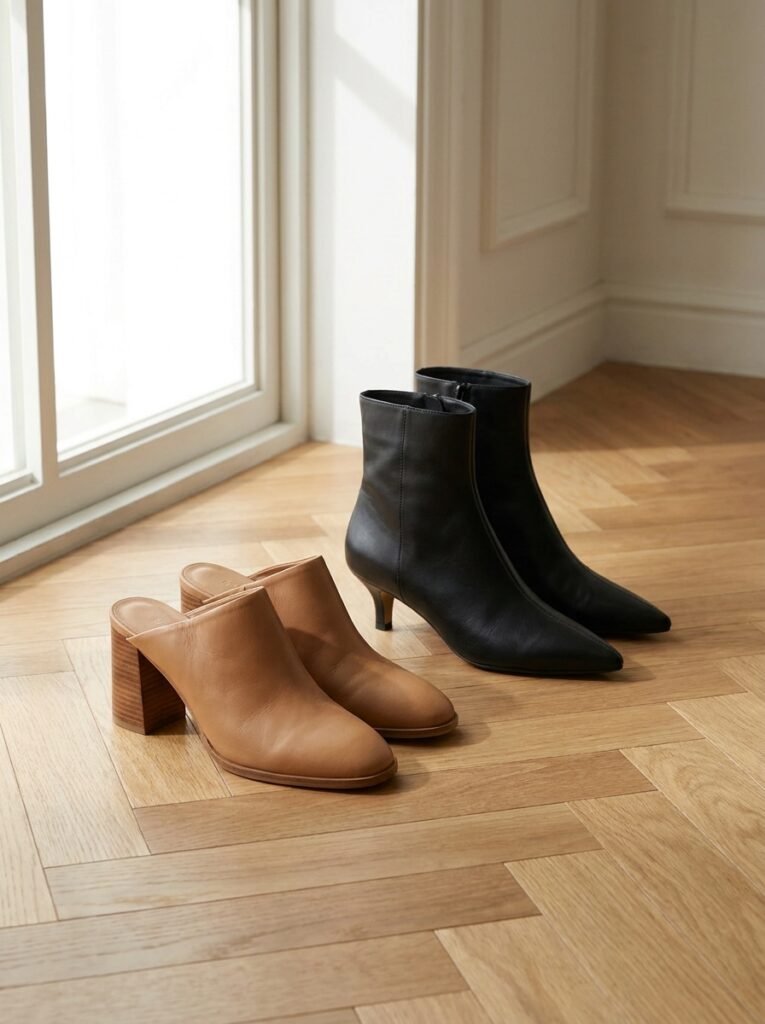
A kitten heel boot gives the same coverage and comfort with a slightly different silhouette. A block heel mule is easier to walk in than a stiletto and still reads dressier than a flat. Pointed flats with a metallic or unexpected texture, snakeskin or a deep patent, add interest without sacrificing comfort for a night that involves walking. Loafers with sheer black tights are an easy way to dress down a monochrome outfit without losing the polish.
Save the statement heel for a date that stays seated for most of the night. Anything involving a walk, a bar with standing room, or an activity beyond dinner favors comfort over height, and a good pair of flats reads intentional rather than like a compromise.
Hair, Nails, and the Small Details That Finish a Look
An outfit does most of the work, but the small finishing details are what make it look planned rather than thrown together at the last minute.
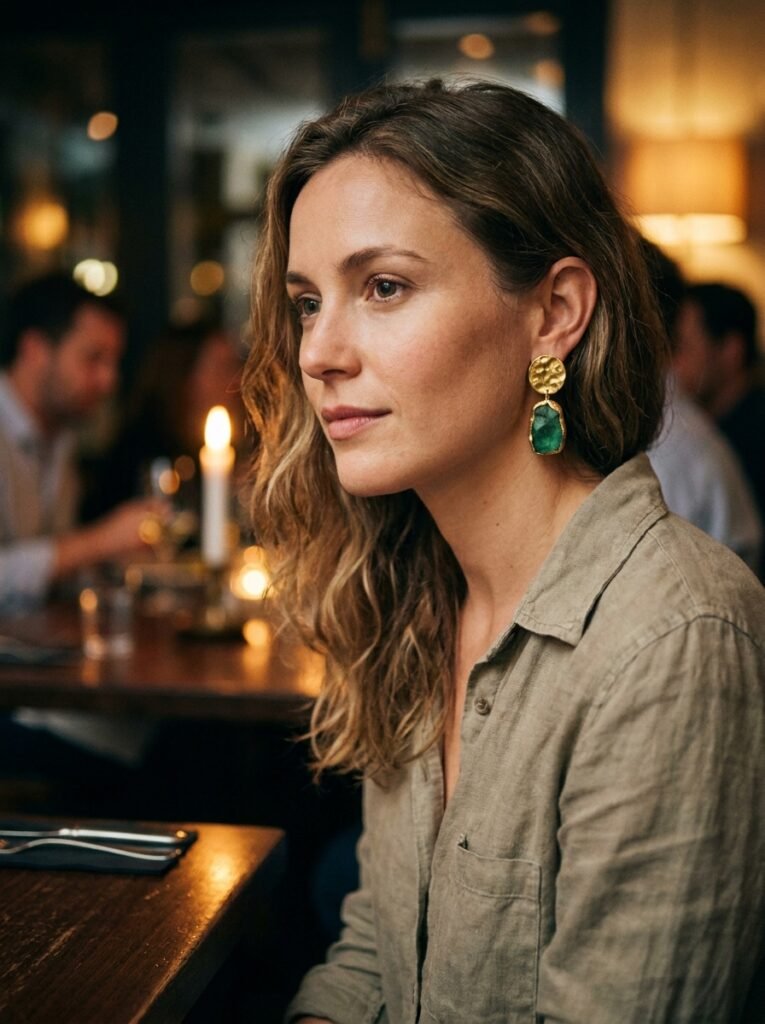
Soft waves or a low, slightly undone bun both suit fall date outfits better than anything too sleek or too styled. Loose layers move with the outfit instead of competing with a structured collar or a statement earring. For anyone growing out layers or working with finer hair, the site’s guide to medium length layered cuts has a few ideas for styles that hold shape through a full evening without much touch-up.
Jewelry works best when it picks one focal point rather than competing everywhere at once. A statement earring pairs with simple hair and a plain neckline. A layered necklace works better with hair pulled back and no earrings competing for attention. Choosing one place for the eye to land keeps the whole look from feeling busy.
A bag is worth considering as part of the outfit rather than an afterthought grabbed on the way out. A small structured bag in a contrasting texture, suede against a smooth outfit, or a smooth bag against a textured one, adds one more layer of the same mixing principle that works everywhere else in a fall outfit.
A Few Ways an Outfit Tips Into Try-Hard or Too Casual
A handful of small missteps show up often enough in fall date outfits to be worth naming directly.
Wearing brand-new shoes for the first time on the date itself is one of the most common. Breaking them in around the house for even a day makes a real difference by the second hour of standing or walking.
Matching too literally, choosing an outfit built entirely around what the venue looks like on social media rather than the actual weather or activity, tends to backfire. A rooftop bar with a great photo wall is still outdoors in October.
Over-accessorizing is another repeat offender. Layering three jewelry pieces, a bold lip, a printed bag, and a statement shoe all at once reads as effort in the wrong direction. Picking two focal points and keeping everything else simple almost always looks more finished.
And on the other end, treating a date the same as a weeknight errand, showing up in the exact outfit worn to run to the pharmacy earlier that day, undersells the effort even when the plan itself is casual. A small swap, a different top or a better shoe, closes that gap without much extra time.
A Small Rotation That Covers a Whole Fall of Dates
A handful of pieces, chosen to overlap, cover most of a season’s worth of date outfits without repeating the exact same combination twice.
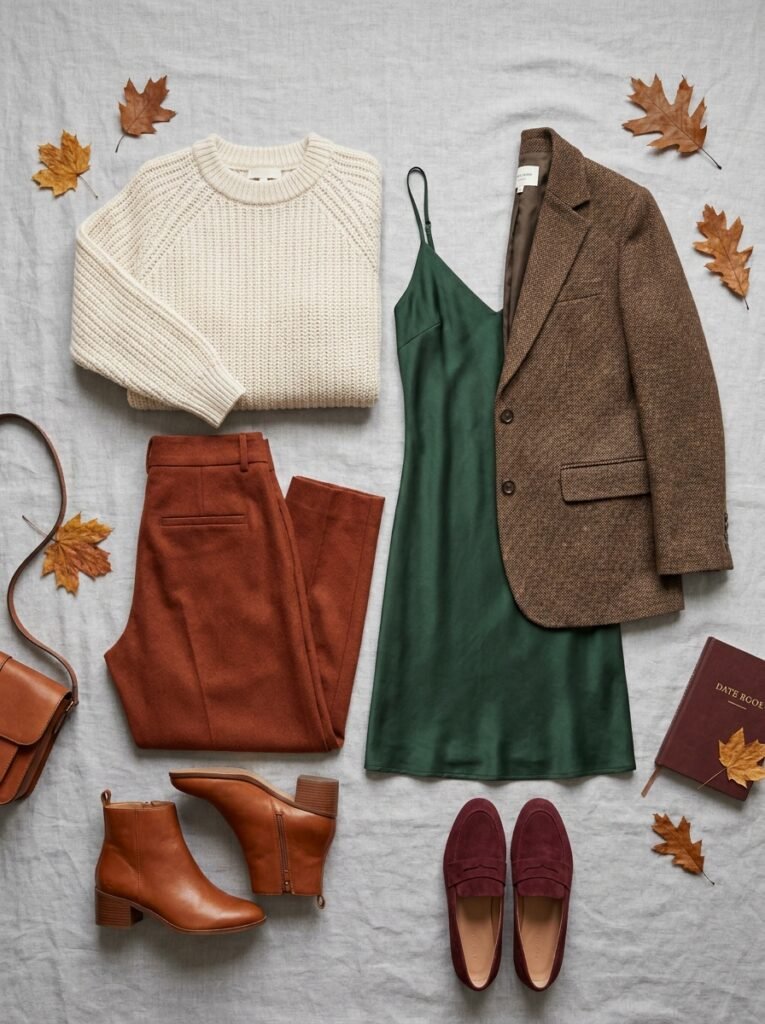
A reasonable starting point: one slip skirt, one chunky knit sweater, one pair of wide-leg trousers, one fitted bodysuit or cami, one structured jacket, one monochrome dress in a deep color, one pair of leather or faux leather pants, and two pairs of shoes that cover both a dressier and a more casual option.
That set produces well over a dozen distinct outfits by mixing and matching rather than buying something new for every plan. Keeping the palette within two or three related colors, rather than a wide mix, makes almost everything in the rotation work with everything else. More seasonal outfit ideas beyond date night are collected in the site’s fashion section for anyone building out the rest of a fall wardrobe at the same time.
Putting It Together
The easiest way out of a repetitive date outfit rotation is starting from a different piece than usual, a skirt instead of a dress, trousers instead of jeans, texture instead of color. None of the formulas above require more effort than the fallback outfit already in rotation. They just start the decision somewhere new.
Once two or three of these formulas become familiar, picking a fall date outfit stops being a decision made in a hurry and starts being something closer to a short list, already narrowed down before the getting-ready clock even starts.