Business Casual Fall Outfits for the Office
Fall office dressing has a timing problem that summer and winter do not really have. The commute starts at 58 degrees, the lobby is air conditioned like it is still July, and by 3 p.m. the sun through a west facing window has the whole floor peeling off cardigans. None of that shows up in a mood board of “fall office looks,” which is usually just a photo of a blazer and boots on a 65 degree day with nowhere to actually be.
This is less about chasing a seasonal color story and more about building outfits that survive a full day moving through three or four different microclimates. A coat that works outside, a top that works under fluorescent lighting for eight hours, shoes that handle a train platform and a conference room without changing.
Below is a way to think through that, piece by piece, along with a handful of outfit formulas built around the kinds of days an office actually has, not just a generic Monday through Friday.
Where Business Casual Actually Sits
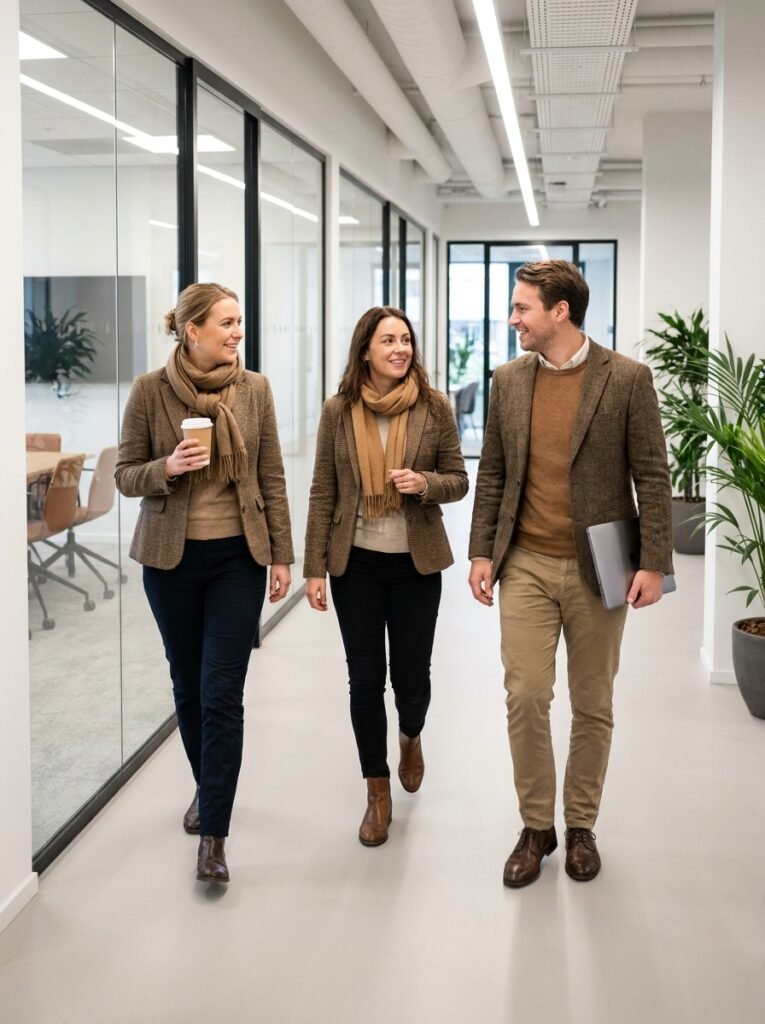
The phrase gets used loosely enough that it is worth pinning down before picking anything out of a closet. Business casual sits between two other categories, and most confusion comes from not knowing which line it is closer to on a given day.
- Business formal or professional. Suits, matched sets, ties, closed toe heels or oxfords. Law firms, banks, client facing consulting.
- Business casual. Trousers or a structured skirt, a collared shirt or a clean knit top, a jacket that is optional rather than required, shoes that are neat but not necessarily dressy.
- Casual or “dress down.” Jeans, sneakers, graphic tees, the version of an office that only exists on Fridays or in fully remote teams.
There is no single national standard for what counts, and it has become the most common dress code across American offices. As Wikipedia’s overview of business casual puts it, the term covers an intentionally loose category that softens traditional business wear, built loosely around trousers and a collared top with the jacket made optional rather than required. The practical upshot is that the safest business casual outfit is one that could survive an unplanned client call without a costume change, even on a day when no client call was on the calendar.
The Temperature Problem Fall Actually Creates
Fall is the season where the outdoor temperature and the indoor temperature stop agreeing with each other. Mornings can sit in the 50s while the building itself stays locked at a fixed setting that was chosen for July, not October.
Most offices are kept fairly narrow on purpose. OSHA’s guidance on indoor temperature recommends a range of roughly 68 to 76 degrees Fahrenheit for workplace comfort, alongside controlled humidity and fresh air circulation. That range sounds mild, but it is often colder than it feels once someone is sitting still at a desk for hours instead of moving around, which is why the same office can register as freezing to one person and stuffy to another.
The practical takeaway is that a single sweater is rarely the answer. A base layer that works alone at a desk, plus an outer layer built for the actual outdoor temperature, covers the swing better than one heavier piece that has to do both jobs at once.
The Pieces Worth Building Around
Rather than a rigid capsule list, it helps to think in three categories that carry most of the outfit’s weight.
Bottoms That Do Double Duty
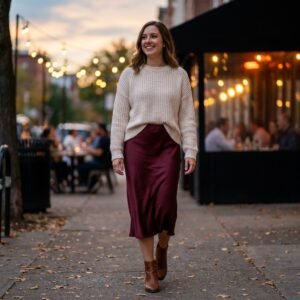
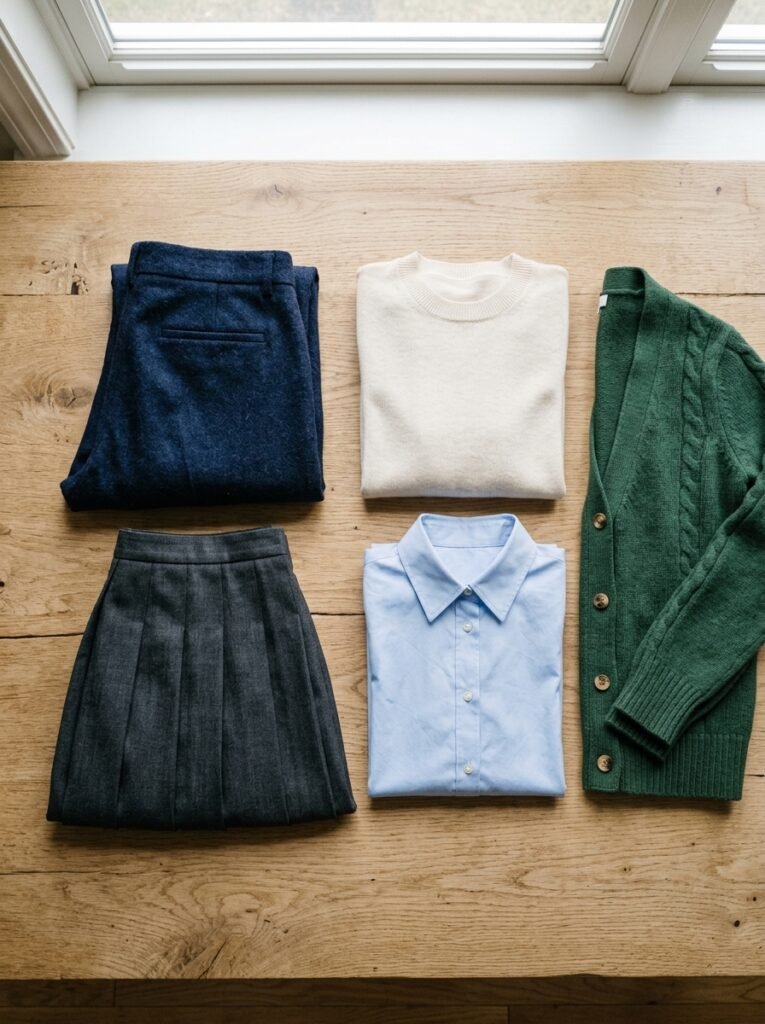
Wide leg or straight trousers in a mid weight wool blend or ponte knit hold their shape through a full day of sitting and walking, and they read as intentional without needing a jacket to back them up. A tailored midi skirt does the same job with slightly more range between desk and evening plans. Dark denim, where it is allowed, works best in a straight or slightly wide cut rather than anything distressed or overly fitted.
Tops You Can Layer Without Bulk
A fine gauge knit or a structured blouse under a cardigan avoids the bulky look that thicker sweaters create once a blazer goes on top. Turtlenecks solve the collar question under a blazer without needing a separate shirt underneath, which matters once three layers are already involved.
The Blazer Question
Not every business casual outfit needs one, and treating it as a daily requirement usually just leads to it being carried around unused. A blazer earns its place on days with meetings, presentations, or anything client facing. On a regular desk day, a longline cardigan or a structured shirt jacket does the same visual job with less restriction across the shoulders.
Fabric Weights That Make Sense for a Desk, Not a Runway
Fall fashion coverage tends to push heavy fabrics before the actual weather earns them. An office adds its own variable, since most people spend the bulk of the day sitting indoors rather than outside in the cold the fabric was chosen for.
Mid weight wool blends and ponte knits hold a crease and resist wrinkling through a commute, which matters more in an office than raw warmth does. A fine gauge knit gives the visual weight of a heavier sweater at a fraction of the actual warmth, which suits a heated building far better than a chunky cable knit does. Cotton Incorporated’s fabric guides are a useful reference for comparing weights before buying, particularly for anyone unsure how a fabric will behave once it is worn indoors all day rather than outside. Brushed cotton and flannel work well for shirt jackets that come off the moment the elevator doors open. Heavier boucle, thick wool coats, and anything lined are better saved for the outer layer worn only for the walk in and out, not for anything worn at the desk itself.
A Color Approach That Still Feels Like You
An office wardrobe benefits from a shorter color story than a personal wardrobe does, mostly because it gets rebuilt into new outfits more often and needs to mix cleanly.
A workable approach is two neutrals plus one accent that repeats across the season. Chocolate brown, camel, and charcoal form a common base, since all three pair with black, cream, and each other without much thought. From there, one accent color such as rust, deep green, or burgundy shows up in a blouse, a scarf, or a pair of shoes rather than an entire outfit, which keeps the color feeling deliberate instead of costume like.
Prints are worth using sparingly in an office setting. A single printed blouse or scarf reads as personality. A fully printed outfit tends to read as louder than most desk environments call for, regardless of how the print looks on its own.
Shoes for Commuting, Standing, and Sitting
Office shoes carry a different set of demands than most other categories on this list, since the same pair often has to handle a train platform, stairs, an elevator, and a full day sitting under a desk.
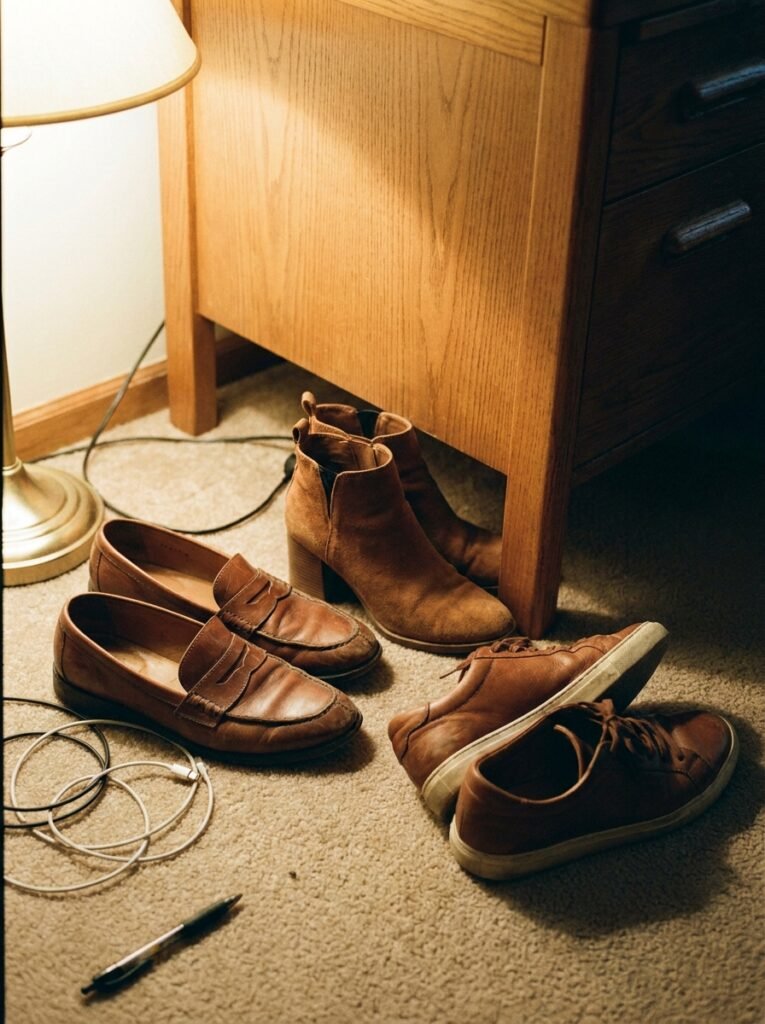
- Loafers. The most reliable option across business casual settings, comfortable enough for walking and structured enough for a meeting.
- Low block heel boots. Practical once the weather turns, and steadier on stairs than a thin heel.
- Clean leather sneakers. Increasingly accepted in hybrid and creative offices, best kept minimal rather than sporty.
- Ballet flats with real support. A lighter option for warmer fall days that still reads as polished.
A second pair kept at the desk, even something as simple as a backup flat, solves the problem of a shoe that looked fine at 8 a.m. and stopped being comfortable by 2 p.m.
Outfit Formulas for Different Kinds of Office Days
A work week rarely repeats the same kind of day five times, so it helps to build formulas around the type of day rather than the day of the week.
The Regular Desk Day
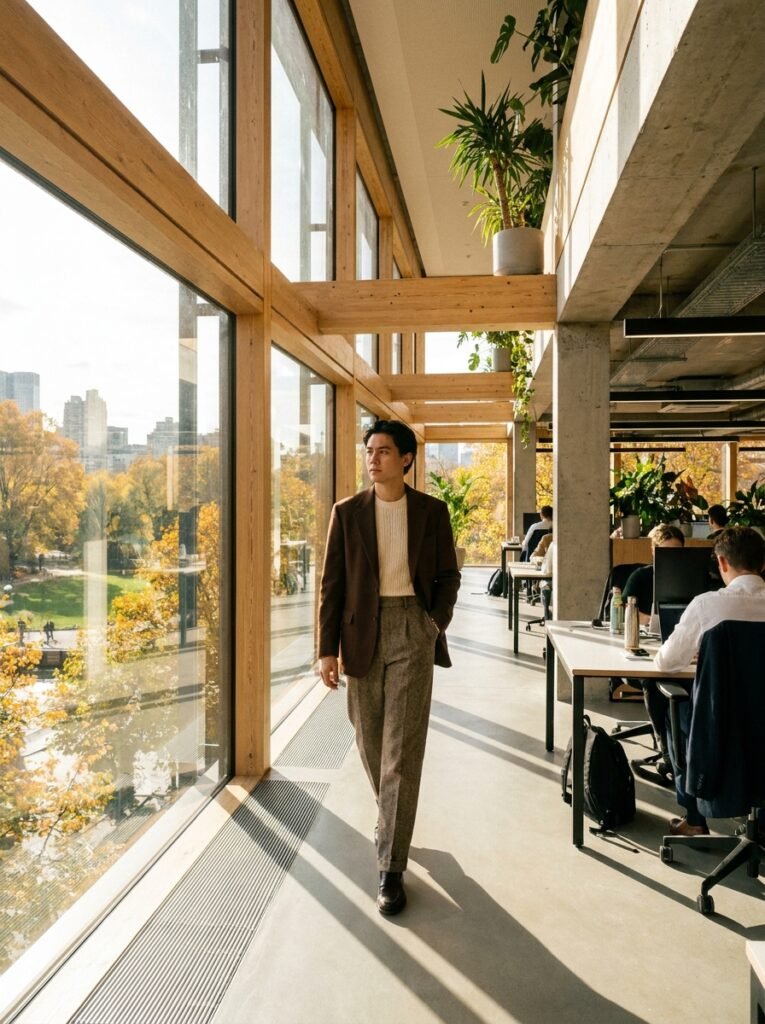
Wool blend trousers, a fine knit top, and loafers, with a cardigan kept at the desk rather than worn on the commute. Nothing here needs a blazer, and the whole outfit takes under a minute to put together on a slow morning.
The Client or Presentation Day
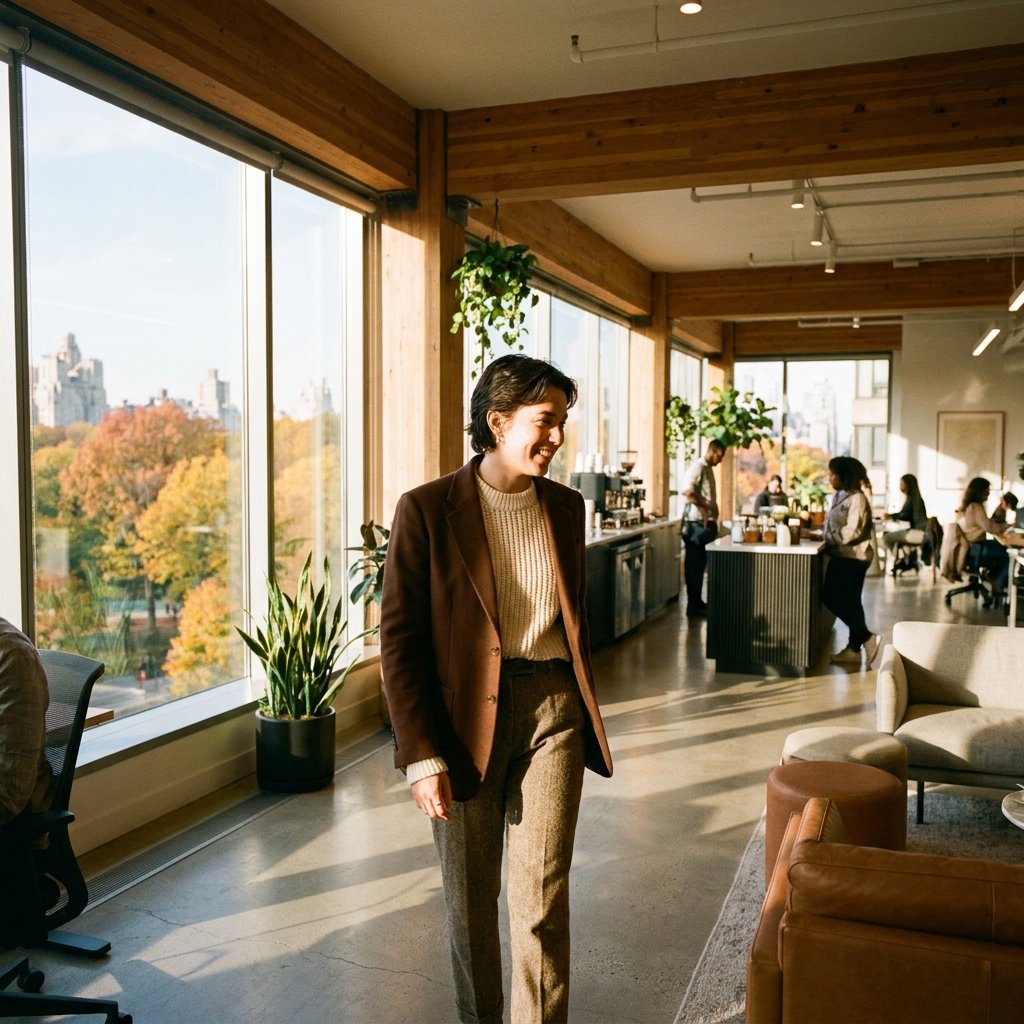
A tailored blazer over the same trousers or a midi skirt, a structured blouse, and a slightly dressier shoe such as a low heel or a polished loafer. The blazer is the piece doing the most work here, so it is worth choosing one in a fabric that does not wrinkle from being carried on a train.
The Hybrid Commute Day
A shirt jacket or a longline cardigan over a simple base, since it needs to look finished walking in from a colder morning and then come off entirely once inside. Ponte pants or dark straight denim, if allowed, hold up well for a day that includes more walking than usual.
Casual Friday, Without Looking Like You Gave Up
Straight leg jeans with a structured blouse or a knit polo, paired with loafers rather than sneakers, keeps the outfit from sliding too far into weekend territory. A blazer stays optional here, but a good belt and a slightly dressier top usually do the same job.
Small Details That Read as Put Together
A handful of small choices tend to signal effort more than any single garment does. A structured tote or crossbody bag reads more office appropriate than a casual weekend bag, particularly when it needs to hold a laptop. A watch does more visual work than most jewelry for a desk setting, and a simple stud or small hoop earring survives a full day of headset use.
Grooming details shift with the season in a similar way. Manicure shades tend to move toward deeper, muted tones once fall settles in, and the site’s guide to fall nail colors covers a few options that read as polished without needing a fresh set every week.
Fifteen Pieces That Cover Two Months at a Desk
A workable office capsule for fall does not need to be large. It needs everything in it to pair with almost everything else.
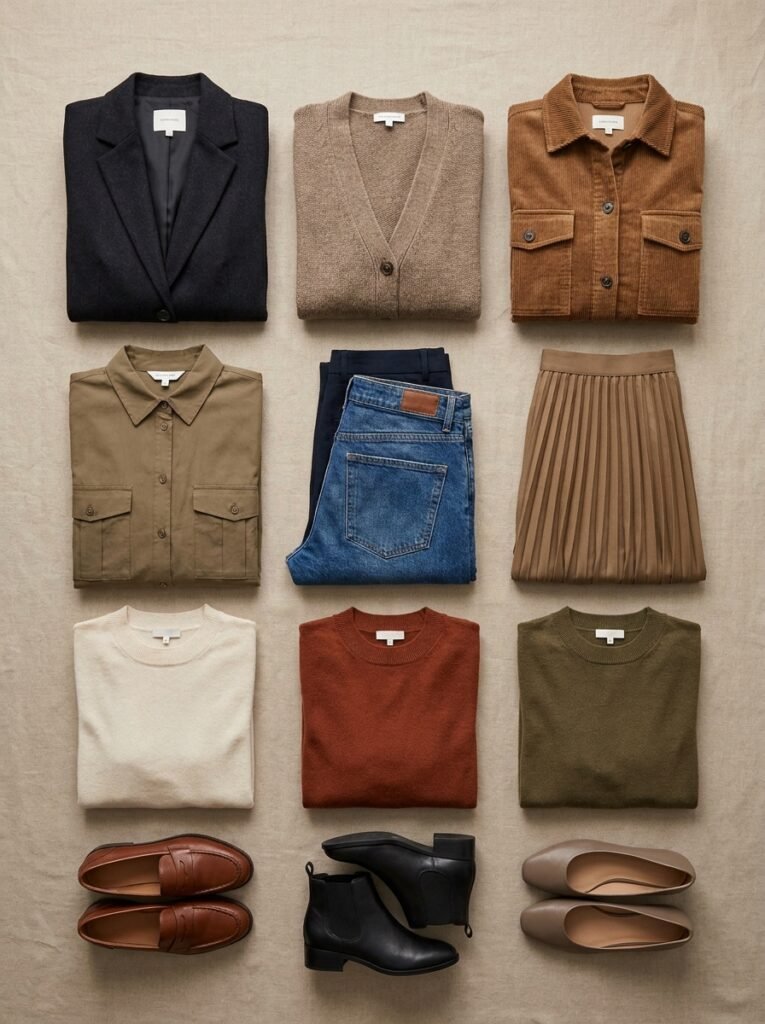
Bottoms: wool blend trousers in chocolate, black ponte pants, dark straight denim, one tailored midi skirt Tops: cream fine knit, black fine knit, one structured blouse, one turtleneck Layers: tailored blazer, longline cardigan, shirt jacket Dresses: one shirt dress that doubles as a one piece outfit on a rushed morning Shoes: loafers, low block heel boots, clean leather sneakers
Kept to a two neutral, one accent color story, that list produces well over a month of outfits without repeating the same combination twice in the same week.
A Few Things Worth Reconsidering
A short list of patterns that tend to undercut an otherwise solid business casual outfit.
- Dressing for the walk in, not the eight hours after it. A heavy coat solves the commute and then sits on the back of a chair looking wrong all day if there is nothing lighter underneath.
- Treating the blazer as mandatory. Wearing one every single day, meeting or not, tends to look more like a uniform than an intentional choice.
- Ignoring how fabric performs under lighting. Certain synthetic blends look fine in daylight and oddly shiny under fluorescent office lighting.
- New shoes on a heavy meeting day. A stiff loafer or an unbroken in boot is its own kind of distraction by hour six.
- One outfit for every kind of day. A desk day, a client day, and a commute heavy day each ask for slightly different things, even within the same wardrobe.
Putting It Together
Fall office dressing works best as a small set of formulas rather than a fresh decision every morning. A base that survives a heated building, a layer built for the actual outdoor temperature, and shoes that can handle stairs and a full day sitting cover most of what a real work week asks for.
The same swap-based thinking applies just as much in the weeks before the weather fully turns. The site’s guide to transitional outfits for August through September covers the earlier stretch of this same problem, when mornings are cool but afternoons have not caught up yet. For anything dressier than a desk day calls for, the fall wedding guest guide has more on fabric and color choices that carry over well into an office happy hour or a work dinner. More seasonal styling ideas are collected in the outfit ideas section of the site.