

Medium Length Layered Hair for Fine Hair: What Actually Works
My sister has the finest hair I have ever seen on a human being. Baby-soft, shiny, and completely allergic to holding any kind of shape. For years she wore it long and one length because someone told her once that layers would “eat” her hair. Then last spring she walked into a salon on a whim, asked for something shorter with a bit of movement, and came out looking like she had twice the hair.
She has been insufferable about it ever since.
That whole experience got me digging into why medium length layered hair works so well for fine strands, and why so many people with fine hair are scared of layers in the first place. Turns out the fear is not totally unfounded. It just depends entirely on how the layers are cut, where they sit, and what you do with them afterward.
So let’s get into it.

If You Only Read One Section, Read This
Short on time? Here are the things that make the biggest difference:
- Keep the length somewhere between your chin and a couple of inches below your collarbone. That range is the sweet spot.
- Ask for long, soft layers rather than short choppy ones stacked near the crown.
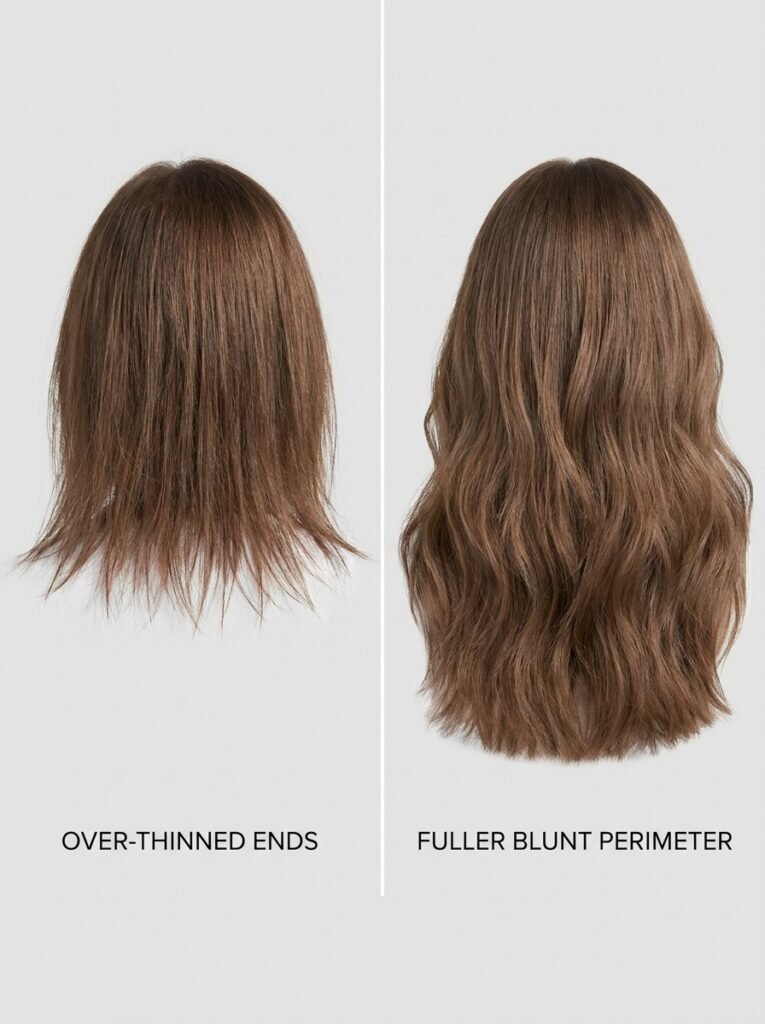
- Keep the ends blunt or close to blunt. Wispy, feathered ends are what make fine hair look thin.
- Volume comes from the roots, not the ends. Your product strategy should reflect that.
- Trim every eight to ten weeks or the shape quietly disappears.
That’s the short version. Now here’s the reasoning, because knowing why something works helps you explain it at the salon.
Why Layers Got Their Bad Reputation
The bad rap comes from a specific kind of layering that was everywhere in the early 2000s. Heavy razor cutting, thinning shears used aggressively, layers that started right at the ear and got shorter as they climbed. On thick hair that removes weight and creates gorgeous movement. On fine hair it removes the little density you had and leaves you with a see-through, stringy bottom half.
If you have ever had a haircut where your ponytail suddenly felt like it was half its old size, you know exactly what I am talking about.
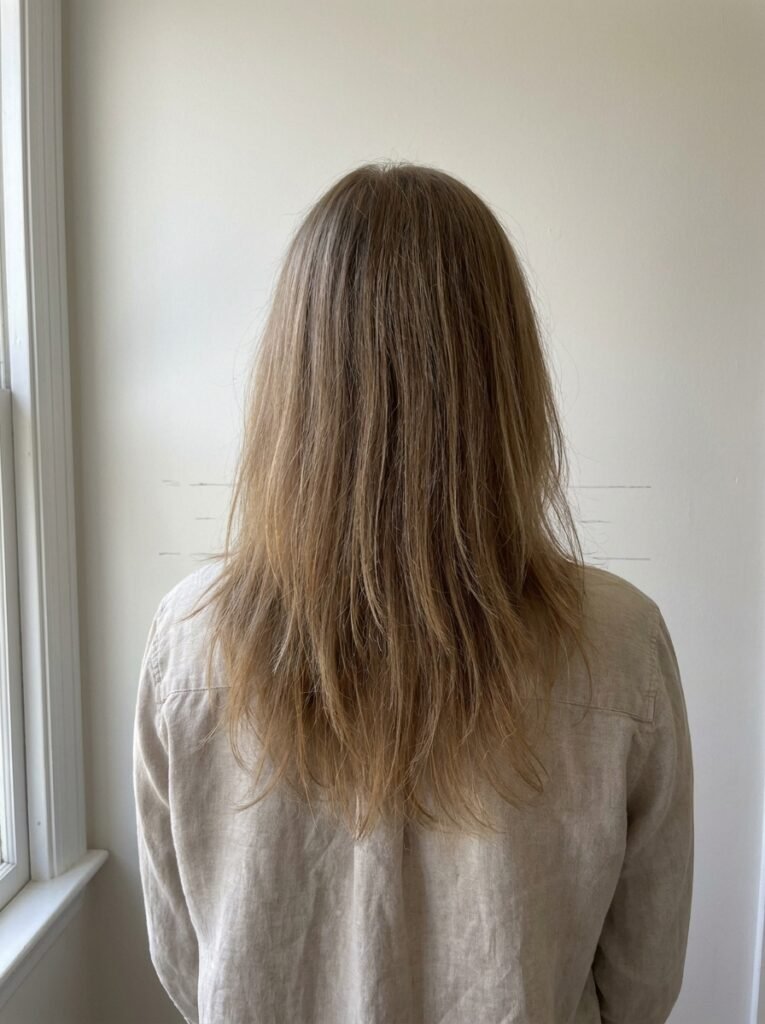
But that is one type of layering, not layering itself. Fine hair actually needs some shape. A single blunt length hanging from the crown to the mid-back tends to lie flat against the head, and flat reads as thin. Break that up with the right layers and you introduce dimension. Light hits the hair at different angles. It looks fuller even though nothing was added.
The trick is subtraction in the right places.
The Length Question Comes First
Before you even think about layers, decide on length. This matters more than most people realize.
Fine hair has a limit before gravity wins. Past a certain point the weight of the length pulls everything flat at the root, and you spend your morning fighting for volume that you will lose by lunchtime. For most people that point falls somewhere around the collarbone or a couple of inches past it.
Medium length is the practical answer. Long enough to tie back on a bad day, short enough to keep some natural lift, and versatile enough to style in different ways without a full toolbox.
A few length markers worth knowing:
Chin to jaw. Punchy and modern. Great if you want the maximum illusion of thickness. Harder to pull back.
Just above the collarbone. My personal favorite for fine hair. It skims the shoulders, so it gets a little natural flip and body. Still ties into a small ponytail.
Two to three inches below the collarbone. The longest I would push it. You get length without total flatness, but you have to be committed to styling.
Anything longer and you are basically choosing length over volume. Which is a valid choice, just be honest with yourself about it.
Cuts Worth Asking For
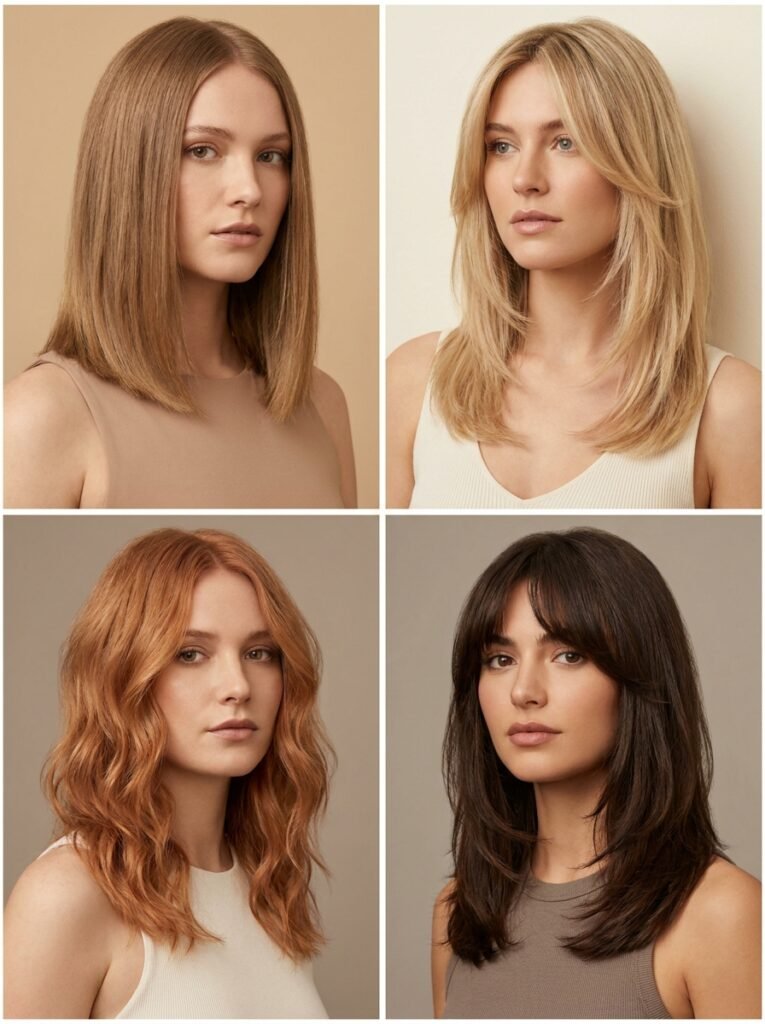
Here are the shapes I have seen work again and again on fine hair. Bring a photo of whichever one speaks to you.
The Collarbone Cut With Long Interior Layers
This is the workhorse. The outline stays blunt at collarbone length. Inside, the stylist removes a little weight with long layers that start well below the chin. The result is a strong perimeter that reads as thick, with just enough internal movement that the hair does not sit like a curtain.
My sister’s cut is basically this. It works on almost everyone.
Face-Framing Pieces With Nothing Else
If you are nervous about layers, start here. No internal layering at all. Just a few soft pieces cut around the face, starting somewhere around the cheekbone and blending into the length.
It costs you almost nothing in density and completely changes how the cut sits. It also softens a strong jaw or a wide forehead, which is a nice bonus.
The Soft Modern Shag
The shag has been having a long moment, and the updated version is much gentler than the 70s original. Layers throughout, but they are cut with a light hand and the ends stay relatively solid. It gives real texture and lift at the crown.
One caveat. This one is only as good as your stylist. A shag done poorly on fine hair is a disaster. Ask to see their work first.
Curtain Bangs With Grown-Out Layers
Curtain bangs are quietly one of the best things you can do for fine hair. They add fullness right where people notice it most, at the front and around the face. Paired with a medium cut and long layers, they create the impression of density even when the rest of the hair is doing very little.
They do require a bit of daily styling. Maybe ninety seconds with a round brush. If you are truly a wash-and-go person, skip them.
The Blunt Lob With Invisible Layering
“Invisible layers” is stylist speak for layers cut so subtly they cannot be seen as distinct sections. The hair looks like it is all one length, but it has internal shape that stops it from going flat.
This is the best option if you want the look of thick, blunt hair but you also need some movement. Ask for it by name. Most stylists will know what you mean.
Three People, Three Different Results
Let me give you some real texture on this.
A friend from work has fine hair and a very round face. She went with a lob just under the chin, no layers at the top, only face-framing pieces starting at the mouth. It elongated her face and gave her hair a surprising amount of bulk. She air dries it with a bit of mousse and she is done.
A neighbor of mine has fine but wavy hair, which is a tricky combination because the waves separate and show scalp. She got a soft shag at collarbone length. The layers gave the waves somewhere to go, so instead of separating into thin ribbons they clump into fuller sections. Huge improvement.
My sister, as mentioned, has fine, straight, dark hair. Dark shows scalp more than light hair does. She went with the blunt collarbone cut and added a few subtle highlights around the face. The color variation plus the shape did more than either would have alone.
Same hair type, three different problems, three different answers. Which is why copying someone else’s exact haircut does not always work out.

Talking To Your Stylist Without Being Vague
“I want layers but not too many” is not useful information. It means something different to every stylist on earth.
Try this instead:
- “My hair is fine, so I want to keep the ends as full as possible.”
- “Can we keep the layers long, starting below my chin?”
- “I would rather have too little taken off today than too much. Can we go conservative and adjust?”
- “Please skip the thinning shears on the ends.”
That last one is worth saying out loud. Thinning shears have their place, but on fine hair, used at the bottom, they create that wispy see-through look everyone is trying to avoid.
Also, bring two photos. One of what you want and one of what you absolutely do not want. The second photo is often more useful than the first.
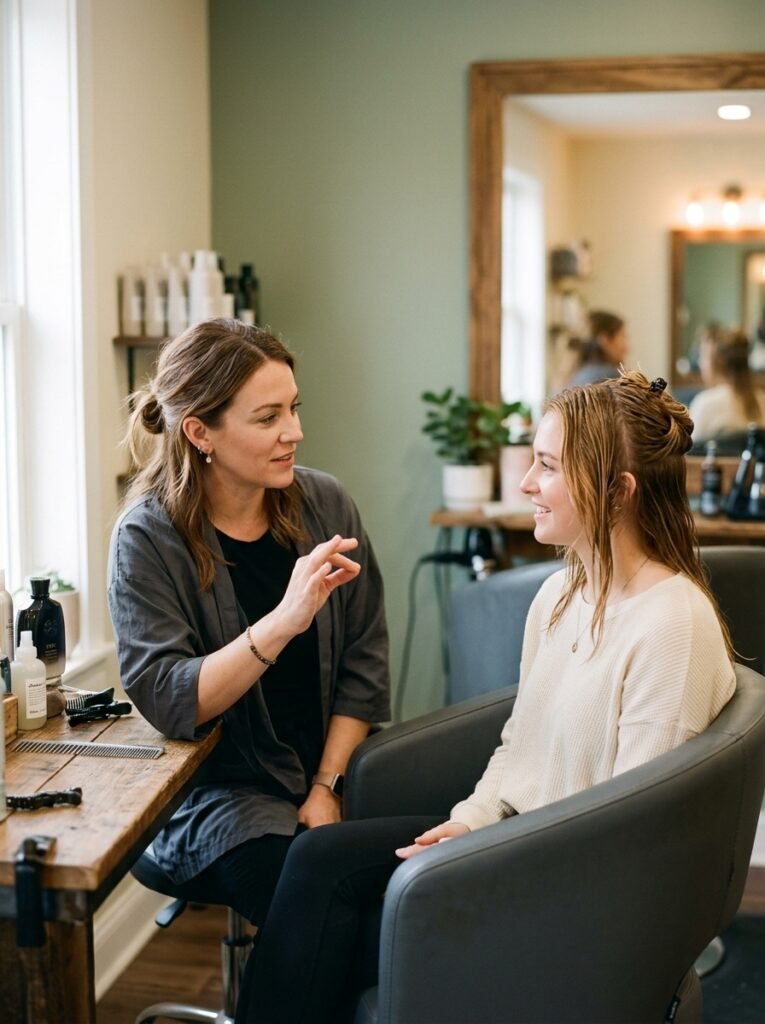
And a small practical note: book the appointment when you have time to sit and talk for five minutes first. Rushed consultations are where haircuts go wrong.
Styling So the Layers Actually Do Something
A good cut on fine hair still needs about five minutes of help. Not thirty. Five.
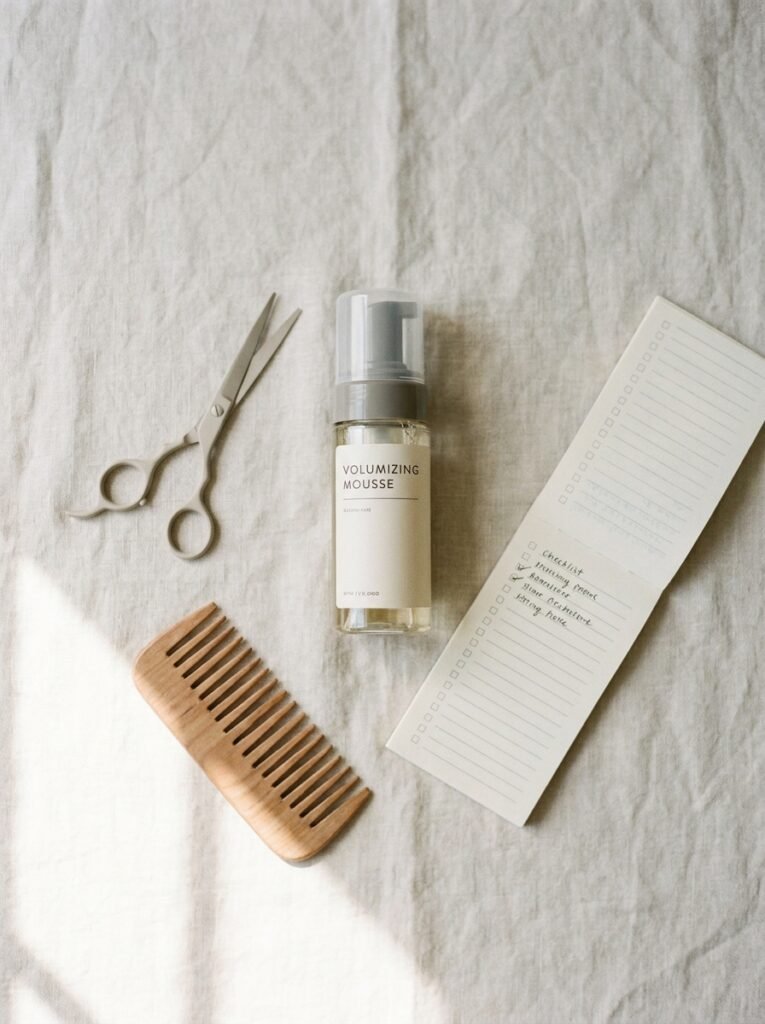
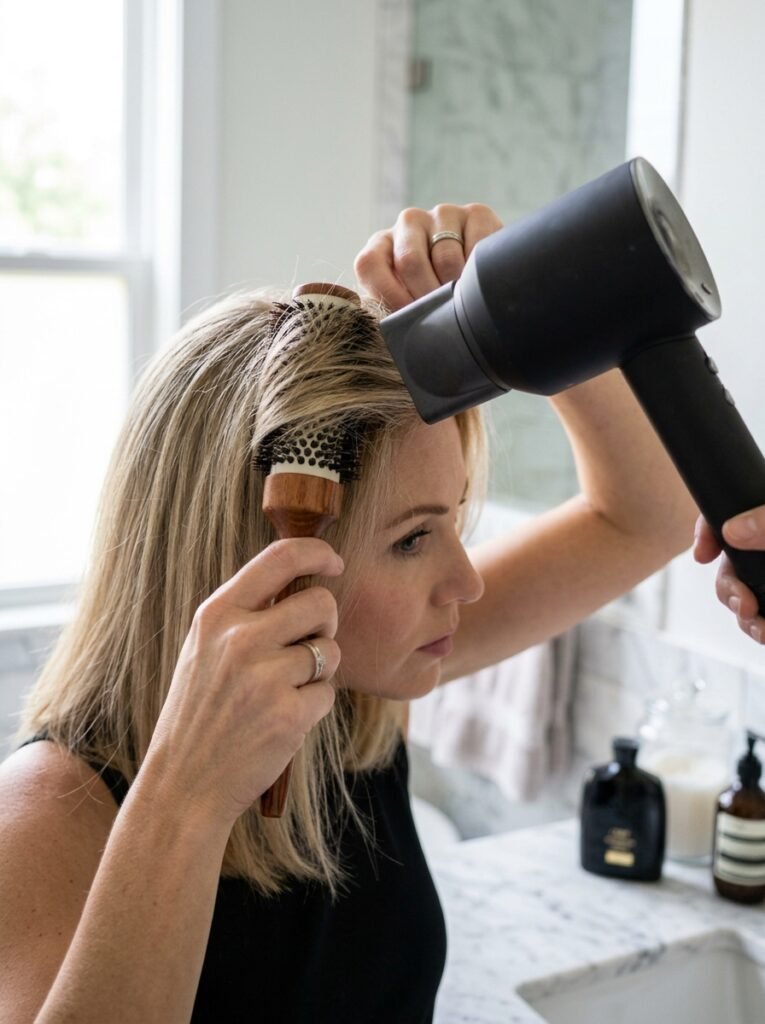
Start at the roots when you are damp. Volume mousse or a root lifting spray applied to the roots only, then rough dry with your fingers, flipping your head upside down. This single habit does more than any product applied to the ends.
Go easy on conditioner. Fine hair gets weighed down fast. Apply conditioner from the mid-length down and rinse thoroughly. Rich masks are usually not your friend unless you have color damage.
Dry shampoo is a styling product, not just a cleanser. Spray a little at the roots on clean, dry hair for grip and lift. Sounds counterintuitive but it works beautifully.
Use heat with intention. A one inch curling iron, a few random pieces bent away from the face, and you have movement that lasts all day. You do not need to curl the whole head. Six to eight pieces is plenty.
Blow dry with a round brush at the crown only. If you skip everything else, still do this bit. Lift at the crown is what people register as thick hair.
Cool shot at the end. Let the shape set before you let go of the brush. Warm hair falls flat as it cools in the wrong position.
One more thing on the overall look. Fine hair benefits from feeling deliberate rather than accidental, and the same is true for the rest of your styling. A clean, put-together finish, even something as small as a fresh manicure with one of these creative nail ideas worth trying, tends to make a simple haircut read as intentional instead of unfinished. Small details do a lot of quiet work.
Mistakes That Keep Showing Up
I have watched people make these over and over, including myself.
Going too long between trims. Fine hair loses its shape fast because there is less weight holding the cut in place. Eight to ten weeks. Set a reminder.
Choosing heavy hair products. Oils, butters, thick creams, heavy leave-in treatments. They are made for coarse or curly hair and they will flatten you. Look for words like lightweight, volumizing, or texturizing.
Washing every single day out of habit. Some people genuinely need to. But many fine-haired people over-wash, strip their scalp, and end up producing more oil. Try stretching to every other day and see what happens.
Asking for layers to fix a volume problem that is actually a color problem. If your hair is very dark and very fine, the scalp contrast is doing a lot of the visual damage. A few soft highlights can help more than any cut.
Copying a celebrity photo without checking the hair type. That gorgeous layered cut you saved might be on someone with three times your density. The same cut on you will not behave the same way.
Letting someone razor cut fine hair. Razors create tapered, wispy ends. That is the opposite of what you want. Scissors, please.
Keeping It Alive Between Salon Visits
The month after a haircut is always the best month. Here is how to stretch that feeling.
Sleep on a smooth pillowcase so you wake up with less frizz and fewer flattened sections. Silk or satin, whichever you can afford.
Rotate your part every so often. Hair trained into one part goes flat there. Flipping it to the other side for a day gives instant lift.
Do not brush obsessively. Fine hair breaks easily and over-brushing pulls out the shape and any texture you built.
Rinse with cooler water at the end of your shower. It closes the cuticle and gives shine, which reads as healthy and full.
And when the cut starts feeling shapeless around week nine, that is your signal. Book it before it gets worse.
Questions People Ask Me About This
Will layers make my fine hair look thinner?
Only if they are cut wrong. Short, choppy layers or heavily tapered ends will. Long, soft layers with a solid perimeter will do the opposite.
Is medium length actually better than long for fine hair?
Generally yes, because less weight means more natural root lift. But if you love long hair, keep it long and just accept that you will need to style for volume.
Can I get bangs if my hair is fine?
Absolutely. Curtain bangs and soft side-swept bangs both work well. Full blunt bangs can be lovely but they use up a lot of your hair, so make sure you have enough to spare at the front.
How often should I trim?
Every eight to ten weeks for a layered medium cut. Slightly longer if you keep it simple and blunt.
Does color help?
Often, yes. Highlights or subtle dimension create contrast that makes hair look denser. Just keep the processing gentle since fine strands damage more easily.
What if I have fine hair and it is also oily?
Focus on scalp care rather than heavier product. A clarifying wash once a week and lightweight everything else. Dry shampoo between washes for both freshness and volume.
Can I still wear a ponytail?
Yes, if you stay at collarbone length or below. Chin length cuts are lovely but ponytails become tricky.
The Bottom Line
Fine hair is not a problem to be fixed. It is just hair that responds to different rules than the ones in most magazines.
Medium length with the right layering hits the balance point. It keeps enough length to feel like real hair, removes enough weight to let your roots breathe, and adds enough shape to catch the light. Add five minutes of styling and you have a cut that looks intentional rather than accidental.
Start conservative. You can always take more off next visit. And find a stylist who asks questions before they pick up the scissors. That relationship is worth more than any specific haircut.
My sister still brings up her haircut at family dinners. Honestly, at this point, she has earned it.