Fall Nail Colors for 2026 and What to Ask For at the Salon
Fall polish collections reach salon shelves around late August, weeks before the weather cooperates. By the time the first genuinely cool morning arrives, the wall rack is already holding a couple hundred bottles named after moods rather than colors. Fireside. Second Pour. Library Hours. None of those names tell you whether the shade leans red or brown, or how it looks once two coats go down.
That gap between the label and the result is where a lot of disappointing manicures begin. Polish looks different in a bottle, on a color stick, and on a hand, and salon lighting flatters almost everything. A shade that seemed rich on the display can turn muddy in daylight, or come out three tones brighter than expected.
What follows covers the shade families showing up for fall 2026, how each one behaves on the nail, and the specific wording that gets a nail tech to the right bottle quickly.
The Direction Fall 2026 Is Leaning
Fall palettes rarely reinvent themselves. They shift by a few degrees, and this season the shift is mostly toward warmth and depth rather than anything loud.
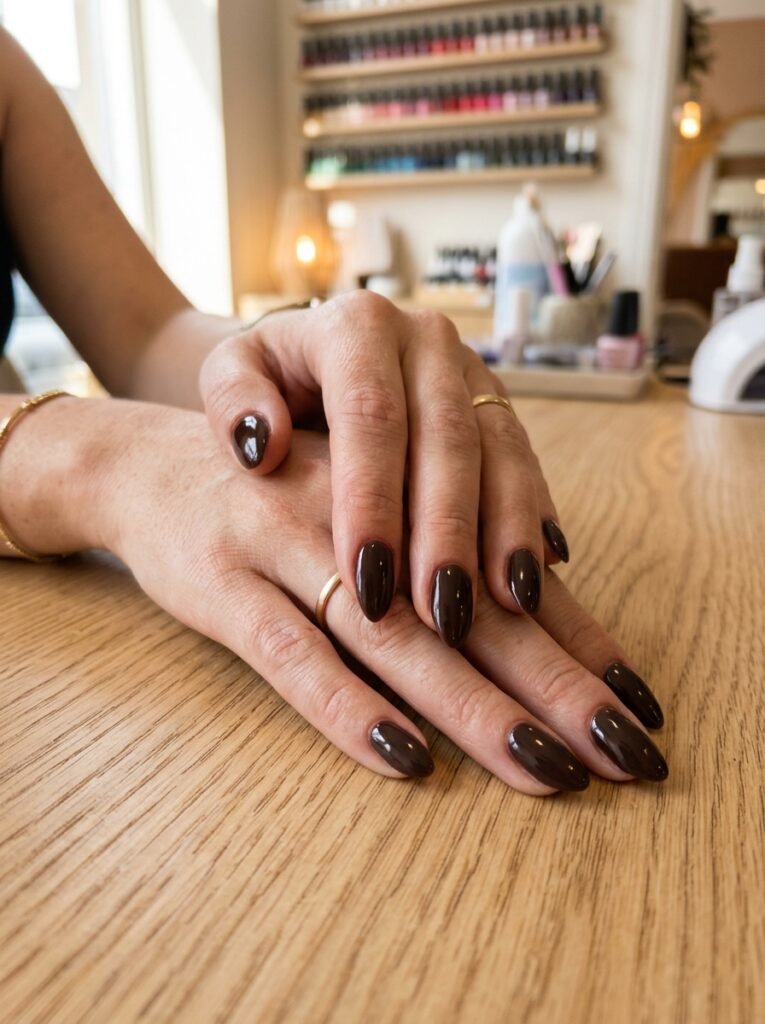
Brown continues to hold the neutral spot it took over from black, with the range stretching from milk tea to near-black espresso. Reds are running deeper and less bright, closer to wine and oxblood than to true cherry. Greens have moved into muted territory, olive and sage-gray more than emerald. Sheer milky neutrals stay in rotation for anyone who wants low upkeep. And metallics have largely traded chunky glitter for smooth chrome and glazed finishes that catch light without adding texture.
Cool shades have not disappeared either. Slate, denim blue, and gray-lilac keep showing up as the alternative for anyone who finds warm browns unflattering.
Color Families and the Words That Get You the Right Bottle
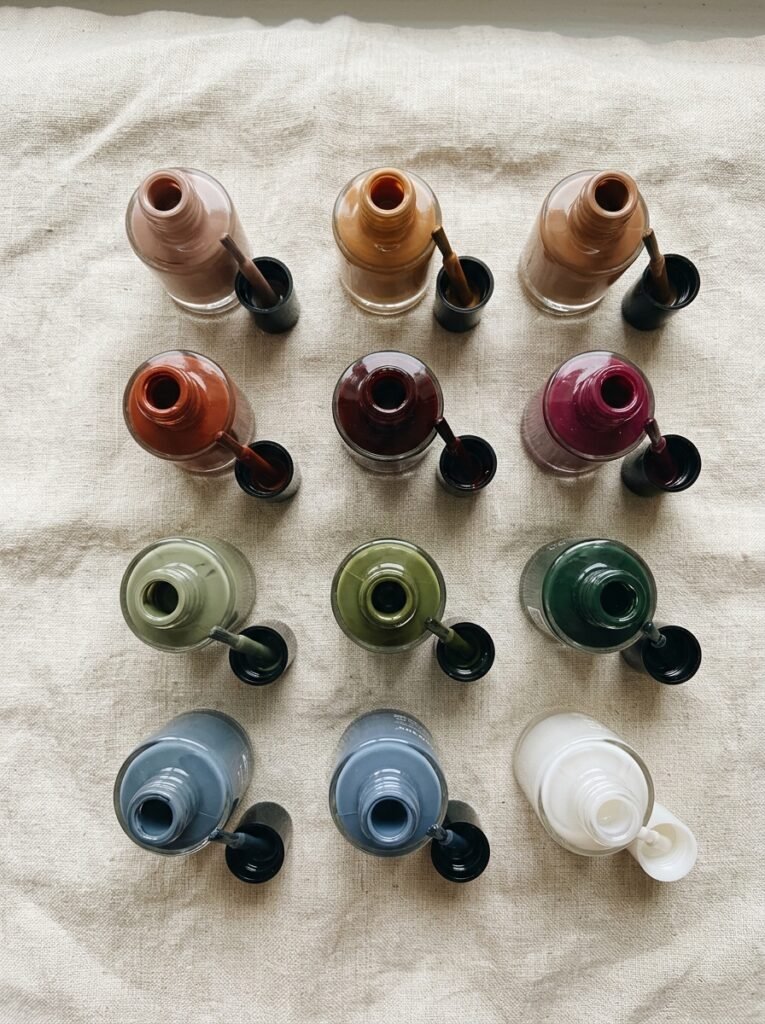
A useful request names the family, the depth, and the temperature. Three words does more than a paragraph of description.
Browns, from Milk Tea to Espresso
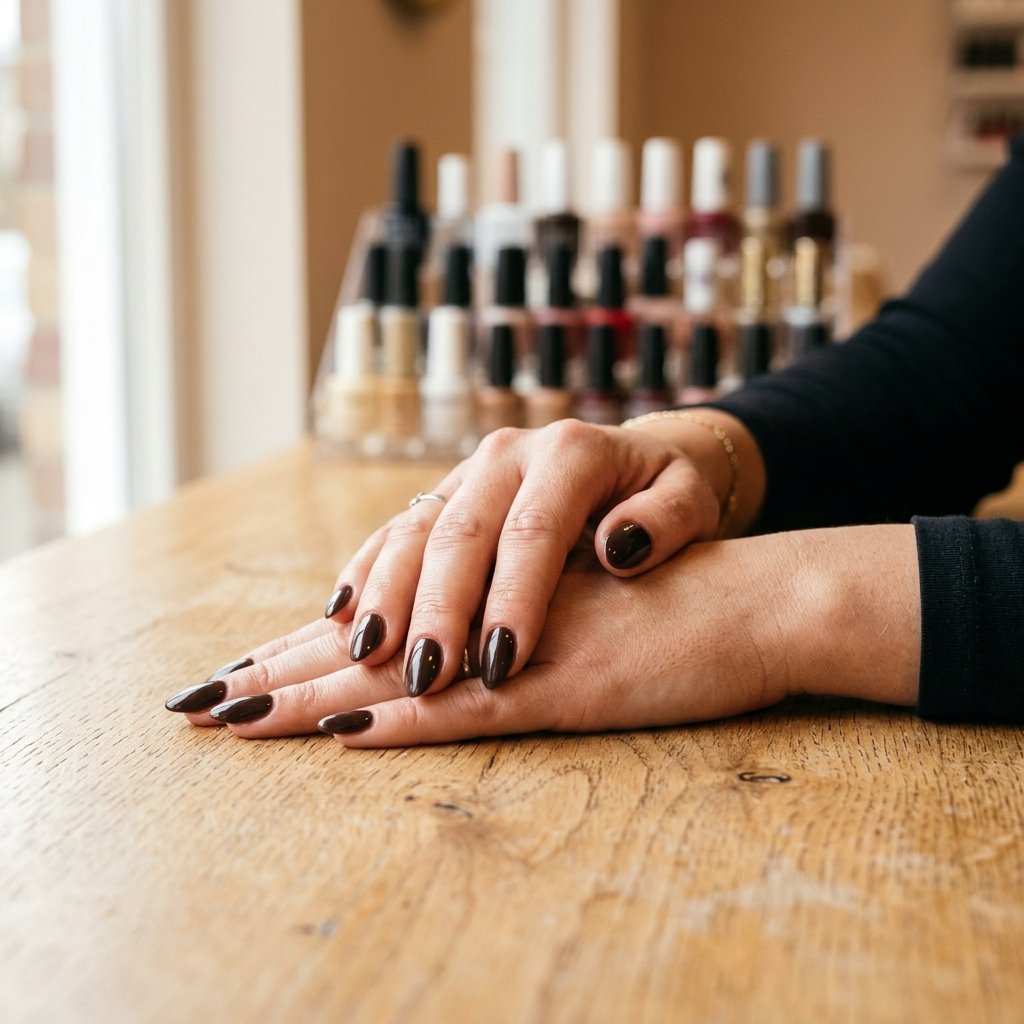
Brown covers more ground than any other fall family, which is exactly why it causes confusion. Mocha and milk tea shades sit light and warm, close to a nude with more body. Cocoa and chestnut land mid-range. Espresso reads almost black indoors and only shows its brown in sunlight.
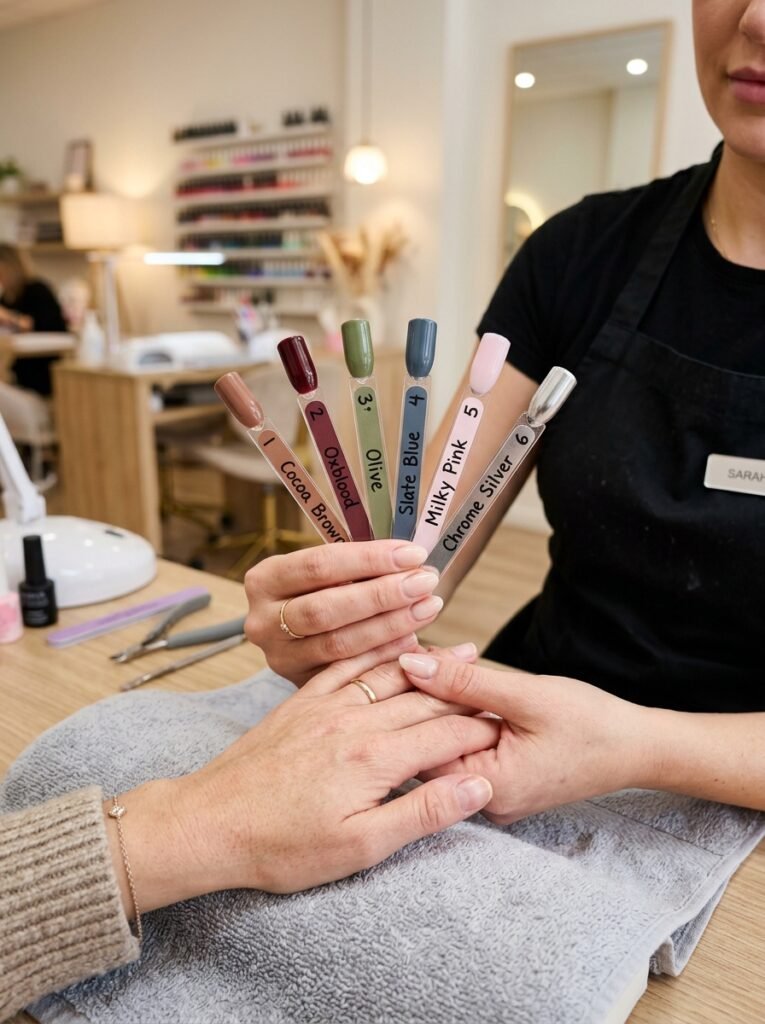
Ask for a medium warm brown with no red in it, or a dark cool brown, and the tech can narrow two dozen bottles down to three. Worth knowing: light browns can look chalky on very fair skin and washed out on deep skin, so a half shade adjustment matters more here than in most families.
Reds That Read Autumn Instead of Holiday
The difference between a fall red and a December red is usually a drop of brown or purple. Oxblood, mulled wine, brick, and cranberry all sit on the muted side. A bright blue-based red is a beautiful color, but it belongs to a different part of the calendar.
Say deep and muted, not bright. Then ask whether the shade needs two coats or three, because dark reds often stay streaky through the second pass.
Greens, Olive Through Forest
Green is the family most people rule out before trying. Olive works better than expected because it reads as a neutral once it dries, especially in a creme finish. Sage-gray does the same thing in a softer way. Deep forest and pine feel closer to a statement, and they pair well with gold jewelry.
Nail down the request by naming a reference object. Olive like an army jacket. Green like a pine needle. Those descriptions travel better than color names.
Slate, Denim, and the Cool Side of the Season
For anyone who does not suit warm shades, gray-blues do the seasonal job without the warmth. Slate, storm gray, denim, and gray-lilac all deepen an outfit without going as heavy as black. They also sit well against silver hardware and cool-toned clothing.
These shades tend to show application flaws, so a smooth base coat matters.
Sheers, Milkies, and Barely-There Neutrals
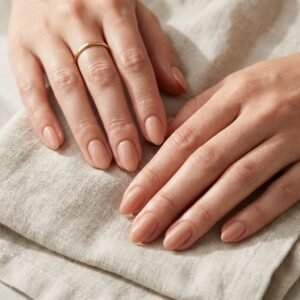
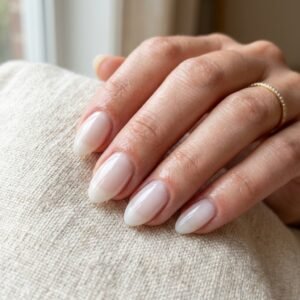
Not every fall manicure needs to be dark. Milky whites, sheer pinks, and soft greige stay popular because they grow out invisibly, which means three weeks between appointments instead of two.
The phrase that helps here is buildable sheer. It tells the tech you want coverage that can be layered rather than a fully opaque nude, and it opens up a different section of the rack.
Chrome, Pearl, and Glazed Finishes
Metallic effects have shifted toward the smooth end. Chrome powder buffed over a colored gel base, pearl top coats, and glazed finishes over milky pink all deliver shine without grit. These are usually add-on services rather than a bottle off the shelf.
Ask whether the effect is a powder, a top coat, or a separate polish. That one question tells you whether it costs extra and how it comes off later.
Finish Changes the Shade More Than the Color Does
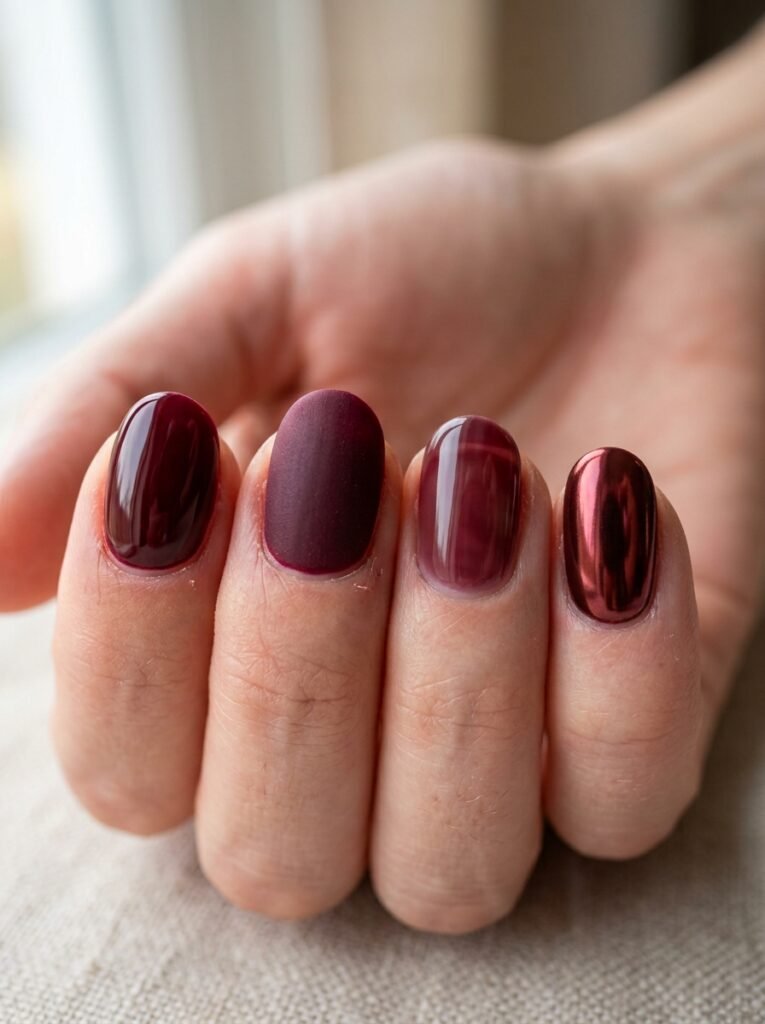
The same polish looks like three different colors depending on what goes on top. This surprises people more than any shade decision.
A glossy top coat deepens and saturates. Matte top coat lightens the shade slightly and mutes any shimmer, which suits browns and deep reds well but makes light colors look dusty. Jelly and sheer finishes let the natural nail show through, so the color shifts with the nail underneath. Cat eye magnetic gels create a moving stripe of light that reads as a pattern rather than a solid.
Velvet and sugar finishes have kept a following through cooler months, though they collect lint on the first day. Chrome behaves best over a dark base and can look grayish over pale colors.
If a photo shows the look you want, the finish is usually the part that made it appealing, not the shade itself.
How Salon Menus Are Usually Structured
Understanding the pricing structure prevents most of the awkward moments at the register. Menus vary by region, but the categories are fairly consistent across the US.
- Regular polish manicure. Lowest cost, dries soft, typically lasts around five to seven days.
- Gel manicure. Cured under a lamp, lasts two to three weeks, costs more and requires proper removal.
- Builder gel or structured manicure. A thin reinforcing layer over the natural nail. Priced above standard gel and useful for nails that peel.
- Extensions. Acrylic, hard gel, or tips. A separate service entirely.
- Design add-ons. Chrome, cat eye, French tips, ombre, and hand-painted art are usually billed per nail or per set.
- Removal. Often a separate line item, especially for gel applied elsewhere.
Asking for the total before the first coat is completely normal, and most techs prefer the question early. A simple version works: what does that come to with the chrome and the removal included?
Wording That Gets the Result You Pictured
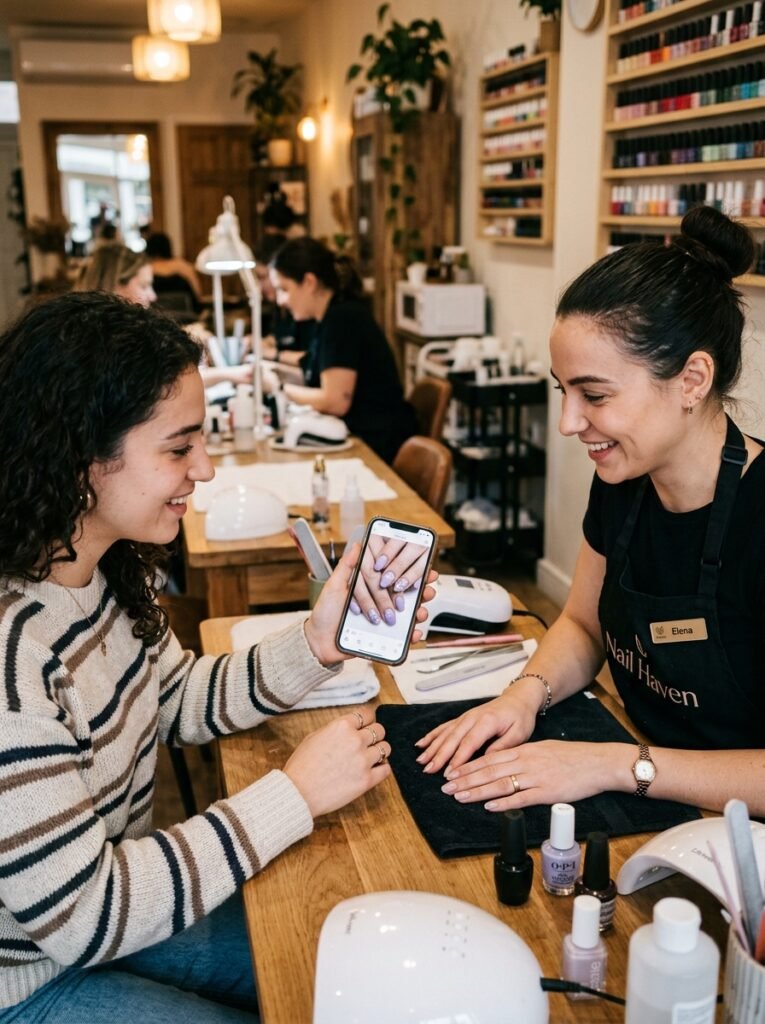
Photos help, but they need context. A saved image on a phone shows a shade under one specific light on one specific set of hands.
When showing a reference, name the part you want. The color, the finish, or the shape. Saying you like the color but want it on your own shape prevents a tech from trying to match a length you do not have.
A few phrases that consistently work:
- Can you swatch that on a stick over two coats first?
- Is this shade a one-coater, or does it need three to look even?
- I want this a half shade warmer, do you have something close?
- Can I see it in daylight by the window before you cure it?
- Same color but matte, is that a different top coat or a different polish?
The pause before curing matters most with gel. Once it goes under the lamp, changing the shade means filing everything off and starting again. Regular polish gives more room to reconsider.
It also helps to mention how you use your hands. Someone typing all day, handling boxes, or washing constantly needs a different recommendation than someone going to an event on Saturday. Shape factors in as well, and the guide covering how a tapered shape works on shorter nails walks through what to request when length is limited.
Matching Shades to Skin Tone Without Overthinking It
The general pattern holds more often than not, though plenty of people ignore it happily.
Warm undertones, where veins look greenish and gold jewelry sits comfortably, tend to suit caramel, brick, olive, and warm chocolate. Cool undertones, where veins look bluer and silver flatters, usually work well with plum, slate, gray-lilac, and blue-based wine. Neutral undertones get the widest range and can wear both sides.
Depth does more work than temperature, though. Very pale shades against deep skin and very dark shades against very fair skin both create a hard visual break at the fingertip. Picking a shade a few steps away from your own skin depth, in either direction, tends to look intentional rather than accidental.
None of this is a rule. A shade you like is worth wearing regardless of what the chart suggests.
Shades That Suit Each Stretch of the Season
Fall covers roughly three months and the mood changes across them.
Early September still runs warm in most of the country, so mid-tone shades bridge the gap. Caramel, dusty rose, muted brick, and sheer neutrals move an outfit forward without committing to winter. This is also the point where wardrobe colors start shifting, and the same warm palette described in the notes on dressing through the August to September swing applies to polish just as neatly.
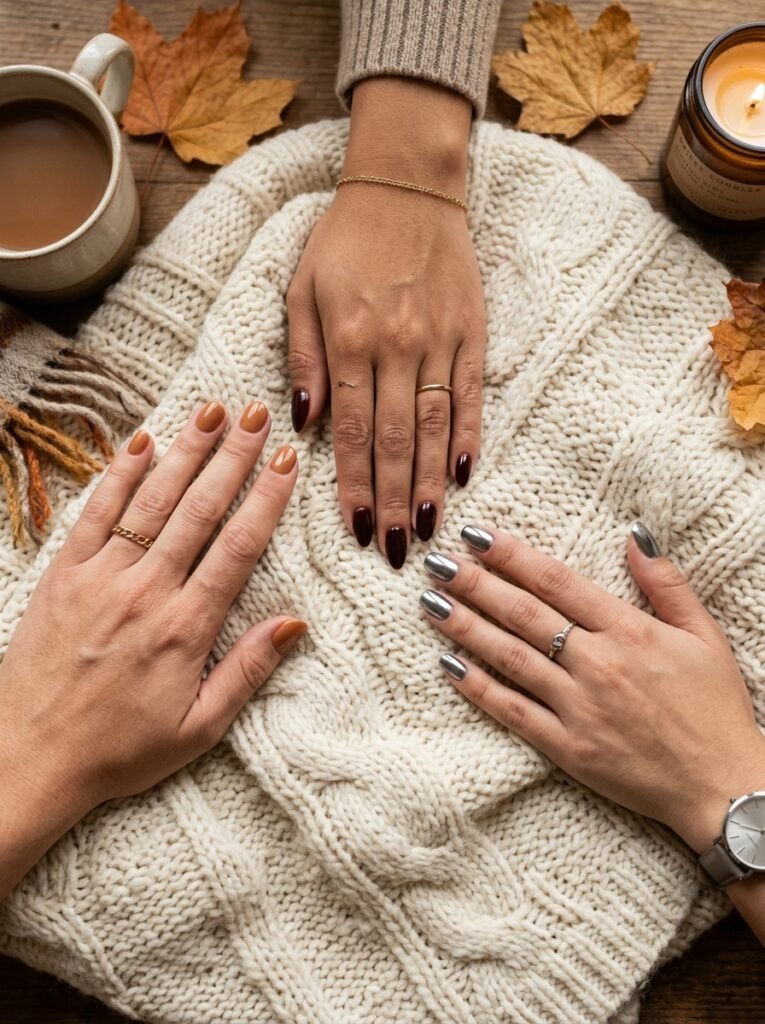
October is where the deeper shades earn their place. Espresso, oxblood, forest green, and slate all suit shorter daylight and heavier fabrics. Chrome and glazed finishes look particularly good against knitwear.
November tends toward the darkest end, plus the first metallics of the holiday stretch. Near-black brown, deep plum, and pewter chrome carry through Thanksgiving without needing a change.
Anyone who prefers not to switch shades every few weeks usually lands on a mid-brown or a milky neutral and stays there.
Details That Decide How Long the Color Lasts
Application quality affects wear time as much as the product does. A few things are worth watching during the appointment.
Polish should stop just short of the cuticle rather than flooding it, since flooded edges lift within days. The free edge needs sealing, meaning the brush runs along the very tip. Thin coats cure better than thick ones, and a rushed thick coat on a dark shade almost always wrinkles.
Removal matters more than most people expect. Picking or peeling gel takes layers of the nail plate with it, and the damage shows for months. The American Academy of Dermatology covers this in its guidance on keeping nails healthy, along with safety points worth knowing before a salon visit. The FDA also maintains an overview of nail care products and curing lamps for anyone curious about ingredients and equipment.
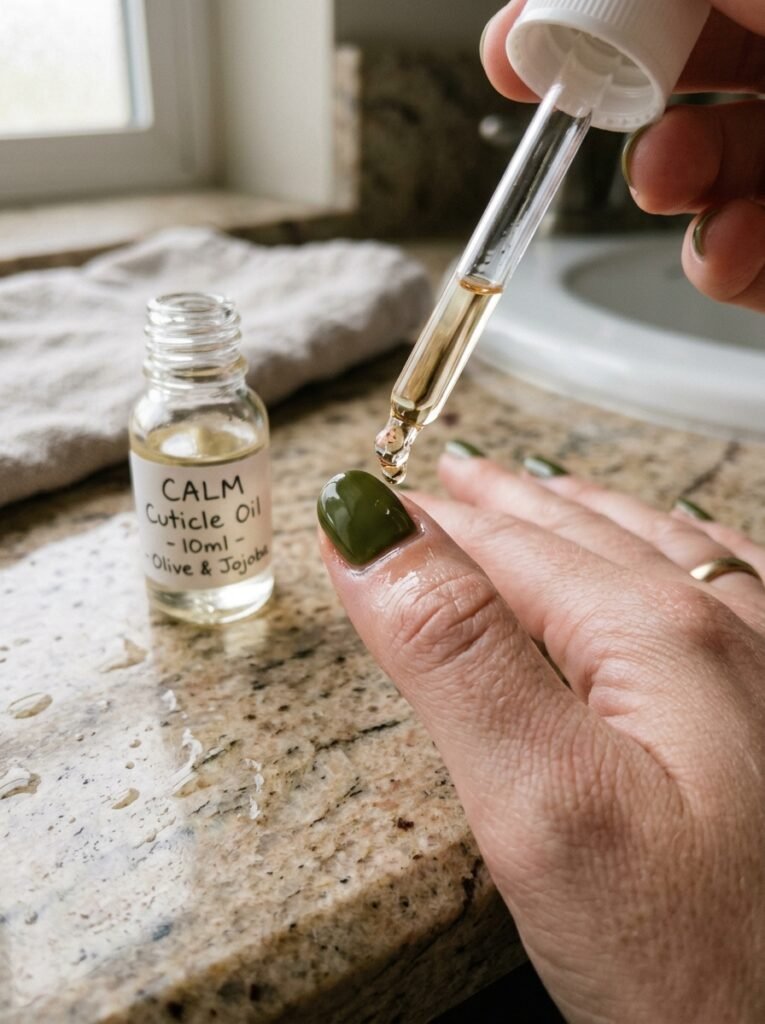
Between appointments, cuticle oil does most of the maintenance work. It keeps the skin around the nail from cracking in dry indoor air, which is the main reason fall manicures start looking untidy before the color has actually chipped.
Building a Small Rotation Instead of a Full Collection
Most people end up wearing two or three shades all season regardless of how many they own. Choosing those deliberately saves both money and decision time at the salon.
A workable set for fall is one neutral that grows out invisibly, one deep shade for evenings and colder weeks, and one finish effect for occasions. That might look like a milky beige, an espresso brown, and a chrome top coat. Or a sheer pink, an oxblood, and a matte finish.
Write the three names in a phone note after the appointment, including the brand and the number on the bottle. Salons carry the same lines for years, and naming the exact shade next time removes the entire guessing stage. More seasonal ideas are collected in the nail ideas section of the site.
Fall colors are forgiving in general. Deep shades hide small application flaws, warm neutrals suit almost everyone, and nothing on the shelf is permanent. If a shade turns out wrong, it comes off in twenty minutes and the next appointment starts over.